Modest, weather-ready clothing that covers your shoulders and knees is the right call for visiting Auschwitz-Birkenau. The museum imposes no strict dress code, but the expectation is clear: dress as you would for a funeral or a religious service. This is a site where over a million people were murdered. Your clothing choices communicate whether you understand that.
Here is the short version before you pack:
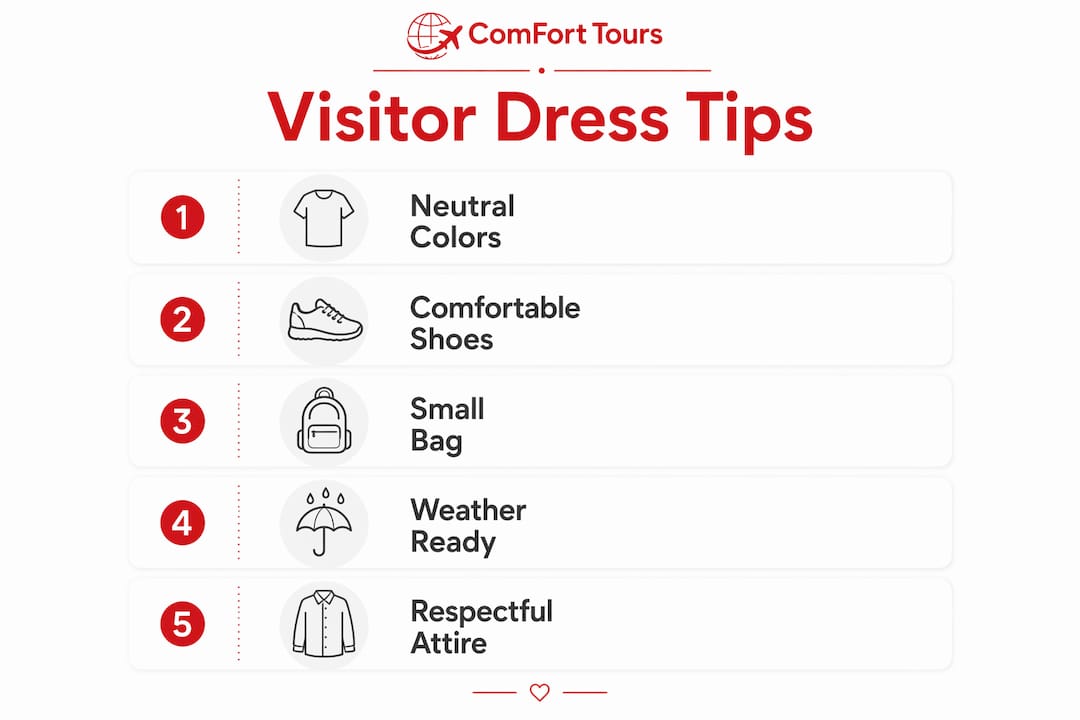
- Cover shoulders and knees; avoid shorts, tank tops, and beachwear
- Wear neutral, sober colors; skip bright patterns and anything with slogans, political symbols, or offensive imagery
- Bring sturdy, comfortable shoes suited for several hours of walking on gravel and uneven ground
- Pack only a small bag with maximum dimensions of 30x20x10 cm
- Layer up regardless of season; weather shifts significantly between indoor and outdoor spaces
- Keep your phone on silent and leave selfie sticks, tripods, and drones at home
- Maintain quiet and solemnity throughout the entire visit
Pro Tip: Think of your outfit the night before, not the morning of. Choosing your clothes when you are calm and focused makes it easier to get it right.
What the Auschwitz dress code actually requires from you
There is no dress code enforced at the gate with a checklist, but that does not mean anything goes. The museum’s guidance is consistent: dress modestly, dress practically, and avoid anything that could be perceived as disrespectful to the memory of the victims. Jeans and a plain T-shirt work fine. A sundress that covers your shoulders and falls past the knee works fine. What does not work: cutoff shorts, crop tops, beachwear, or a shirt printed with a political slogan.
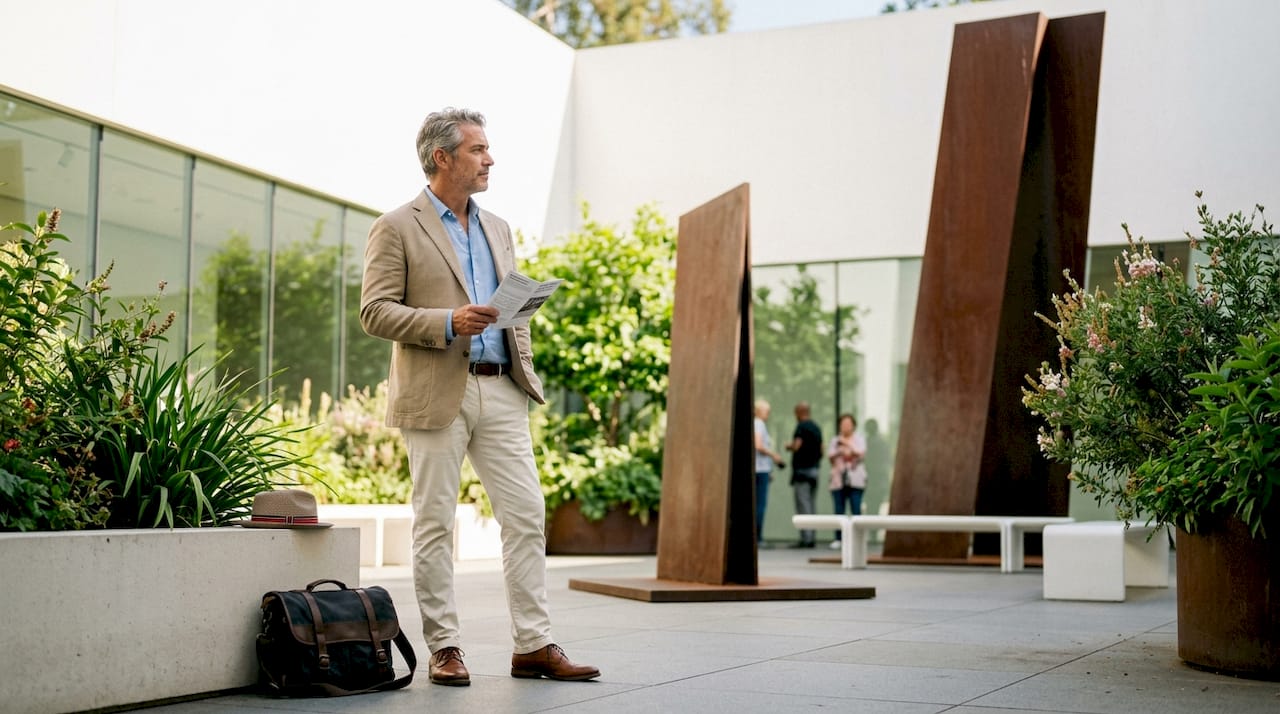
Clothing colors matter more than most visitors realize. Neutral and muted tones, think navy, gray, black, olive, or white, fit the atmosphere. Bright neon prints or loud patterns feel out of place at a site of mass extermination. You do not need to wear all black, but you should avoid anything that reads as festive or casual in a beach-vacation way.
Avoid clothing with political symbols, vulgar language, or violent imagery. This applies to hats, bags, and accessories, not just shirts. Visitors have been asked to cover or remove items that staff found disrespectful, so it is easier to leave those pieces at home entirely.
Practical packing and clothing tips for your visit
What to wear by season
Auschwitz sits in southern Poland, and the weather there can surprise you. Summers get warm but the site is largely outdoors, so mornings and evenings cool down fast. Winters are genuinely cold, with snow and ice on the original historical terrain. Spring and fall bring rain. The answer in every season is layers.
- Summer (june–august): Lightweight trousers or a modest skirt, a breathable top with sleeves, a light jacket or cardigan for indoor spaces, sunscreen, and a hat
- Spring and fall (march–may, september–november): A medium-weight jacket, waterproof layer, and closed-toe shoes with grip
- Winter (december–february): Warm base layers, a waterproof coat, insulated boots, gloves, a hat, and a scarf. The ground gets slippery in rain or snow, so footwear with real traction is not optional
Pro Tip: Bring a small umbrella year-round. Even in summer, afternoon rain is common in this part of Poland, and there is limited shelter on the Birkenau grounds.
Shoes: the detail most visitors underestimate
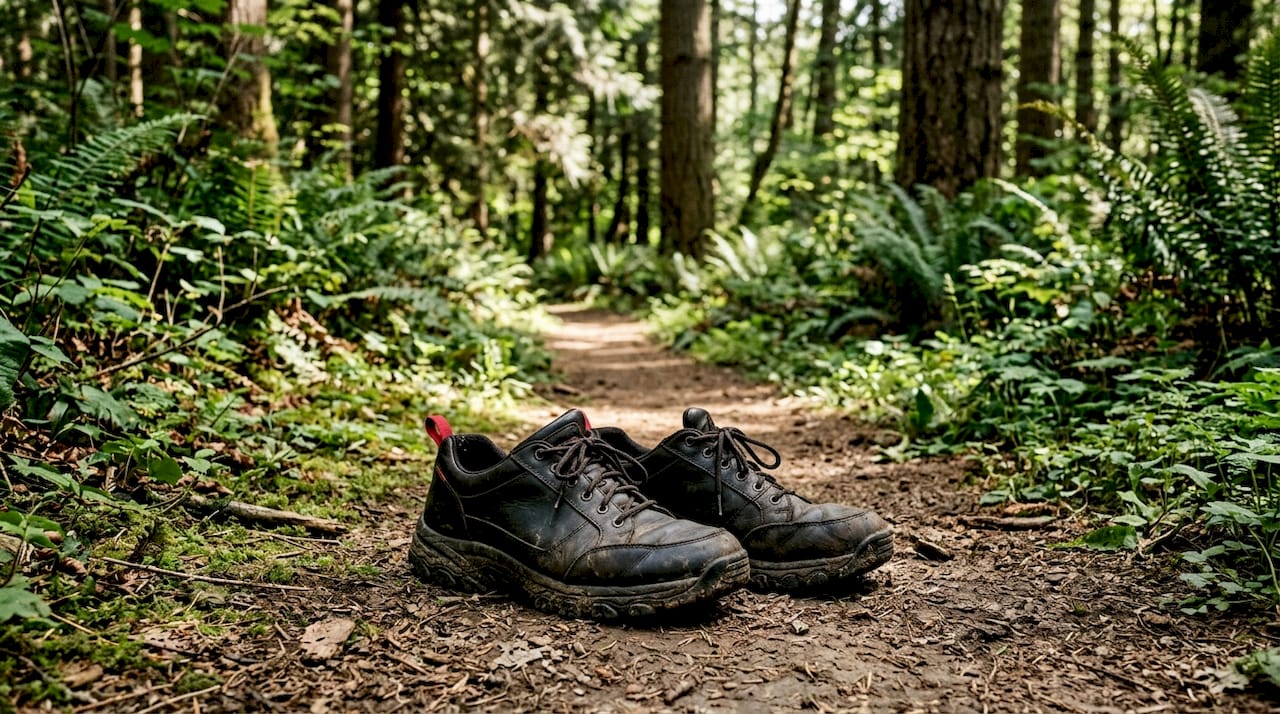
The tour covers 3–4 hours of walking across gravel paths, original brick surfaces, and uneven ground. Sneakers with good support work well. Sandals, flip-flops, and dress shoes do not. In wet or cold conditions, waterproof footwear is strongly advised. Your feet will tell you at the end of the day whether you made the right call.
Bag size restrictions
Per 2026 museum rules, visitors may only bring only small bags with limited dimensions into the grounds. Anything larger, including backpacks and rolling luggage, must be stored in the visitor center lockers or left in your transport vehicle. Plan accordingly: bring only what you genuinely need for the visit.
| Item | Recommendation |
|---|---|
| Bag size | Max 30x20x10 cm; larger bags go in lockers |
| Footwear | Sturdy, closed-toe, waterproof in cold/wet seasons |
| Clothing coverage | Shoulders and knees covered |
| Colors | Neutral and muted; avoid bright patterns |
| Slogans/imagery | None; political symbols and offensive prints not allowed |
| Weather gear | Sunscreen, hat, or umbrella depending on season |
| Electronics | Phone on silent; no selfie sticks, tripods, or drones |
Visitor etiquette and what you should not do at Auschwitz
Auschwitz-Birkenau is not a museum in the conventional sense. It is a cemetery and a crime scene preserved for memory. The conduct expected there reflects that.
Silence and solemnity come first. Loud conversations, laughter, and disruptive behavior are deeply inappropriate. This applies from the moment you enter the security checkpoint to the moment you leave. Keep your voice low, stay with your group, and give other visitors space to process what they are seeing.
Photography rules are specific. You may photograph most of the site, but certain areas, particularly inside some of the barracks and memorial spaces, prohibit photography out of respect for the victims. Follow posted signs and your guide’s instructions. Taking photos is permitted in most outdoor areas, but the spirit of the rule matters as much as the letter: photograph to remember, not to perform.
Prohibited items and behaviors include:
- Selfie sticks, tripods, and drones are strictly banned throughout the site
- Loud audio devices, including Bluetooth speakers
- Eating or drinking inside the exhibition buildings
- Touching artifacts, fences, or preserved structures
- Running, shouting, or any behavior that disrupts the reflective atmosphere
- Recording video or audio in areas where signage prohibits it
Mobile phone use should be quiet and discreet. Silence your phone before you enter. If you need to take a call, step away from the group and keep it brief. Scrolling social media while your guide is speaking is disrespectful to both the guide and the site.
Survivors and their families sometimes visit Auschwitz. Other visitors may be there for deeply personal reasons. Your behavior affects their experience directly.
Arrival, security, and how to prepare for a smooth entry
The security process at Auschwitz-Birkenau is airport-style: bags go through a scanner, and you walk through a metal detector. Arriving with a small, organized bag speeds this up for everyone. If you have a larger bag, you will need to store it before you reach the checkpoint, so factor that into your arrival time.
Arrive early. Tours run on a timed entry system, and missing your slot means losing part of the experience. Build in at least 20–30 minutes before your scheduled entry to park, store bags if needed, and clear security without rushing.
A few practical notes on logistics:
- Auschwitz I (the main camp) and Auschwitz II-Birkenau are about 3 km apart; a free shuttle runs between them during peak hours, but check the current schedule before your visit
- The visitor center at Auschwitz I has lockers, a café, and restrooms; use them before your tour starts
- Guided tours are strongly recommended, especially for first-time visitors; a knowledgeable guide provides context that self-guided audio tours cannot fully replicate
- After the visit, allow yourself quiet time before jumping back into normal travel activities; the site is emotionally demanding, and that is by design
For visitors coming from Krakow, ComFort Tours Cracow offers Auschwitz tours from Krakow with transport included, so bag storage and logistics are handled before you arrive.
What local Auschwitz guides say about dressing respectfully
Experienced guides who lead tours at Auschwitz regularly give the same piece of advice: think of this visit the way you would think of attending a funeral. That mental model solves most clothing decisions instantly. You would not wear a tank top and cutoff shorts to a funeral. You would not bring a selfie stick. You would not laugh loudly or check your phone constantly. The same logic applies here.
Local guides emphasize that respectful dress and behavior significantly improve both the personal experience and the group atmosphere. When everyone in a tour group is dressed appropriately and behaving with solemnity, the visit becomes more focused and more meaningful. When one person is dressed for the beach or acting like a tourist at a theme park, it pulls the entire group out of the reflective space the site demands.
A few specific points guides raise repeatedly:
- Modest footwear matters as much as modest clothing; guides have seen visitors in heels or sandals struggle badly on the gravel paths at Birkenau
- Dress for the weather you will actually face, not the weather you hope for; the site is largely open-air and there is little shelter from wind or rain at Birkenau
- Neutral colors are not a rule, but they reflect the tone of the place; bright clothing can feel jarring against the gray barracks and preserved structures
- Prepare mentally before you arrive; reading about the site or watching a documentary beforehand helps you engage more deeply once you are there
Pro Tip: If you are visiting in winter, guides recommend wearing your warmest coat and bringing hand warmers. The Birkenau grounds are exposed and the cold is relentless. Comfort and solemnity are not mutually exclusive.
The Auschwitz memorial visiting guide from ComFort Tours Cracow covers these points in detail, including seasonal packing lists and what to expect from each part of the site.
Accessibility considerations and dress code adaptations
Auschwitz-Birkenau is committed to making the site accessible to visitors with disabilities, and the dress code guidance applies equally to everyone, with some practical adaptations worth knowing.
Wheelchair users and visitors with limited mobility should prioritize footwear and lower-body clothing that works with their mobility aids. Loose trousers or skirts that do not catch on wheels or crutches are a practical choice. The site has paved accessible routes through much of Auschwitz I, though parts of Birkenau involve uneven ground that can be challenging. Layering remains just as important for visitors who spend time stationary, since sitting or moving slowly in cold weather means feeling the temperature drop faster.
Visitors with sensory sensitivities may find the site’s audio environment easier to manage with noise-reducing headphones or earplugs, which are permitted. There is no restriction on medical equipment, mobility aids, or adaptive clothing. If you use a cooling vest, compression garments, or other medical wearables, bring them without concern.
The museum’s visitor center staff can provide specific accessibility information on request, and booking a guided tour with ComFort Tours Cracow allows you to communicate accessibility needs in advance so your guide can plan the route accordingly.
Key takeaways
Dressing modestly and behaving with solemnity at Auschwitz-Birkenau are the two non-negotiable expectations for every visitor in 2026.
| Point | Details |
|---|---|
| Cover shoulders and knees | No shorts, tank tops, or beachwear; modest clothing is expected at all times |
| Wear sturdy, comfortable shoes | The tour involves several hours on gravel and uneven terrain; waterproof footwear in cold or wet seasons |
| Respect the 30×20 cm bag limit | Larger bags must be stored in lockers or your vehicle before entering the grounds |
| Keep phones silent and cameras discreet | No selfie sticks, tripods, or drones; photography is restricted in certain indoor spaces |
| Dress for the weather, not just the occasion | Layer up year-round; Birkenau is exposed and temperatures shift significantly throughout the day |