
Most of Schindler’s List was filmed in Kraków, and the key on-screen places are grouped into four walkable clusters: Kazimierz (Szeroka Street, Józefa 12), Podgórze (the real ghetto site and Pilsudski Bridge), Zabłocie (Lipowa 4, the factory) and the Liban Quarry, which served as the set for the Plaszów camp. Prioritise Lipowa 4, Szeroka Street, Józefa 12 courtyard, the quarry, Pilsudski Bridge and 7 Straszewskiego Street. Walk the clusters in sequence or book a guided route so you don’t waste a day crossing back and forth across the Vistula.
TL;DR:
- The main filming locations in Kraków are spread across four clusters: Kazimierz, Podgórze, Zabłocie, and Liban Quarry, each serving a specific scene or setting.
- Kazimierz was used as the ghetto’s filming site due to its preserved architecture, despite the actual ghetto being in Podgórze, which has been heavily modernized.
- The Lipowa 4 building is the authentic Schindler’s factory, but interior scenes were shot elsewhere; the museum inside offers exhibits on Kraków during the occupation years.
- Liban Quarry still contains remnants of the recreated camp scenes, but it is overgrown, unsafe, and accessible only by private transport or taxi.
- Visiting the sites in one day from the UK is feasible with a structured route, but responsible tourism involves respecting residents’ privacy and avoiding disrupting local life.
Table of Contents
- How the Schindler’s List filming locations group into four Kraków clusters
- Szeroka Street and Józefa 12 courtyard: the heart of the Kazimierz set
- Was the real ghetto in Podgórze, and what does Pilsudski Bridge show?
- Schindler’s Factory at Lipowa 4: what’s real and what to book
- Liban Quarry: is the Plaszów film set still standing?
- Other Schindler’s List addresses in Kraków: what you can and can’t visit
- A one-day Schindler’s List route for visitors from the UK
- Local guide notes on visiting these sites responsibly
- Book a guided Schindler’s List tour with ComFort Tours Cracow
- Key resources for planning your visit
- Sources
- FAQ
How the Schindler’s List filming locations group into four Kraków clusters
Spielberg’s crew didn’t shoot in one neighbourhood and call it a day. They split filming across four distinct pockets of Kraków, each doing a different job on screen, and understanding that split is the single most useful thing you can do before you set out.
Kazimierz is the historic Jewish quarter south of the Old Town, and it played the on-screen ghetto, even though it wasn’t the real wartime ghetto at all. Podgórze, across the river, was where Kraków’s Jews were actually confined between 1941 and 1943, and it appears in the film mostly through the bridge crossing and background geography rather than as the ghetto set itself. Zabłocie, a former industrial strip beside Podgórze, holds Oskar Schindler’s actual enamelware factory. Liban Quarry, a disused limestone pit on the city’s southern edge, is where the production built its Plaszów camp replica from scratch.
The reason Kazimierz stood in for the ghetto rather than Podgórze itself comes down to architecture. By the early 1990s, Podgórze had been substantially rebuilt and modernised, while Kazimierz still had the tenement blocks, courtyards and street textures that matched 1940s photographs. Production designers found it easier to dress Kazimierz’s period buildings than to strip decades of development out of Podgórze, a point well documented by In Your Pocket’s location guide. It’s a detail that trips up a lot of visitors, who arrive expecting the ghetto scenes to have been filmed where the ghetto actually stood.
A sensible day works through the clusters in this order:
- Start at Zabłocie for the factory museum, ideally on the earliest available time slot.
- Cross into Podgórze for the ghetto memorial and Pilsudski Bridge.
- Walk or tram up to Kazimierz for Szeroka Street and Józefa 12.
- Finish at Liban Quarry if you have transport and daylight, since it sits furthest from the centre.
Zabłocie and Podgórze are roughly ten minutes apart on foot. Kazimierz is another fifteen to twenty minutes’ walk from Podgórze, or a short tram ride if your legs are tired. Liban Quarry needs a taxi or a car, since it’s tucked behind a hill with no direct tram access.
Szeroka Street and Józefa 12 courtyard: the heart of the Kazimierz set
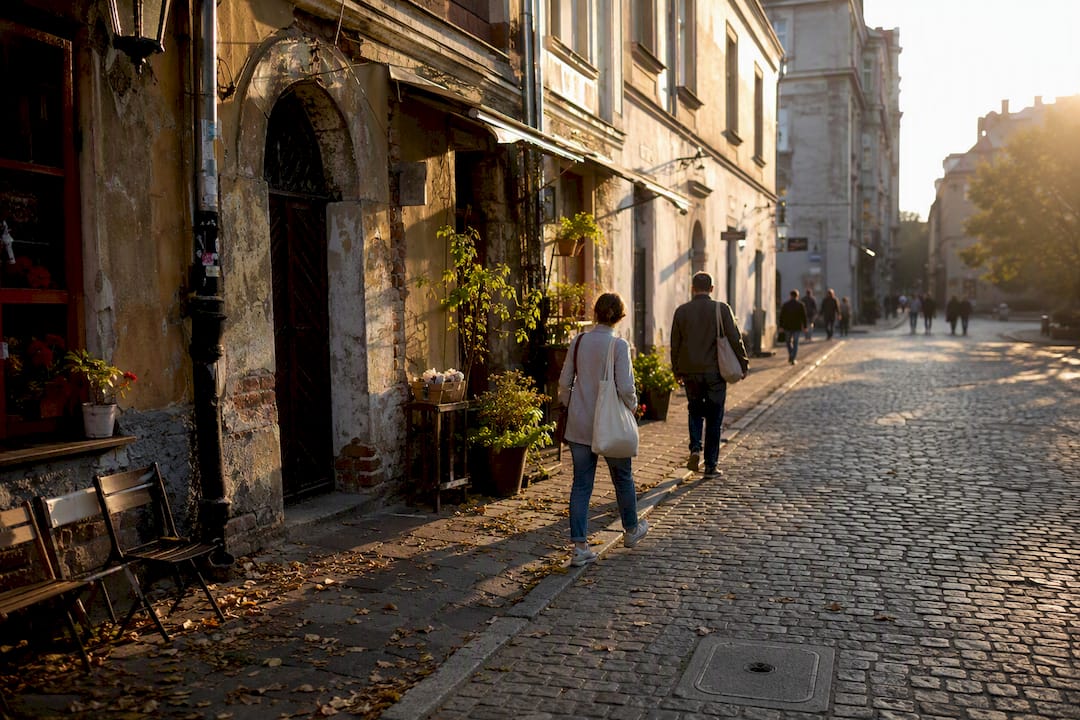
Szeroka Street is the widest, most photographed street in Kazimierz, and it’s where the film staged Plac Zgody, the square used for round-ups and deportations. The stretch between the Old Synagogue and Remuh Synagogue is the segment most closely matching the film’s framing, and it’s worth bringing a printed still or a phone screenshot to compare angles against what stands there today. Cafés and small galleries now occupy buildings that appear in the background of several scenes, which makes the comparison oddly pleasant rather than grim.
Józefa 12 is a working residential courtyard just off Józefa Street, and it’s arguably the single most atmospheric stop in the whole Kazimierz cluster. The production used its enclosed, tenement-style layout for several ghetto scenes, and the courtyard has barely changed. It’s also, importantly, still somebody’s home.
- Enter quietly during daylight hours and keep your visit to a few minutes.
- Photograph the architecture and general courtyard, not residents’ windows or doorways.
- Avoid loud conversation, since sound carries in the enclosed space.
- Leave promptly if a resident is entering or leaving, and never block the passage.
The junction of Ciemna Street and Jakuba Street, a short walk from Józefa 12, appears in another notable sequence, and it sits close enough to the synagogues and Plac Nowy’s food stalls that you can fold it into the same loop without a detour.
Pro Tip: Visit Szeroka Street before 9am if you want photographs without tour groups in the frame. Kazimierz fills up fast once the walking tours start arriving from 10am onwards, and Józefa 12 in particular becomes uncomfortably crowded by late morning.
If you’d rather have someone point out exactly which building fronts made the final cut, a complete visitor guide to Kazimierz covers the wider quarter’s synagogues and street layout alongside the film sites.
Was the real ghetto in Podgórze, and what does Pilsudski Bridge show?
Yes. The historical Kraków ghetto stood in Podgórze, not Kazimierz, and that distinction matters for anyone trying to separate film set from lived history. Plac Bohaterów Getta, or Ghetto Heroes’ Square, marks the site today, and it holds one of the city’s most striking memorials: 70 empty metal chairs scattered across the square, representing the furniture Jewish families were forced to abandon or sell before being marched into the enclosed district.
Pilsudski Bridge, spanning the Vistula between Kazimierz and Podgórze, appears in the film during scenes of forced transfer across the river. The production reversed the actual direction of the historical crossing for the shoot, a choice made to keep modern buildings and infrastructure out of frame, as noted in Kraków’s own walking-route guide to the film’s locations. It’s a small but telling example of how period filmmaking bends geography to protect the illusion.
For a wider view of the bridge and the river crossing, climb Lasota Hill, just above Podgórze. It offers one of the clearest vantage points over the Vistula and is close to where the “girl in the red coat” sequence was staged, one of the film’s most quoted visual moments. Morning light tends to work best here, since the hill faces the river and the sun sits behind you rather than washing out the shot.
What to prioritise in Podgórze on a single visit:
- Plac Bohaterów Getta and its 70 chairs, best seen slowly rather than rushed through.
- The Podgórze side of Pilsudski Bridge, walkable in minutes from the square.
- Lasota Hill for the elevated river view, a short uphill detour.
- The Eagle Pharmacy museum nearby, if time allows, for wartime context on the ghetto itself.
Schindler’s Factory at Lipowa 4: what’s real and what to book
The building at Lipowa 4 is genuinely Oskar Schindler’s enamelware factory, and its exterior is authentic, unlike a fair number of “filming locations” that turn out to be facades or nearby stand-ins. Many of the interior scenes, however, were shot roughly 25 miles away at a former enamel factory in Olkusz, since the real Lipowa 4 interior had changed too much by the time filming began. Knowing this in advance saves you the mild disappointment of expecting the museum’s rooms to match the film shot for shot, a distinction confirmed by Movie Locations’ breakdown of the film’s sites.
Today the building houses the Schindler Factory Museum, which focuses less on Schindler himself and more on Kraków’s occupation years between 1939 and 1945, using immersive room-by-room exhibits rather than a straightforward chronology. It’s one of the most highly rated historical museums in the city, and it fills up.
Before you go:
- Book a timed-entry ticket in advance; walk-up availability is unreliable, especially in summer.
- Check current opening hours before travelling, since the museum closes on selected days and adjusts hours seasonally.
- Allow around two hours inside, more if you read every panel.
- The nearest tram stop is Zabłocie, on lines running from the Old Town and Kazimierz, roughly a ten-minute ride.
- Step-free access is available at the main entrance, though some interior sections involve stairs.
Visiting the factory first, before Podgórze and Kazimierz, gives the rest of the day historical grounding. Everything you see afterwards, the ghetto square, the courtyard, the bridge, connects back to what you’ve just read inside. A detailed museum guide covers ticketing and exhibition layout in more depth if you want to plan around specific rooms.
Liban Quarry: is the Plaszów film set still standing?
Fragments, yes; a finished attraction, no. For the Plaszów camp scenes, the production built a full-scale replica inside the disused Liban Quarry, including barracks, watchtowers and a road paved with tombstones lifted from a Jewish cemetery, a detail lifted directly from historical accounts of the real camp. Some of that construction, including sections of the tombstone road and ruined villa foundations, still lies scattered across the quarry floor, as described in location research from Salut Byebye’s filming-locations guide. Auschwitz’s exterior appears in the film too, but its interiors were never shot inside the real camp; those scenes were recreated here at the quarry instead, according to the same film locations research.
The quarry today is overgrown, uneven and entirely unofficial. There’s no ticket booth, no marked path and no safety railing anywhere on site.
Pro Tip: Wear proper walking boots, not trainers. The limestone underfoot is loose and the slopes are steeper than photos suggest, and a twisted ankle here is a long way from the nearest pharmacy.
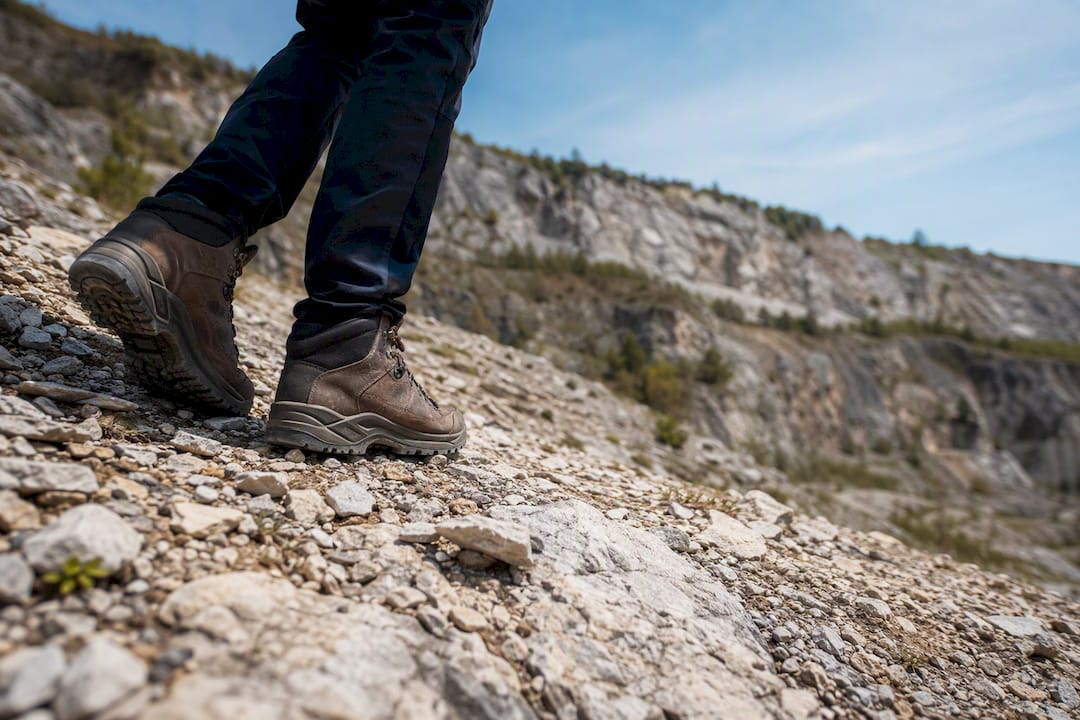
Access is easiest by taxi or private car, since public transport doesn’t reach the quarry directly and the walk from the nearest tram stop crosses busy roads. Because this isn’t a formal memorial, treat it with the same restraint you’d apply to Podgórze or Józefa 12: no loud behaviour, no removing stones or debris, and no wandering after dusk when visibility drops fast on unstable ground.
Other Schindler’s List addresses in Kraków: what you can and can’t visit
A handful of other addresses turn up constantly in searches for Schindler’s List filming sites, and it’s worth knowing exactly what each one offers before you build them into a route.
7 Straszewskiego Street, near the Planty park ringing the Old Town, is identified as the building used for Oskar Schindler’s apartment exterior. It’s a working residential building today, so you can view and photograph the façade from the street, but there’s no public access inside and no plaque marking the connection. Don’t ring the buzzer or attempt entry.
Kraków Główny, the city’s main railway station, features in background shots connected to transport sequences, though the film’s Brünnlitz factory scenes, representing the camp Schindler relocated his workers to near the war’s end, were actually filmed around Niepołomice, a town roughly 20 minutes east of Kraków. If you’re chasing every last location, Niepołomice is a separate day trip rather than something to squeeze into a Kraków city walk.
A short list of what’s genuinely worth building into your route:
- Szeroka Street and Józefa 12, both freely walkable and covered in the Kazimierz section above.
- Lipowa 4, the factory and museum, ticketed and fully open to visitors.
- 7 Straszewskiego Street, exterior viewing only, no interior access.
- Niepołomice, for the Brünnlitz stand-in, best treated as an optional extra trip.
As Screen Rant’s location breakdown points out, most of these addresses remain genuinely visitable decades on, which is unusual for a film shot in working residential streets rather than purpose-built sets. That accessibility is exactly why discretion matters. These are people’s homes and daily routes, not museum exhibits, so keep group sizes small, voices down and visits brief.
A one-day Schindler’s List route for visitors from the UK
If you’re flying in from the UK for a short break, a single well-sequenced day covers every major site without feeling rushed.
- Morning: Book the earliest Schindler Factory Museum slot at Lipowa 4, then walk ten minutes into Podgórze.
- Midday: Visit Plac Bohaterów Getta and Pilsudski Bridge, climbing Lasota Hill if the weather’s clear.
- Afternoon: Tram or walk up to Kazimierz for Szeroka Street, Józefa 12 and the surrounding synagogues.
- Late afternoon: Take a taxi to Liban Quarry if daylight and footwear allow, or swap it for 7 Straszewskiego Street on the way back into town.
Kraków’s public transport runs on a dense tram network, and a single fare covers roughly 20 minutes of travel time across most central routes, which is generally enough to cover any two of these clusters back to back. Spring and early autumn tend to give the clearest light for photographs at Lasota Hill and Szeroka Street, while summer brings the thickest tour-group crowds to Józefa 12 by mid-morning.
Local guide notes on visiting these sites responsibly
I’ve watched a lot of visitors treat this route as a checklist, ticking off addresses without pausing at any of them, and it misses the point entirely. Kazimierz and Podgórze are not film sets frozen in 1993. People live in that courtyard on Józefa Street. Buses stop at Plac Bohaterów Getta every few minutes carrying commuters, not tourists. The film borrowed these streets for a few months thirty years ago; the streets belong to Kraków, not to the film.
ComFort Tours Cracow runs small-group visits specifically because a coach party of forty doesn’t fit through Józefa 12’s archway without turning it into a spectacle. English-speaking local guides handle the historical framing, so you’re not standing in a random courtyard wondering what actually happened there, and timed-ticket booking for the factory museum gets sorted before you arrive.
Three things worth knowing if you’re planning independently: book the museum’s first slot of the day, since the exhibition rooms genuinely empty out before 10am. Photograph Szeroka Street from the synagogue end rather than the square’s centre, where you’ll dodge fewer tour groups. And if you want Liban Quarry included, arrange private transport rather than relying on a long, awkward walk along a main road with no pavement for most of the route.
— Damian Fort
Book a guided Schindler’s List tour with ComFort Tours Cracow
ComFort Tours Cracow gives you what a self-guided map can’t: someone who knows exactly which courtyard gate is open, when the museum queue thins out, and how to read Plac Bohaterów Getta’s memorial without a plaque doing the explaining for you.
Our guided visit to the Schindler Factory Museum includes timed-ticket handling, so you’re not refreshing a booking page the night before. Small-group walking tours through Kazimierz and Podgórze keep numbers low enough that you can actually hear your guide inside Józefa 12’s courtyard, and private transport is available for anyone who wants Liban Quarry added without the awkward taxi negotiation. Every guide speaks English and works these streets daily, which matters when a resident opens their door mid-tour and you need someone who knows how to step back politely. If you’re weighing up private transfers for the wider trip, our airport and city transfer service covers that too. Head to our full tours listing to check dates and book the Schindler’s List route directly.
Key resources for planning your visit
- Schindler Factory Museum ticketing and details for booking your timed entry.
- Kraków’s official Schindler’s List walking route for a city-endorsed map of the sites.
- Location-by-location filming guide for verifying exact addresses before you set out.
- Day-tour and transfer planning resource for readers comparing private transport logistics on multi-stop days.
Sources
- On the trail of Schindler’s List in Kraków | Schindler’s List Film Locations in Kraków
- Schindler’s List | Film Locations
- Schindler’s List filming locations – Itinerari di cinema e d’America
- In the footsteps of Schindler’s List
- Where Was Schindler’s List Filmed? The Historical Drama’s Filming Locations Explained
FAQ
Was any of Schindler’s List actually filmed in Kraków?
Yes, the majority of the film was shot on location in Kraków, primarily around Kazimierz, Podgórze, Zabłocie and Liban Quarry, though interior factory scenes were filmed roughly 25 miles away in Olkusz.
Are any of the real Schindlerjuden still alive today?
Most of the people Schindler saved have since died given the decades since the war, though descendants of Schindler Jews remain active in preserving and sharing the history, including through visits and talks connected to the factory museum.
Does Schindler’s actual factory still exist in Kraków?
Yes, the building at Lipowa 4 still stands and now houses the Schindler Factory Museum, which focuses on Kraków’s wartime occupation rather than a straightforward recreation of the factory floor.
Where is Oskar Schindler buried?
Oskar Schindler is buried in the Catholic Cemetery on Mount Zion in Jerusalem, the only member of the Nazi Party to be honoured with burial there, reflecting his recognition as one of the Righteous Among the Nations.