
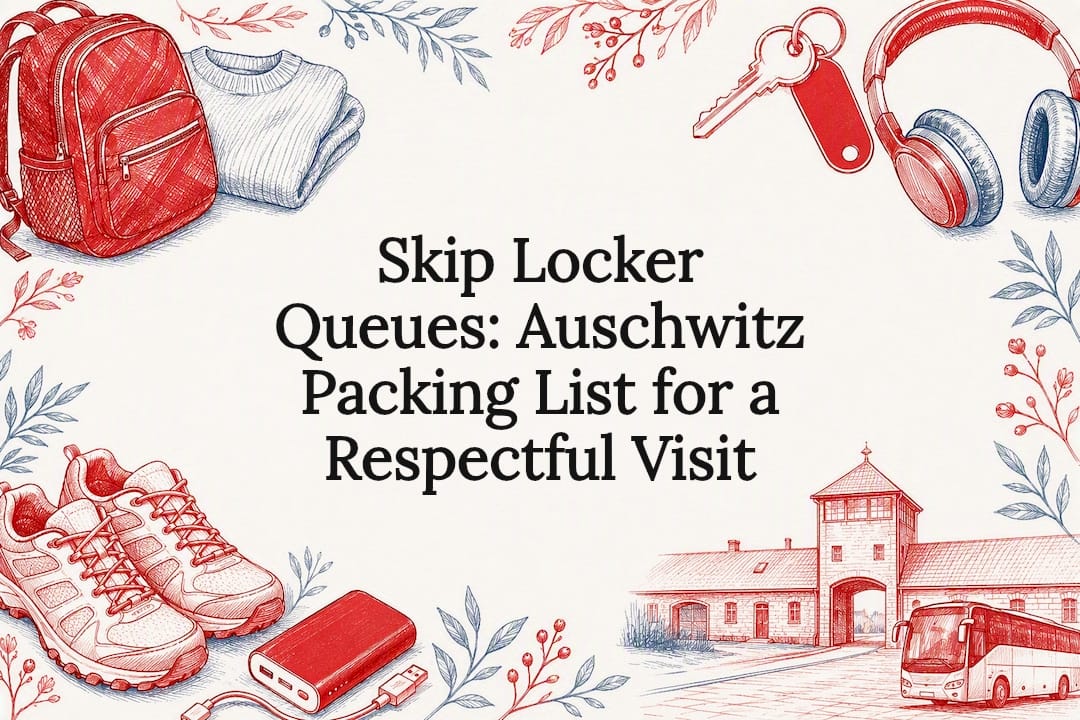
Bring your ID, printed or digital entry pass, a small day bag adhering to the museum’s size limits, comfortable closed shoes, modest clothing, and a bottle of water. Anything larger goes into the on-site luggage storage or stays at your accommodation. This is a memorial site first, so dress plainly, keep your phone on silent, and treat photography as a personal record rather than a photo opportunity.
TL;DR:
- Larger bags and luggage beyond the size limit must be stored in on-site lockers, which are operated by vending machines and require a card payment of around PLN 5.
- Dress modestly and wear supportive, non-slip footwear suitable for gravel paths and long walking distances across outdoor and indoor areas.
- Photography should be respectful, avoiding posed shots or celebratory poses, and tripods, drones, or loud audio devices are strictly prohibited on site.
- Carry your ID, entry pass, and small cash for toilets or the gift shop, and have a fully charged phone with a backup power bank since charging points are limited inside.
- Allocate at least three to four hours for the visit, allowing time for security checks, luggage storage, shuttle access, and respecting the site’s memorial tone.
Table of Contents
- Auschwitz packing list essentials for your day bag
- Bag size, luggage storage and how the lockers work
- How to dress respectfully for the weather and the terrain
- Electronics, photography and headset etiquette
- Documents and small payments to have ready
- Day-of logistics: timing, shuttles and access on site
- A guidebook note from ComFort Tours
- Book a guided visit and skip the logistics headache
- Sources
- FAQ
Auschwitz packing list essentials for your day bag
The museum enforces a strict bag-size limit, and everything you carry into the grounds needs to fit inside it. Anything larger than that has to go into storage before you queue for entry, so pack deliberately rather than bringing your usual travel bag.
Here’s what actually earns a place in that small bag:
- Identity documents and entry pass. Match the name on your ID to your booking, and carry your pass as a printed copy or a screenshot saved offline, since signal inside the buildings can be patchy.
- Layered clothing. A thin jumper or fleece under a jacket works better than one thick coat, since indoor spaces and outdoor grounds swing in temperature.
- A refillable water bottle. Staying hydrated matters, particularly in summer when there’s little shade across the Birkenau grounds.
- Closed, supportive shoes. Trainers or walking shoes with decent grip handle the gravel paths far better than sandals or heels.
- A phone and a small power bank. There’s no guaranteed charging point on site, and you’ll want battery left for photos and navigation afterwards.
- Headphones with a 3.5mm jack, if your tour uses guided-headset systems that still rely on a wired connection rather than Bluetooth.
- Basic medication and any accessibility aids you need for several hours of walking, since first-aid provision on the grounds is limited.
Leave large backpacks, wheeled suitcases, flags or banners, tripods, selfie sticks, drones, alcohol and anything sharp at your accommodation or in your vehicle. None of these are permitted inside, and bringing them just means an extra trip to the storage room before you can start your visit.
Pro Tip: Eating on the grounds is discouraged out of respect for the site. Please finish your snacks and coffee before you go through the entrance rather than mid-visit.
Bag size, luggage storage and how the lockers work
The Auschwitz-Birkenau State Museum sets a maximum bag size for anything taken inside. Bigger bags, including daypacks exceeding this limit, must be deposited in the on-site luggage storage before you enter.
The storage system runs on vending machines rather than a staffed desk. You buy your ticket by card only (cash isn’t accepted at the machine), and the fee sits around PLN 5. The machine prints a barcode ticket that opens your specific locker, and you’ll need that same ticket to retrieve your bag later, so don’t lose it.
A few practical points worth knowing before you arrive:
- Lockers open 30 minutes before museum opening and stay accessible for up to two hours after closing, so arriving well outside those hours can leave you stuck.
- Some lockers have a load limit sufficient for daypacks but not for larger luggage.
- Build in extra time at both ends of your visit: five minutes to queue for a locker in the morning, and a similar buffer to collect your bag before your onward transport.
How to dress respectfully for the weather and the terrain
Skip anything provocative, branded with slogans, or overly casual, such as beachwear or vest tops. Neutral, modest layers suit the tone of a memorial site far better than bright colours or statement clothing.
Weather changes what you’ll actually need underneath that modesty:
- Winter calls for a proper coat, thermal layers, gloves and a hat, since much of the walking route between buildings and across Birkenau is outdoors and exposed.
- Summer means breathable fabrics, a hat, and sun cream, particularly for the long open stretches at Birkenau where shade is scarce.
- Any season benefits from a compact rain jacket or umbrella, since Polish weather can turn without much warning.
Footwear matters more than most visitors expect. Birkenau’s paths are gravel, not paved, and you’ll cover several kilometres on foot between the two sites, so trainers or walking shoes beat anything with a heel or an open toe.
Pro Tip: Pack a light jumper even in high summer. Some of the exhibition buildings at Auschwitz I are cool indoors regardless of the season outside.
Electronics, photography and headset etiquette
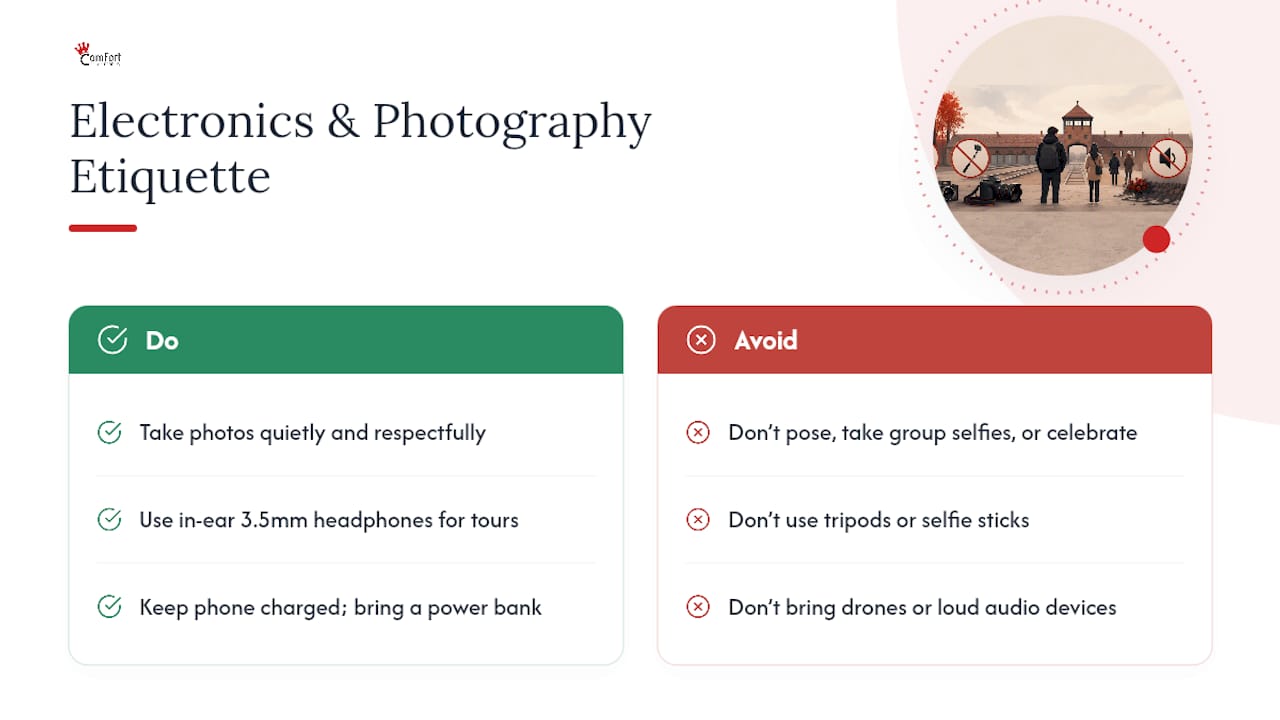
Photography is allowed across most of the site, but this isn’t the place for posed shots, group selfies or celebratory poses. A quiet, respectful approach to your camera matches the tone the museum asks visitors to keep throughout.
Tripods, selfie sticks, drones and loud audio devices are not permitted, and guards do enforce this. For guided tours, bring in-ear headphones with a standard 3.5mm jack, since many headset systems still use that connection rather than Bluetooth. Check with your tour operator beforehand if you’re unsure which type you’ll need.
Keep your phone charged and bring a small power bank. There’s no reliable charging point once you’re inside, and you’ll want battery for photos, navigation and your entry pass right through to the end.
Documents and small payments to have ready
Your ID needs to match the name on your booking exactly, so double-check this before travel day. Carry your entry pass either printed or as an offline screenshot, since it needs scanning at the gate.
Locker payment is card-only, but small cash is worth having for paid toilets or items at the bookshop, where card acceptance isn’t always guaranteed. If you take regular medication or need accessibility support, bringing a short note or your prescription can help if you need to explain it. Withdraw or exchange a small amount of Polish złoty before you arrive rather than relying on finding an ATM nearby.
Day-of logistics: timing, shuttles and access on site
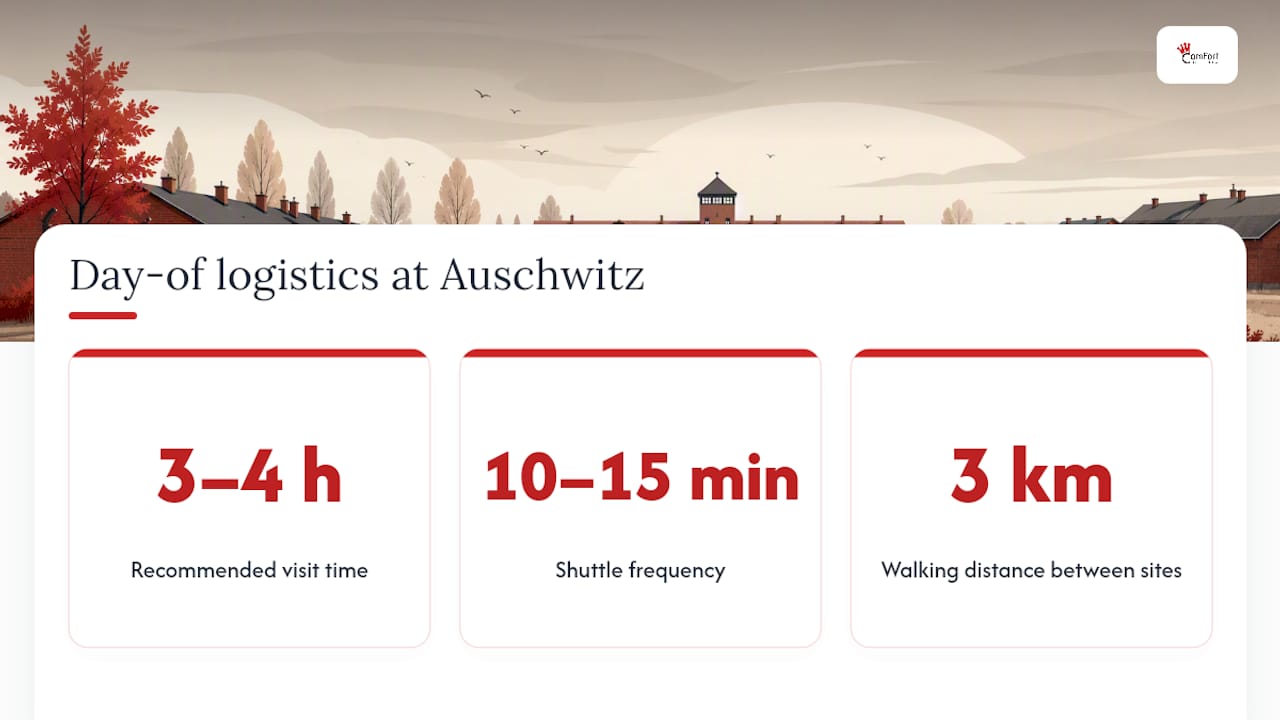
Allow at least three to four hours to cover Auschwitz I and Birkenau properly. A free shuttle runs between the two sites roughly every 10 to 15 minutes during opening hours, though walking is possible if you’d rather cover the three-kilometre distance on foot.
Toilets and a café sit at the visitor centre and near the Birkenau entrance, both with small paid elements. A wheelchair is available to borrow at Auschwitz I, but access at Birkenau is more limited given the gravel terrain, so plan mobility needs ahead of time. Build in a buffer for luggage storage and security checks before you factor in onward transport from Krakow.
A guidebook note from ComFort Tours
I’m Damian Fort, and this checklist draws on how ComFort Tours Cracow guides small groups through this site week after week. The most common mistake isn’t forgetting an item. It’s underestimating how the visit affects people afterwards.
Give yourself quiet time once you leave, rather than rushing straight into another activity. Our Auschwitz Memorial Visiting Guide covers this in more depth if you want to prepare properly.
— Damian Fort
Book a guided visit and skip the logistics headache
Packing correctly is only half the challenge. Working out locker queues, shuttle timing and where to be by which hour adds pressure to a day that should stay focused on the site itself. Small-group visits are run where transfers, timing and locker logistics are handled before you even arrive, so your only job is showing up with your day bag and ID.

Guides know approximately when the storage room gets busy and which entrance queue moves faster, knowledge that comes from regularly running this route rather than checking it once online. If a private schedule suits you better, we also arrange tailored transport and guiding around Krakow for groups with specific mobility or timing needs. Check available dates and book your guided Auschwitz-Birkenau tour directly through ComFort Tours Cracow.
Sources
Confirm current bag rules directly on the museum’s official visitor page, and check locker terms in the official luggage-storage regulations before you travel. If you’re arranging your own vehicle and wondering whether to leave luggage in the boot rather than use lockers, this guide to luggage policies for taxis covers similar dimension and storage questions.
- Auschwitz-Birkenau State Museum Basic information
- Visiting Auschwitz-Birkenau: A Complete 2026 Guide | Poland Wander
- Auschwitz-Birkenau on-site facilities: café, bookshop, toilets & luggage storage
- Visitauschwitz
FAQ
Can I wear jeans to Auschwitz?
Yes, jeans are fine as long as they’re not ripped, distressed, or paired with anything provocative or branded with slogans. Aim for modest, neutral clothing overall.
Can I bring a water bottle into Auschwitz?
Yes, a refillable water bottle is allowed and recommended, particularly in summer when Birkenau offers little shade across its open grounds.
Is two hours enough for Auschwitz?
No, two hours is too short. Allow at least three to four hours to see both Auschwitz I and Birkenau properly, including shuttle time between them.
What not to do when visiting Auschwitz?
Avoid posed or celebratory photos, loud conversation, eating on the grounds, and bringing prohibited items like tripods, drones or oversized bags. Treat the site with the same quiet respect you’d bring to a cemetery.
Do I need to book an entry pass in advance?
Yes, tickets and time slots sell out, particularly in summer, so booking ahead avoids being turned away at the gate.