
A meaningful visit to your ancestral village in Poland is absolutely achievable from the UK, but the trip succeeds or fails at your kitchen table months before you fly. Do the desk research first, verify the village name against historical gazetteers, book archive and parish appointments in advance, and bring a bilingual guide or private transfer for the final stretch into rural territory. Skip any of those steps and you risk standing outside a locked church with no one to talk to.
TL;DR:
- Confirm your ancestral village through multiple documents and cross-reference historical place names before planning your trip.
- Schedule archive appointments in advance and consider hiring a bilingual guide to access local records and arrange transport.
- Visit during spring or early autumn, allowing five to seven days for archive research, village visits, and buffer time, especially if multiple locations are involved.
- Focus on the parish church and cemetery rather than physical structures, as most buildings are likely gone due to war and rebuilding efforts.
- Rely on on-the-ground contacts and oral histories for insights that no records can provide, making patience and local engagement essential.
Table of Contents
- How to find and verify your ancestral village before you travel
- When to go, how long to stay, and how to get there
- What you’ll find on arrival, and how to document it properly
- Why a bilingual guide changes what you actually achieve
- A 7-day itinerary and checklist you can actually use
- Staying safe and healthy on rural roads and country visits
- A guide’s-eye view of what these trips actually deliver
- Book the parts of this trip that actually need local help
- Where to go next for research and preparation
- Sources
- FAQ
How to find and verify your ancestral village before you travel
Most failed heritage trips share the same root cause: the traveller never confirmed which village they were actually looking for. Family memory is unreliable across three or four generations, and place names in Poland have shifted with borders, partitions, and language more than almost anywhere else in Europe.
Start with what’s already in a drawer somewhere. Old passports, birth and marriage certificates, naturalisation papers, and passenger lists often carry a place name your grandparents never mentioned aloud. Immigration paperwork from the early twentieth century frequently lists a village or district that never made it into family stories, because the person who filled in the form was thinking about the nearest town, not the hamlet three miles away.
- Collect every document with a place name on it. Naturalisation records, ship manifests, and old letters are often more accurate than oral history, because a clerk wrote down what was said at the time, not what was remembered decades later.
- Cross-check the name against a historical gazetteer. The Słownik Geograficzny Królestwa Polskiego and the Kartenmeister database convert nineteenth-century or German and Prussian era names into their modern Polish equivalents, which matters enormously if your ancestors left during the partitions.
- Search Geneteka for parish register indexes. This crowdsourced index covers a huge share of Poland’s surviving Catholic, Jewish, and Orthodox records and will often tell you exactly which parish held your family’s baptisms and marriages.
- Use Szukaj w Archiwach to find the holding archive. This is the central portal for Poland’s state archives and the correct starting point for working out which regional archive, rather than the parish itself, now holds the older registers.
- If the village name still doesn’t surface, work indirectly. Census returns, obituaries, and even old parish bulletins mentioning a “colony” or “settlement” name can point you toward the right district when a direct search draws a blank.
Pro Tip: Never trust a modern map alone when verifying an ancestral place name. Partition-era Poland used German, Austrian, and Russian administrative names side by side with Polish ones, so a village your family called by one name might appear under two or three others in the historical record.
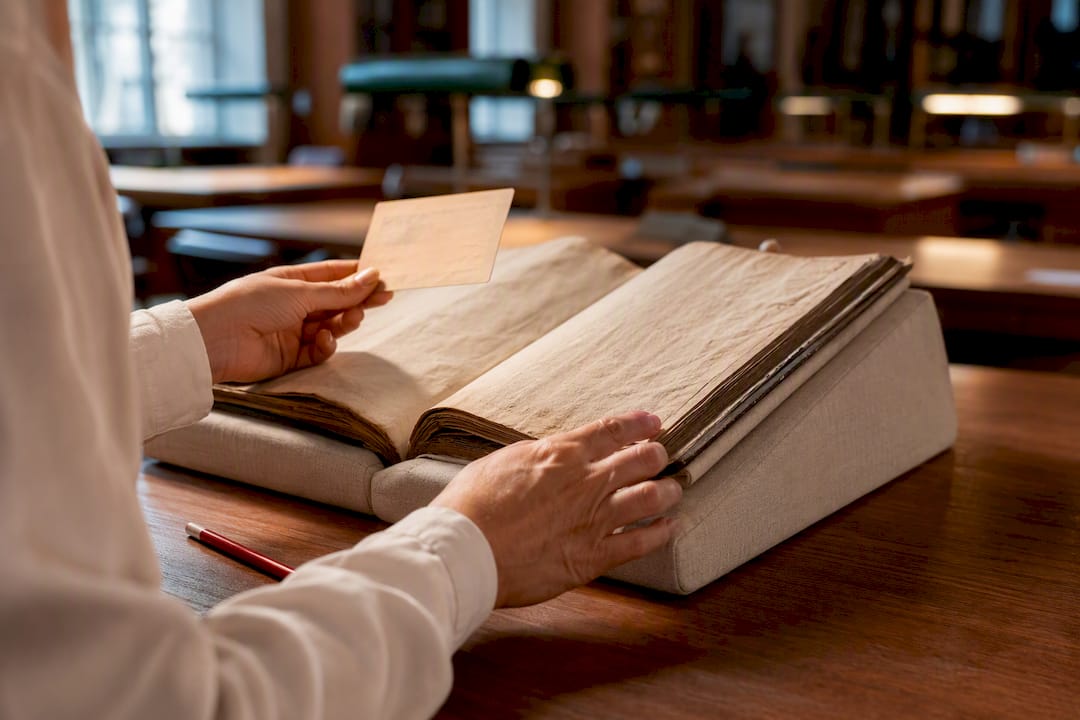
If the trail goes cold, a written archive query is worth the wait. State archives will often search a specific parish’s registers for a fee, and confirming the right parish before you fly saves an entire day of your trip.
When to go, how long to stay, and how to get there
Spring and early autumn are the strongest windows for a heritage trip to Poland. Archives and parish offices run to their normal opening hours outside the summer holiday period, rural roads are clear, and cemeteries are easier to walk without waist-high grass hiding the older stones.
A heritage trip to Poland is best treated as a project with a minimum viable length, not a flying day trip. Five to seven days gives you enough time for at least one substantial archive session plus the village visit itself, with a buffer day for anything that runs long, which it usually does. If you’re researching multiple branches of the family or villages in different regions, stretch that to two weeks.
- Fly into Warsaw or Kraków, then take rail or a hire car to the regional town nearest your ancestral village.
- Book archive appointments before booking flights, since state archives and parish offices typically require advance notice and turning up unannounced rarely works.
- Rent a car or arrange a private transfer for the final leg. Public transport in Poland is excellent between cities but thins out fast once you’re heading to a village of a few hundred people, where the bus might run twice a day.
- Build in a rest day between the archive work and the village visit; the emotional weight of both stages tends to catch up with people who try to do everything back to back.
A private transfer or chauffeur service often beats self-drive for the village leg specifically, not because Polish roads are difficult, but because a driver who knows the region can find an unmarked turning, wait while you’re in the cemetery for two hours, and get you to a parish appointment on time without you worrying about a hire car return deadline on the last day.
What you’ll find on arrival, and how to document it properly
Set your expectations correctly before you get there: the farmhouse is very likely gone. War, collectivisation, and simple rebuilding over a century have erased most of the physical structures your ancestors would have lived in. What tends to survive is the parish church, the cemetery, and the underlying street layout, which is why prioritising the church and cemetery makes far more sense than searching for a specific address.
- Go to the parish church first, even if it’s locked, and try to make contact with the priest or a caretaker rather than waiting for a scheduled appointment; rural parishes often respond better to a polite in-person introduction than a formal letter.
- Walk the cemetery systematically, not row by row at random. Take a full-shot photograph of each grave you think might be relevant, a close-up of the inscription, and a wider shot showing its position relative to the church or a landmark, so you can reconstruct the layout later.
- Talk to older residents if you can. Bring printed photographs; showing an old family picture to someone in their eighties often produces a name or a memory that no archive holds, because oral testimony from long-term residents fills gaps that written records simply don’t cover.
- Record GPS coordinates for every grave, building, or field you photograph. A phone’s camera app usually geotags automatically, but note it manually too in case you’re somewhere with poor signal.
- Keep a written log as you go, not a mental one. Note who you spoke to, what they said, and any name or lead that came up, even if it seems minor at the time.
Pro Tip: Bring a translation app loaded and tested before you leave Wi-Fi range. Google Translate’s conversation mode works reasonably well for simple exchanges with older villagers, but rural signal can be patchy, so download the Polish language pack for offline use in advance.
Converting names and dates into actual places and relationships is the whole point of the trip, and it only works when archive evidence is paired with on-site observation and oral testimony rather than relying on either alone.
Why a bilingual guide changes what you actually achieve
The single biggest difference between travellers who come home with real findings and those who come home with photographs of a nice village is language and local access. A bilingual guide doesn’t just translate; they get a parish priest to open the register cupboard on a Tuesday afternoon when you’d have been told to come back next week.
A good local guide handles the introductions that a foreigner struggles to make cold: explaining who you are, why you’re there, and why the priest or archivist should make time for you. They also shortcut the orientation phase inside an archive, because they know which reading room to ask for and which forms need filling in before you even sit down. For villages that sit well off the main road, they can also arrange local transport so a two-hour round trip doesn’t eat the whole day.
Before booking any heritage-tour provider, ask these questions:
- Do they have prior experience specifically with genealogy or heritage-focused itineraries, not just standard sightseeing?
- Do they have existing contacts at regional archives or parish offices, or will they be cold-calling on your behalf?
- What languages does the guide speak fluently, and will that guide be with you for the village visit itself?
- Can they show you a sample itinerary from a previous heritage trip?
- What are the cancellation and payment terms if an archive appointment falls through at short notice?
ComFort Tours Cracow is one example of a small-group operator offering this kind of tailored heritage service, built around bilingual guiding and private transport rather than a fixed sightseeing route. Commercial genealogy tours that combine archive research with village visits have become an established part of the Polish travel market, which tells you this isn’t a niche need. Plenty of people are doing exactly this.
A 7-day itinerary and checklist you can actually use
This isn’t the only way to structure a trip, but it’s a sensible default for someone working from one confirmed village and archive.
- Day 1: Arrive in Warsaw or Kraków, settle in, and use the afternoon for local orientation and a final check of your document pack.
- Day 2: Travel to the regional town nearest your archive and attend your first appointment; expect this to raise as many questions as it answers.
- Day 3: Visit the village itself. Church, cemetery, and conversations with residents if the opportunity arises.
- Days 4 to 5: Follow-up archive work based on what surfaced on Day 3, or a visit to a neighbouring village if your family history touches more than one place.
- Day 6: Spend time in the nearest larger town for cultural context, regional museums, and a slower pace after several intense days.
- Day 7: Wrap-up, organise your notes and photographs, and travel home.
Pack and prepare with this in mind:
- Photo identification and scanned copies of every family document you’re relying on, stored both on your phone and printed on paper.
- A dedicated camera or a phone with plenty of storage, plus a power bank, since rural areas can mean a long day between charging points.
- Offline maps downloaded in advance, because signal in small villages is patchy at best.
- A short Polish-language email template ready to send to parishes or archives requesting an appointment or record search.
A simple template for that email might read: “Dear Father [Name], I am researching my family history and believe my ancestors were baptised in your parish around [year]. Could I arrange a brief visit to view the parish registers, or would you be able to check for the surname [Surname]? I would be very grateful for any assistance.” Translate it into Polish before sending, and where the books remain in the parish rather than the state archive, a polite letter with a small donation offered and a return envelope enclosed often opens more doors than a phone call.
Staying safe and healthy on rural roads and country visits
Poland is a safe country to travel through, but rural areas call for the same common sense you’d apply to any countryside trip anywhere in Europe. Roads connecting small villages are often narrower and less well lit than main routes, so driving after dark in unfamiliar territory is worth avoiding where you can plan around it.
Mobile signal drops out in some rural pockets, particularly in wooded or hilly regions, so download offline maps and let someone know your rough plan for the day before you head into a village with no fixed schedule. Standard UK travel insurance covering EU travel is sufficient for most heritage trips, but check it explicitly covers activities like cemetery visits on uneven ground, since older graveyards are rarely flat or well maintained.
Pharmacies (apteka) are common even in modest towns and pharmacists usually speak some English or will use a translation app without fuss. Tap water is safe to drink across Poland. If you’re travelling in high summer, carry water and sun protection for cemetery visits, since headstones offer no shade and this work takes longer than people expect. Comfortable, closed footwear matters more than it sounds; overgrown cemetery paths and uneven village lanes are not the place for anything open-toed.
A guide’s-eye view of what these trips actually deliver
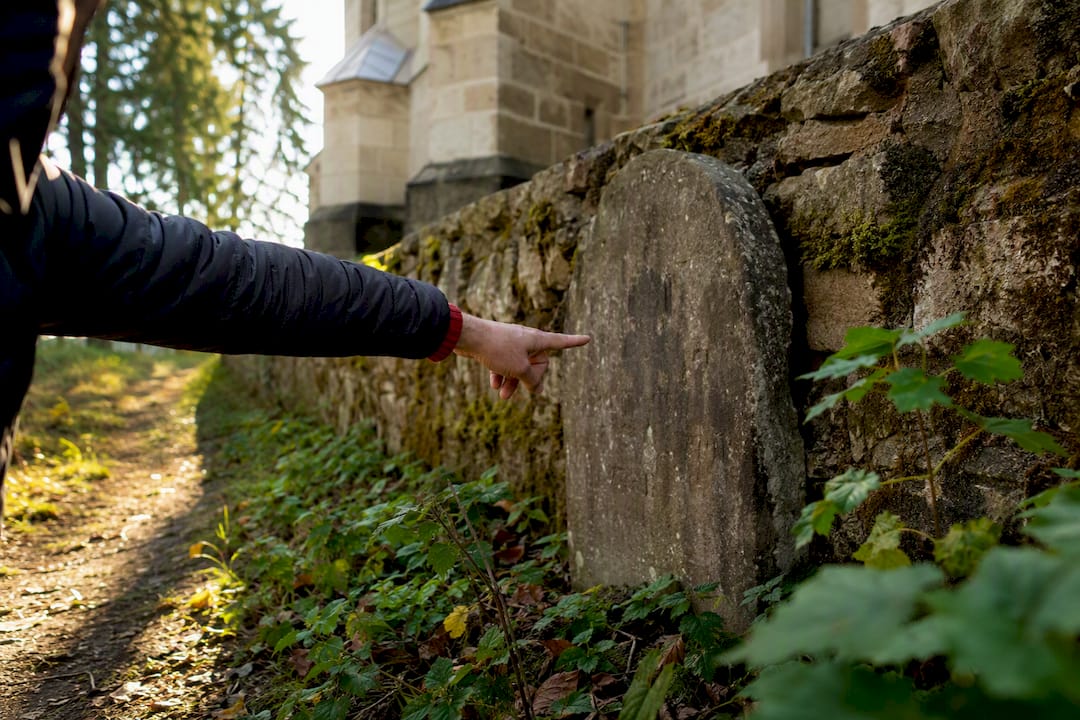
The families who get the most out of a heritage trip aren’t the ones with the most documents. They’re the ones willing to be patient with a locked church door and a cemetery that takes three hours longer than planned. One visit that stands out involved a family convinced their ancestral surname had died out in the village entirely, right up until an elderly resident recognised the name from a photograph and walked them to a headstone tucked behind the church wall that no online index had recorded.
That’s the pattern worth remembering. Archives give you names and dates. The village gives you context, faces, and the occasional discovery that no database will ever hold, which is why ComFort Tours Cracow treats heritage visits as a combination of research support and genuine on-the-ground fieldwork, not a scenic drive with a photo stop.
Three lessons worth carrying into your own trip: verify the village name before you book anything, expect the physical building to be gone and plan around the church and cemetery instead, and treat conversations with older residents as seriously as anything you find in an archive. The paperwork gets you to the right place. The people you meet there are what make the trip mean something.
— Damian Fort
Book the parts of this trip that actually need local help
There are ways to attempt all of this yourself, and plenty of determined people do. But the two hardest parts of a heritage trip, getting archives and parishes to actually respond, and reaching a village with no reliable public transport, are exactly where some small-group operators earn their keep by building tailored heritage itineraries with bilingual guides and private transport rather than generic sightseeing routes.
Book support through the Polish roots planning page and expect a bilingual guide, help sequencing your archive and parish contacts, and private transport arranged for the village leg of the journey specifically, since that’s usually the part self-drive travellers find hardest. If you need transport sorted separately, private driver services cover everything from airport pickup to the final rural stretch. Get in touch through the tour booking hub to talk through your specific village, region, and timeframe, and start building an itinerary around what you already know.
Where to go next for research and preparation
Keep these close as you plan: Szukaj w Archiwach for locating the holding archive, Geneteka for parish register indexes, the Słownik Geograficzny Królestwa Polskiego and Kartenmeister for historical place names, and the Polish Roots Project’s heritage trip guidance for broader planning context. For booking support once you’ve done the groundwork, ComFort Tours Cracow’s Polish roots page covers what a guided visit typically involves.
Sources
- How to plan a heritage trip to Poland | Polish Roots Project
- PolishOrigins. Genealogy, History and Cultural Tours. (TripAdvisor)
FAQ
What DNA do most people of Polish descent carry?
Polish ancestry is predominantly linked to Slavic genetic markers common across Central and Eastern Europe, though centuries of shifting borders mean many families also carry German, Lithuanian, Ukrainian, or Jewish ancestry depending on the specific region their family came from.
What is the most beautiful village to visit in Poland?
Beauty is subjective and depends heavily on the region, but many travellers single out villages in the Tatra foothills and the Kashubian Lake District for their scenery; your own ancestral village, whatever its size, will likely hold more meaning than any list-topping destination.
Where is the largest Polish community in London?
Ealing in West London has long been recognised as one of the most established centres of Polish community life in the capital, alongside significant populations in Hammersmith and Balham.
Why does the UK have such a large Polish immigrant population?
Large-scale Polish migration to the UK followed several distinct waves, including resettlement after the Second World War and a major surge after Poland joined the European Union, when free movement made relocating for work far easier.
How long should I budget for a trip to visit my ancestral village?
Five to seven days is generally the minimum for a meaningful heritage trip that combines archive work with the village visit itself; extend to around two weeks if you’re researching multiple family branches or villages across different regions.