

April through may and september through october are the best time to visit Krakow, giving travelers mild temperatures, manageable crowds, and a full calendar of cultural events. Wawel Castle and the Main Market Square are most enjoyable when you are not competing with summer tour groups for space. Krakow in winter has its own appeal, and Krakow in summer delivers long sunny days, but the shoulder seasons consistently offer the best balance. ComFort Tours Cracow, a Krakow-based tour organizer specializing in small-group experiences, sees the clearest demand for guided tours during these peak-value windows. This guide breaks down every season so you can match your trip to your priorities.
What is the best time to visit Krakow by season?
The shoulder seasons deliver the strongest overall experience. April, may, september, and october combine comfortable temperatures, lower hotel rates than peak summer, and cultural events that fill the city’s squares and courtyards without overwhelming them.
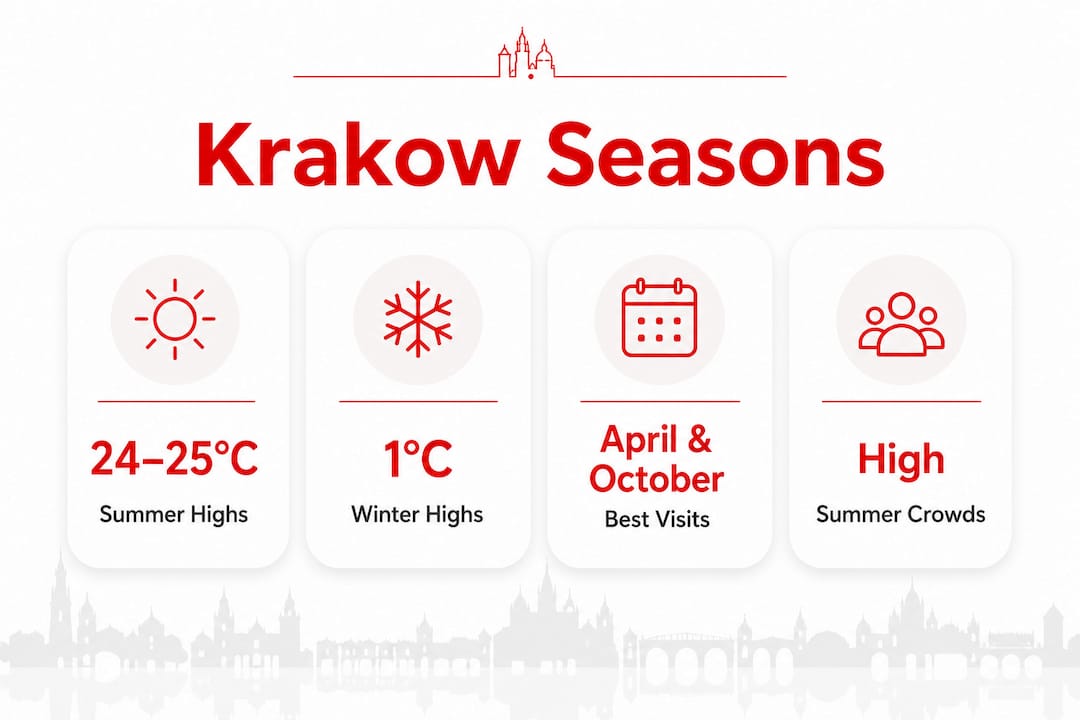
Summer (June through August) is the most popular window. Temperatures reach average highs of 24–25°C, terraces fill up, and the city pulses with energy. The trade-off is real: accommodation prices climb, queues at major sites grow long, and July brings heavy afternoon thunderstorms with rain on roughly 48% of days.

Winter (December through February) is the quietest and coldest period. January averages a high of just 1°C, and temperatures can drop to -10°C. The city’s Christmas market in December draws visitors back into the cold, but overall winter visit quality scores very low due to limited daylight and harsh conditions.
Spring and autumn sit in the sweet spot. Flowers bloom across the Planty gardens in april, and the city’s chestnut trees turn gold in october. Neither season demands the advance planning that summer requires, though weekday travel still beats weekend crowds.
How does Krakow’s weather vary throughout the year?
Krakow’s climate follows a classic Central European pattern: cold winters, warm summers, and pleasant transitions in spring and autumn. The city sits in a valley, which traps cold air in winter and heat in summer, so temperature swings feel more pronounced than the latitude alone would suggest.
June and august score 8.5 out of 10 for visit quality, with 13.2 hours of sunshine per day and moderate rain on about 37% of days. That score reflects genuinely good weather, not just warm temperatures. May and september score nearly as high while carrying fewer crowds.
| Month | Avg High (°C) | Rain Days | Sunshine Hours | Visit Score |
|---|---|---|---|---|
| January | 1 | Low | Short | 0.8/10 |
| April | 14 | Moderate | Growing | High |
| June | 24 | 37% days | 13.2 hrs | 8.5/10 |
| July | 25 | 48% days | Long | High/Wet |
| August | 24 | 37% days | 13.2 hrs | 8.5/10 |
| October | 13 | Moderate | Shortening | High |
| December | 2 | Low-Mod | Very Short | Low |
July is the warmest month but also the wettest. Afternoon thunderstorms arrive fast and leave fast, so morning sightseeing stays dry most days. Pack a compact rain jacket and plan outdoor walks before noon.
Pro Tip: Schedule Wawel Hill and the Main Market Square for mornings in july and august. By 2:00 PM, afternoon storms are most likely, and you can retreat to a milk bar or a café in the Old Town until skies clear.
When are crowds heaviest, and how does that affect your trip?
Summer is Krakow’s high season, and the difference in crowd density compared to shoulder months is significant. Wawel Castle, the Wieliczka Salt Mine, and the Auschwitz-Birkenau memorial all see their longest queues between june and august. Same-day entry at these sites is often unavailable in peak months.
Booking tours 2–3 months ahead is necessary for summer and december travel. For major festivals, 4+ months of lead time is the safer target. This is not a casual suggestion. Travelers who arrive in july expecting to walk up to the Wieliczka Salt Mine ticket desk frequently leave disappointed.
Shoulder season travel removes most of that pressure. April, may, september, and october allow weekday travelers to complete a 3-day itinerary efficiently, with shorter queues and more breathing room at popular sites. The Main Market Square feels like a local gathering place rather than a transit hub.
Winter is the least crowded period outside of the december Christmas market rush. January and february offer near-empty streets in the Old Town, which suits travelers who prioritize atmosphere over sunshine. Hotel rates drop noticeably, and restaurant reservations are rarely needed.
Pro Tip: If you visit in shoulder season, travel Tuesday through Thursday. Weekend visitors from Warsaw and other Polish cities fill Krakow’s Old Town even in april and october, pushing crowds closer to summer levels on Friday and Saturday evenings.
What unique events and experiences define each season?
Krakow’s cultural calendar is one of its strongest arguments for timing your trip carefully. Each season offers something the others cannot replicate.
Winter: Christmas markets and Old Town atmosphere
December transforms the Main Market Square into one of Central Europe’s most atmospheric Christmas markets. Wooden stalls sell oscypek (smoked sheep’s cheese), mulled wine, and handmade crafts against the backdrop of St. Mary’s Basilica. The market runs through late december and draws visitors who accept the cold as part of the charm.
Summer: festivals and long days
The Jewish Culture Festival takes place in late june and early july in the Kazimierz district. It is one of Europe’s largest events celebrating Jewish heritage, with concerts, workshops, and open-air performances filling the neighborhood’s squares and synagogues. The festival draws international visitors and gives the already vibrant Kazimierz a distinct energy.
Long summer days also make evening walks along the Vistula River genuinely pleasant. Outdoor bars and food stalls line the riverbank, and the city stays light until nearly 9:00 PM.
Spring and autumn: nature and local pace
Spring brings the Planty gardens to life with cherry blossoms and tulips in april. Autumn delivers golden foliage and the smell of roasting chestnuts from street vendors in october. Both seasons suit visits to nearby sites without the summer rush.
The Wieliczka Salt Mine, a UNESCO World Heritage site just 14 kilometers from Krakow, is worth visiting in any season since it maintains a constant underground temperature of 14°C year-round. Shoulder season visits mean shorter waits and more time with your guide. The Auschwitz-Birkenau memorial is equally accessible in spring and autumn, and the planning process for Auschwitz visits is simpler when demand is lower.
How to plan your Krakow trip based on your season and priorities
Your season shapes more than just what you pack. It determines where to stay, how far ahead to book, and which parts of the city to prioritize.
Summer visitors
Stay in Kazimierz or Podgórze if you want a neighborhood feel with easy access to riverside bars and the Jewish Culture Festival. The Old Town is convenient but noisier and pricier in peak months. Book guided tours for Auschwitz and the Salt Mine at least 2–3 months before arrival. Same-day bookings at peak season attractions are rarely available.
Winter travelers
The Old Town is the right base for december and January visits. Compact routes between warm indoor stops, including the Cloth Hall, St. Mary’s Basilica, and the many cafés on Floriańska Street, make the cold manageable. Winter visits work best when you plan outdoor walks during the short daylight window (roughly 8:00 AM to 4:00 PM) and treat indoor stops as part of the itinerary rather than interruptions.
Comforttours offers apartment accommodations in the city center that suit winter travelers who want a warm base close to the Old Town’s main attractions.
Shoulder season travelers
April, may, september, and october reward flexible travelers. Book accommodations 4–6 weeks ahead rather than months in advance. Prioritize outdoor sites like Wawel Hill and the Planty gardens during the day, and save museums for any rainy afternoon. Weekday travel, as noted, consistently beats weekend crowds even in shoulder months.
| Season | Best For | Main Challenge | Booking Lead Time |
|---|---|---|---|
| Spring (Apr–May) | Mild weather, fewer crowds | Unpredictable rain | 4–6 weeks |
| Summer (Jun–Aug) | Festivals, long days | Crowds, higher prices | 2–3 months |
| Autumn (Sep–Oct) | Foliage, local pace | Shortening days | 4–6 weeks |
| Winter (Dec–Feb) | Christmas market, low prices | Cold, limited daylight | 2–4 weeks |
Pro Tip: September is arguably the single best month for first-time visitors. Summer crowds thin out after the first week, temperatures stay comfortable in the low-to-mid 20s°C, and the city’s cultural calendar remains active through the end of the month.
Key Takeaways
The shoulder seasons of april through may and september through october offer the strongest overall Krakow experience, combining good weather, manageable crowds, and a rich cultural calendar.
| Point | Details |
|---|---|
| Best overall months | April, May, September, and October balance weather, crowds, and cultural events. |
| Summer booking rule | Reserve tours for Auschwitz and the Salt Mine at least 2–3 months ahead in peak season. |
| Winter strategy | Plan outdoor walks during daylight hours and build indoor warm-up stops into your route. |
| Neighborhood choice | Stay in Kazimierz in summer and the Old Town in winter for the best mobility and comfort. |
| September advantage | September combines thinning summer crowds with warm temperatures, making it ideal for first-time visitors. |
My honest read on when Krakow actually rewards you
I have seen travelers arrive in july with a packed itinerary and spend half their first day standing in queues. I have also seen visitors dismiss december as too cold, only to find the Christmas market on the Main Market Square genuinely moving in a way that no summer festival matches.
The data points toward shoulder seasons, and the data is right. But the more useful insight is this: Krakow does not have a bad season. It has seasons that punish poor planning. Summer without advance bookings is frustrating. Winter without a daylight-aware itinerary feels bleak. Shoulder seasons are forgiving precisely because the margin for error is wider.
What I tell travelers who ask me directly: if you have flexibility, choose september. The light is golden, the crowds are thinning, and the city is still fully alive. If you have no flexibility and must go in july, book everything before you pack a bag. If december is your only window, lean into the winter atmosphere rather than fighting it. Krakow in the snow, with mulled wine in hand and St. Mary’s Basilica lit up at dusk, is one of the genuinely underrated travel experiences in Central Europe.
The travelers who leave Krakow disappointed are almost always the ones who arrived with summer expectations in the wrong season. Match your expectations to the season, plan accordingly, and the city delivers every time.
— Damian Fort
Krakow tours worth booking, whatever the season
Timing your visit well is only half the equation. Getting the most from Krakow’s major sites requires a guide who knows the stories behind the stones.
ComFort Tours Cracow organizes small-group and private tours across Krakow and its surroundings, covering the Wieliczka Salt Mine, Auschwitz-Birkenau, and the city’s Old Town and Kazimierz district. Small group sizes mean you spend your time listening to history, not straining to hear over a crowd. Whether you are visiting in the golden light of october or the crisp air of april, the full tour catalog covers every season and interest. Shoulder season travelers especially benefit from booking early, since popular dates fill faster than most visitors expect.
FAQ
When is the cheapest time to visit Krakow?
January and february offer the lowest accommodation prices and the fewest crowds. The trade-off is cold temperatures and limited daylight, so budget travelers should plan indoor-heavy itineraries.
Is Krakow worth visiting in winter?
Yes, particularly in december for the Christmas market on the Main Market Square. January and february suit travelers who want low prices and an uncrowded Old Town, provided they plan around the short daylight window.
How far ahead should I book Auschwitz tours?
Book at least 2–3 months in advance for summer visits. Same-day availability at Auschwitz-Birkenau is rarely possible in peak season, and shoulder season slots also fill quickly for guided tours.
What is the weather like in Krakow in summer?
June and august are the most comfortable summer months, with average highs of 24–25°C and about 13.2 hours of sunshine per day. July is the warmest but also the wettest, with afternoon thunderstorms on roughly 48% of days.
Is september a good month to visit Krakow?
September is one of the best months to visit. Summer crowds thin after the first week, temperatures remain warm, and the city’s cultural calendar stays active, making it ideal for first-time visitors.