

If you want the unscripted, local connection that Airbnb Experiences used to offer, choose a local-first marketplace. If you want scale, predictable logistics, and thousands of reviews to lean on, choose a large aggregator. Those two goals rarely live on the same platform.
Here is the short version of what actually works:
- Local-resident marketplaces (e.g., Lokafy, WithLocals): best for one-on-one time with someone who actually lives there. No script, no group, no rehearsed route.
- Large tour aggregators (e.g., GetYourGuide, Viator): best for popular destinations where you want reliability, volume of reviews, and professionally run logistics.
- Asia-focused booking platforms (e.g., Klook): best for Southeast and East Asia, where local pricing and attraction bundling are hard to beat.
- Museum and ticket specialists (e.g., Tiqets): best when your priority is skip-the-line access at major venues, not human interaction.
- Direct local operators (e.g., Comforttours for Krakow): best when a destination has specific heritage, logistics, or language complexity that a global marketplace handles poorly.
Before you pick a platform, ask yourself one question: Do you want a local resident who will improvise the afternoon based on your curiosity, or a licensed operator who will run a polished, time-tested experience? That single answer narrows the field faster than any feature comparison.
Table of Contents
- What are the real Airbnb Experiences alternatives and how do they work?
- How do these platforms compare at a glance?
- How do you choose the right platform before you book?
- What does booking actually cost and how does the process work?
- Why are travelers moving away from mass-market experience platforms?
- Which specific platforms should you actually consider?
- How do user reviews and ratings actually compare across platforms?
- How does customer support compare across platform types?
- Which platforms have the best mobile apps?
- What do platforms say about safety and insurance coverage?
- Key Takeaways
- What I actually look for when choosing an experience
- Comforttours: a local operator built for Krakow’s complexity
- Useful sources and further reading
What are the real Airbnb Experiences alternatives and how do they work?
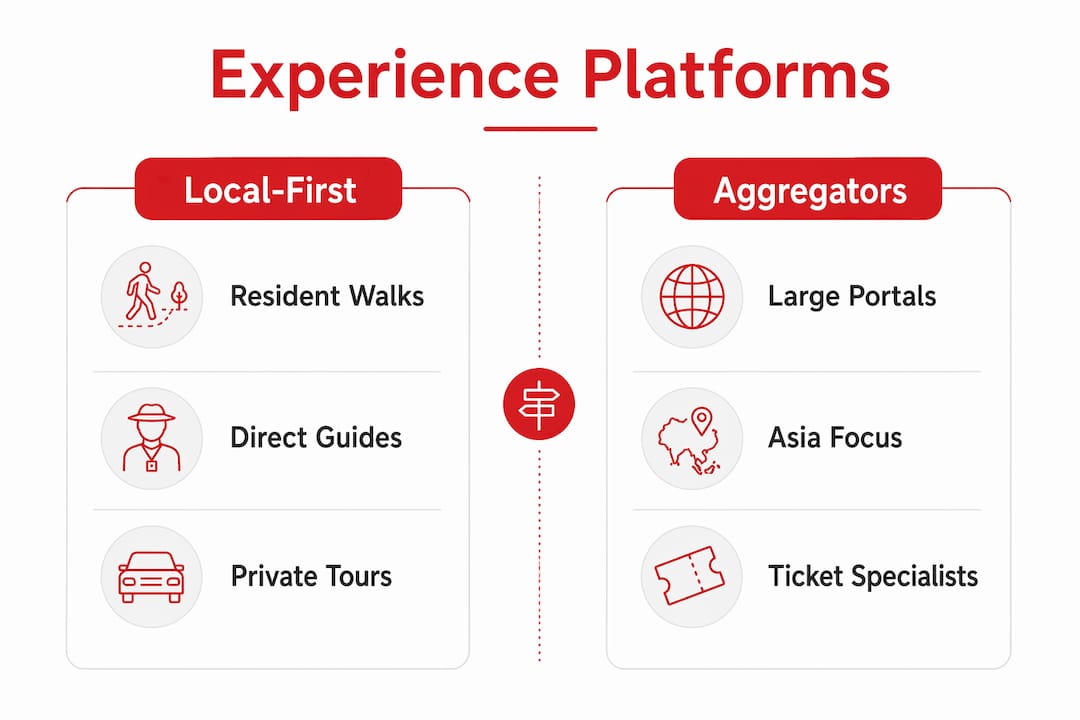
The market for alternative travel experiences breaks into five distinct categories. Each one is built around a different idea of what a “good” experience means.
Local-resident marketplaces
These connect you directly with people who live in the city, not professional guides. The walk is unscripted. The conversation goes wherever it goes. Lokafy is the clearest example: you tell your local what you are curious about, and they take it from there. WithLocals operates on a similar model, always private, always tailored, and certified as a B Corp for its commitment to fair pay for hosts.

Strengths: Genuine conversation, flexible itinerary, often covers cities that professional tour infrastructure ignores.
Weaknesses: Quality depends heavily on the individual host. Less predictable than a polished operator. Fewer reviews to vet.
Booking style: Usually involves pre-booking chat with the host. That conversation is itself a quality signal — if a host responds thoughtfully before you pay, the experience tends to follow.
Large tour aggregators
GetYourGuide and Viator dominate this category. Both aggregate professional operators across thousands of destinations. The inventory is enormous, the review volume is high, and the booking flow is clean. Viator, owned by TripAdvisor, has a slightly broader catalog and is stronger on day trips and multi-day excursions. GetYourGuide tends to have a cleaner booking experience with strong European city coverage.

Strengths: Reliable, well-reviewed, professionally run. Good for families and first-time visitors.
Weaknesses: Experiences are standardized by design. You are booking a product built to run smoothly for many different kinds of travelers — personal connection is not the point.
Pro Tip: On large aggregators, filter by “small group” and look for listings where the operator responds to review comments personally. That is a stronger signal of care than star rating alone.
Asia-focused platforms
Klook is the clear winner in Southeast and East Asia for price, coverage, and convenience on attractions and logistics. It is less useful outside that region.
Museum and ticket specialists
Tiqets specializes in skip-the-line museum and attraction tickets. Now owned by Expedia, it operates in over 60 countries and covers landmarks like the Sagrada Familia, the Vatican Museums, and the Rijksmuseum. Practical for logistics, not designed for human interaction.
Direct local operators
For destinations with specific heritage complexity, local operators often handle logistics that large marketplaces simply do not coordinate: private transfers, timed entry windows, language-matched guides, and permits. Local operators who manage their own booking tend to offer a more tailored experience than anything a global platform can slot you into. For heritage sites in particular, practitioners note that local providers can coordinate transfers and special permits that large aggregators typically do not handle end-to-end.
How do these platforms compare at a glance?
| Best for | Price / refund shape | Host type | Coverage strength | Booking flexibility | Group size |
|---|---|---|---|---|---|
| Authenticity seekers, solo travelers | Low to mid; flexible cancellation common | Local residents, non-professional | Strong in underserved cities | Pre-booking chat standard | Private only |
| Families, first-timers at popular destinations | Mid to high; operator-set, varies by listing | Licensed professional operators | Global, strongest in Europe and US | Limited host messaging | Group default; private at premium |
| Asia travelers, attraction bundlers | Low to mid; platform-managed refunds | Licensed operators, attraction partners | Southeast and East Asia | App-based, limited direct chat | Group default |
| Museum and landmark visitors | Low to mid; generally flexible | Attraction operators, venue partners | 60+ countries, major landmarks | Ticket-only, no host interaction | N/A (ticket access) |
| Heritage and logistics-heavy destinations | Operator-set; direct booking | Locally licensed guides, small operators | Regional depth, not global breadth | Direct communication, high flexibility | Small group and private |
Reading this table: the two dimensions that most consistently drive satisfaction are host type and booking flexibility. Travelers who want a personal experience and end up on a platform with no pre-booking messaging almost always report feeling like they were processed, not hosted. Conversely, travelers who want predictability and book a local-resident walk sometimes find the lack of structure frustrating. Match the column to your actual goal before you look at price.
- If authenticity is the priority, weight host type and booking flexibility above price.
- If logistics matter most (transport, timed entry, licensed guide requirements), weight coverage and host type toward professional operators.
- Private options are rarely the default on large aggregators — expect to pay a meaningful premium for them.
How do you choose the right platform before you book?
The one-sentence rule: book on a platform where you can message the host before paying, and where the host’s profile includes verifiable identity or licensing information. Industry commentators consistently flag pre-booking chat as the highest-confidence signal that an experience will actually be tailored to you.
From there, work through these criteria:
- Host verification: Does the platform show ID verification, licensing badges, or operator credentials? Local-resident platforms should show community verification at minimum. Licensed-guide platforms should show credentials.
- Messaging before booking: Can you contact the host before committing? If the answer is no, treat that as a red flag.
- Cancellation and refund terms: Look for free cancellation up to 24 or 48 hours before the experience. Read the fine print — some platforms show “flexible” at the listing level but apply stricter rules at checkout.
- Insurance and safety information: Reputable platforms disclose whether operators carry liability insurance. If that information is absent, ask directly.
- Private vs. group options: Know which you want before you search. Private options on large aggregators carry a significant price premium; on local-resident platforms, private is usually the default.
- Language support: Confirm the guide speaks your language at the level you need, not just “basic English.”
- Payment security: Look for HTTPS checkout, recognized payment processors (Stripe, PayPal, major card networks), and a clear booking confirmation email.
Questions to message the host before booking:
- “What is the maximum group size for this experience?”
- “Can we adjust the itinerary based on our interests?”
- “What happens if we need to cancel within 48 hours?”
- “Do you handle transport to the starting point, or is that on us?”
- “Can you share a sample itinerary or recent photos from the experience?”
Red flags to walk away from: no messaging option, no ID or license verification, no reviews in the past six months, pricing that changes between the listing and checkout, and any host who cannot answer basic logistics questions before you pay.
Pro Tip: Ask for a sample itinerary or recent photos from a past group. A host who can produce either within a day is almost certainly running a real, active experience. One who deflects or sends a generic brochure probably is not.
What does booking actually cost and how does the process work?
Across both platform categories, the booking flow looks similar from the outside: search, select, pay, receive confirmation. The practical differences show up in timing, fees, and what happens when something goes wrong.
Lead times:
- Local-resident platforms: book at least 48–72 hours ahead. Many hosts have day jobs. Last-minute requests often go unanswered.
- Large aggregators: same-day booking is often possible for popular experiences, but private options and heritage-site tours with timed entry typically need 3–7 days.
- Direct local operators: for heritage sites with permit requirements or private transport, book 5–10 days in advance and confirm logistics in writing.
Fees and pricing:
- Large aggregators typically charge operators a commission (often in the 20–30% range, though exact rates are not publicly listed for most platforms). That cost is usually baked into the listing price you see.
- Local-resident platforms tend to have lower absolute prices because hosts are not running a tour business and platform fees are often lower.
- Common extra costs to budget for: entrance fees (not always included), private transport, gratuities, and equipment where relevant.
Cancellation norms:
- Free cancellation up to 24 hours is the most common policy on large aggregators.
- Local-resident platforms vary widely — always read the individual listing.
- For private bookings with a local operator, cancellation terms are usually set by the operator directly. Get them in writing before you pay.
Payment security checklist:
- HTTPS on the checkout page
- Recognized payment processor (Stripe, PayPal, major card networks)
- Booking confirmation email with full details
- Screenshot or PDF of the cancellation policy as it appeared at booking
Save before departure: booking confirmation, host contact details, meeting point address, cancellation policy, and any permit or entry ticket the operator sends separately.
Why are travelers moving away from mass-market experience platforms?
The primary shift is toward direct-to-guide and local-first models, driven by two things: a desire for authenticity that mass-market platforms structurally cannot deliver, and growing awareness that local-first bookings keep more money in local economies.
Sustainable-travel researchers argue that choosing local-specialist providers directs a larger share of tourist spending to local communities, reducing the economic harm that overtourism concentrates in popular destinations. That is not just an ethical argument. Travelers who book local-first consistently report more memorable experiences, partly because the host has a genuine stake in the place they are showing you.
Experienced operators also point out that popularity on mass-market platforms often reflects platform algorithm incentives more than on-the-ground quality. A listing with 2,000 reviews is not necessarily better than one with 80 — it may simply have been on the platform longer and benefited from early algorithmic placement. Looking for operator-managed booking and direct host communication increases the chance of a genuinely personalized experience.
Which specific platforms should you actually consider?
These are the platforms the SERP consensus consistently surfaces, each with a clear use case.
GetYourGuide is one of the largest tours and activities platforms globally, with listings across thousands of destinations. The booking process is clean, review volume is high, and it performs particularly well in European cities. Best for families and first-time visitors who want reliability over intimacy.
Viator, owned by TripAdvisor, runs on a similar model with a broader catalog and deep integration with TripAdvisor’s review ecosystem. It excels at day trips, multi-hour excursions, and experiences that require licensed guides by law. The practical difference between Viator and GetYourGuide is small for most travelers.
Klook is the dominant platform in Southeast and East Asia for price, coverage, and attraction bundling. Outside that region, its inventory thins considerably.
Tiqets is the go-to for skip-the-line museum and attraction tickets. It operates in over 60 countries and covers major landmarks with generally flexible cancellation policies. Not designed for human connection — purely a logistics tool.
Lokafy connects travelers with residents for private, unscripted city walks. No fixed itinerary, no group. The conversation starts before you arrive, which is the point. Particularly strong for solo travelers and for cities that larger platforms underserve.
ToursByLocals matches travelers with vetted, locally based guides for private tours. Guides are independent professionals, not residents in the Lokafy sense, but the private format and direct communication make it a strong middle ground between full authenticity and professional reliability.
WithLocals operates on a fully private model: every experience is just you and your host. It is B Corp certified, which means its commitment to fair host pay is externally verified, not just marketing copy.
How do user reviews and ratings actually compare across platforms?
Review volume and review quality are different things. GetYourGuide and Viator have the highest raw review counts, which makes it easier to spot outliers and get a reliable read on consistency. The trade-off is that high-volume platforms also attract more templated, low-information reviews (“great guide, highly recommend!”) that do not tell you much.
Local-resident platforms like Lokafy and WithLocals have lower review counts but tend to produce more specific, narrative reviews because the experiences themselves are more personal. A review that describes a specific conversation or an unexpected detour tells you far more than a five-star rating with no text.
What to look for when reading reviews:
- Recent reviews (within the last three months) matter more than overall rating.
- Look for reviews that mention the guide by name and describe specific moments.
- Check how the operator responds to negative reviews. A thoughtful, non-defensive response is a strong trust signal.
- On large aggregators, filter by your travel group type (solo, couple, family) to find reviews from travelers in a similar situation.
How does customer support compare across platform types?
Large aggregators generally offer 24/7 customer support via chat or email, with dedicated teams for booking issues, refunds, and last-minute cancellations. Response times vary, but the infrastructure exists. GetYourGuide and Viator both have established support channels with documented refund processes.
Local-resident platforms typically route support through the platform’s team for payment and refund issues, but the host relationship itself is the primary support channel for experience-related questions. That works well when the host is responsive; it creates friction when they are not.
Direct local operators handle support personally. That means faster, more human responses for most issues, and a single point of contact for logistics, changes, and questions. The downside is that there is no platform intermediary if something goes seriously wrong.
Which platforms have the best mobile apps?
GetYourGuide and Viator both have polished, well-maintained iOS and Android apps with full booking functionality, offline ticket access, and push notifications for booking confirmations. Klook’s app is particularly strong for Asia-based bookings, with in-app chat and real-time availability updates.
Tiqets delivers mobile tickets directly to your phone, which is its core value proposition. The app is functional and straightforward.
Lokafy and WithLocals are primarily web-based, though both are mobile-optimized. The Locali.Guide app offers in-app chat with verified local guides and is available on iOS and Android, which gives it an edge for travelers who want everything in one place on their phone.
What do platforms say about safety and insurance coverage?
Large aggregators require operators to meet minimum safety and licensing standards before listing, though the specifics vary by destination and activity type. GetYourGuide and Viator both have operator vetting processes, but they do not universally guarantee that every listed operator carries liability insurance. Check the individual listing and ask the operator directly if insurance coverage matters for your activity.
Local-resident platforms occupy a grayer area. Hosts are not professional operators, so traditional operator liability insurance does not apply in the same way. Platforms like WithLocals address this through their B Corp certification and community standards, but travelers should read each platform’s terms carefully before booking high-risk activities.
Direct local operators who handle heritage sites, adventure activities, or private transport should be able to confirm their insurance and licensing on request. Any operator who cannot or will not answer that question directly is worth reconsidering.
Key Takeaways
The strongest predictor of a great experience is not the platform’s star rating — it is whether you can talk to the host before you pay.
| Point | Details |
|---|---|
| Local-first for authenticity | Choose a local-resident marketplace when genuine connection and an unscripted experience matter more than predictability. |
| Aggregators for reliability | GetYourGuide and Viator are the right call when you want scale, high review volume, and professionally run logistics at popular destinations. |
| Pre-booking chat is the key signal | Platforms that allow messaging before booking consistently produce more tailored, satisfying experiences. |
| Local operators for complex heritage trips | For destinations with permit requirements, timed entry, or language complexity, a direct local operator handles logistics that global platforms typically do not. |
| Comforttours for Krakow | For Krakow-area heritage and local experiences, Comforttours offers small-group and private tours with direct booking and multi-language guides. |
What I actually look for when choosing an experience
My bottom-line rule: if I cannot message the host before booking, I do not book.
That one filter eliminates most of the experiences that disappoint. A host who responds quickly, answers specific questions, and adjusts the plan based on what I tell them I care about is almost always worth booking. One who sends a copy-paste reply or cannot answer a basic logistics question is telling me exactly what the experience will feel like.
When I am evaluating a platform or a specific listing, I run through a short checklist:
- Can I message the host directly before paying?
- Does the host profile show verifiable credentials or community verification?
- Are there recent reviews (last 90 days) that describe specific moments, not just a star rating?
- Is the cancellation policy clearly stated at the listing level, not buried in the platform’s terms?
- For heritage sites: does the operator confirm they handle transport, timed entry, and language support?
Comforttours earned the Tripadvisor Travelers’ Choice Award 2024, which matters to me less as a badge and more as evidence that real travelers, not algorithm-boosted listings, consistently rated the experience worth recommending. For Krakow specifically, where the history is dense and the logistics around sites like Auschwitz-Birkenau require careful handling, a locally run operator with that track record is a different proposition than a global marketplace slot.
If you are planning a heritage tour in the Krakow area, the top Auschwitz tour providers roundup is worth reading before you decide where to book.
Comforttours: a local operator built for Krakow’s complexity
Most global platforms will show you Krakow. Comforttours will show you what Krakow actually means.
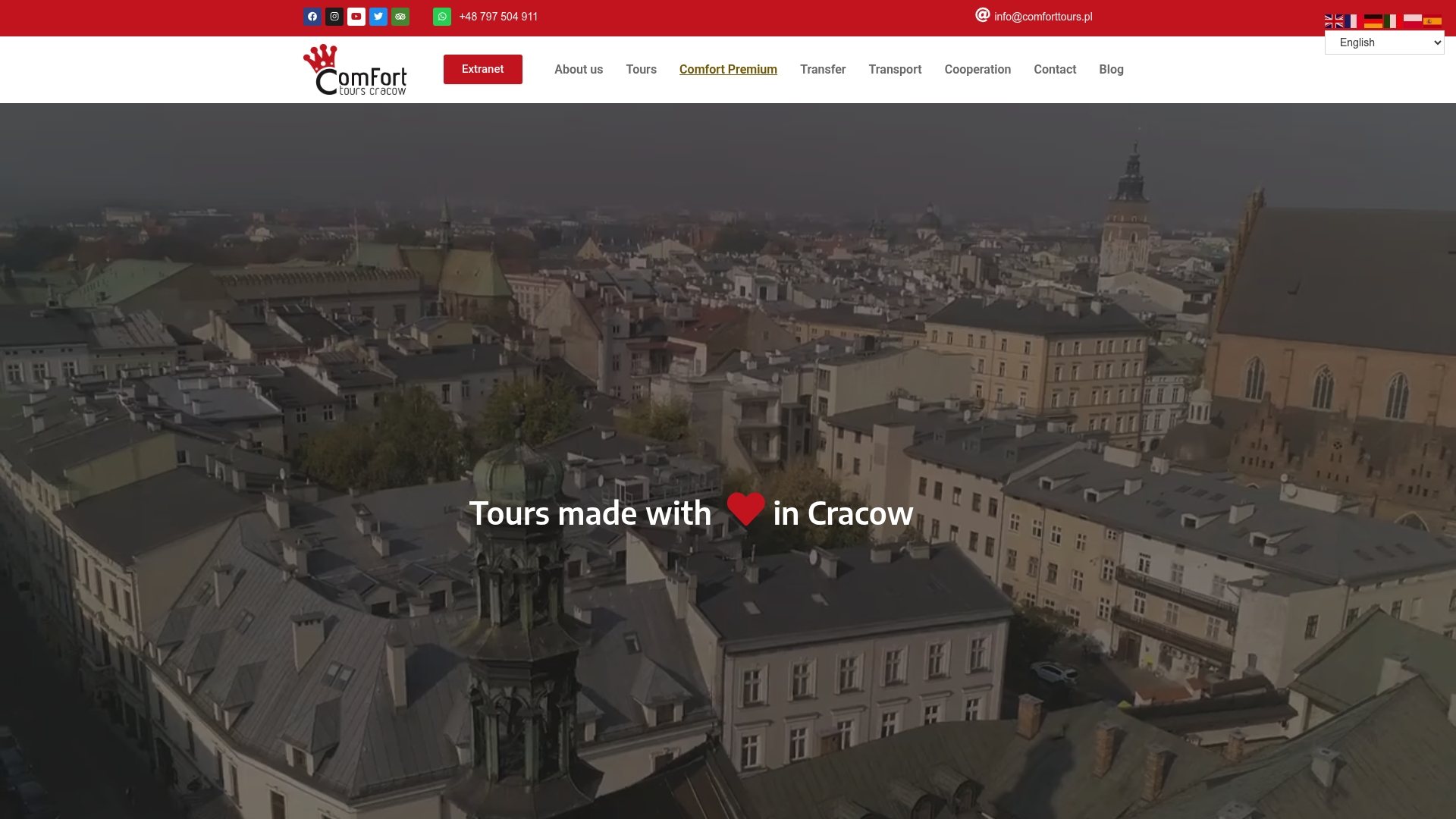
For travelers coming from this article, the distinction is concrete: Comforttours runs small-group and private tours with multi-language guides, handles private transport to Auschwitz-Birkenau and the Wieliczka Salt Mine, and builds itineraries around what you actually want to see, not what fits a 90-minute slot. There is no group of 40 strangers. There is no script that runs the same way for the fourth time that week.
That is the gap that global aggregators leave open, and it is exactly what a direct local operator fills. If you are planning a trip to Krakow and want an experience that handles the logistics, the language, and the history with the care those sites deserve, browse the full tour list and book directly.
Useful sources and further reading
- GuideAtlas — experiences market commentary: Analysis of the shift toward direct-to-guide models and why pre-booking communication matters.
- TravlinMad — overtourism and alternative travel: Research on the economic and ethical case for local-first bookings.
- Mentawai Immersion — logistics for immersive travel: Practitioner notes on why local operators outperform aggregators for heritage and off-grid experiences.
- Comforttours — full tour listings and direct booking: Private and small-group Krakow tours with direct booking and multi-language guides.
- Comforttours — street art walking tour: Example of a themed private walk that illustrates what a locally run, curated experience looks like in practice.
- Comforttours — Tripadvisor Travelers’ Choice 2024: External recognition useful for vetting the operator before booking.