
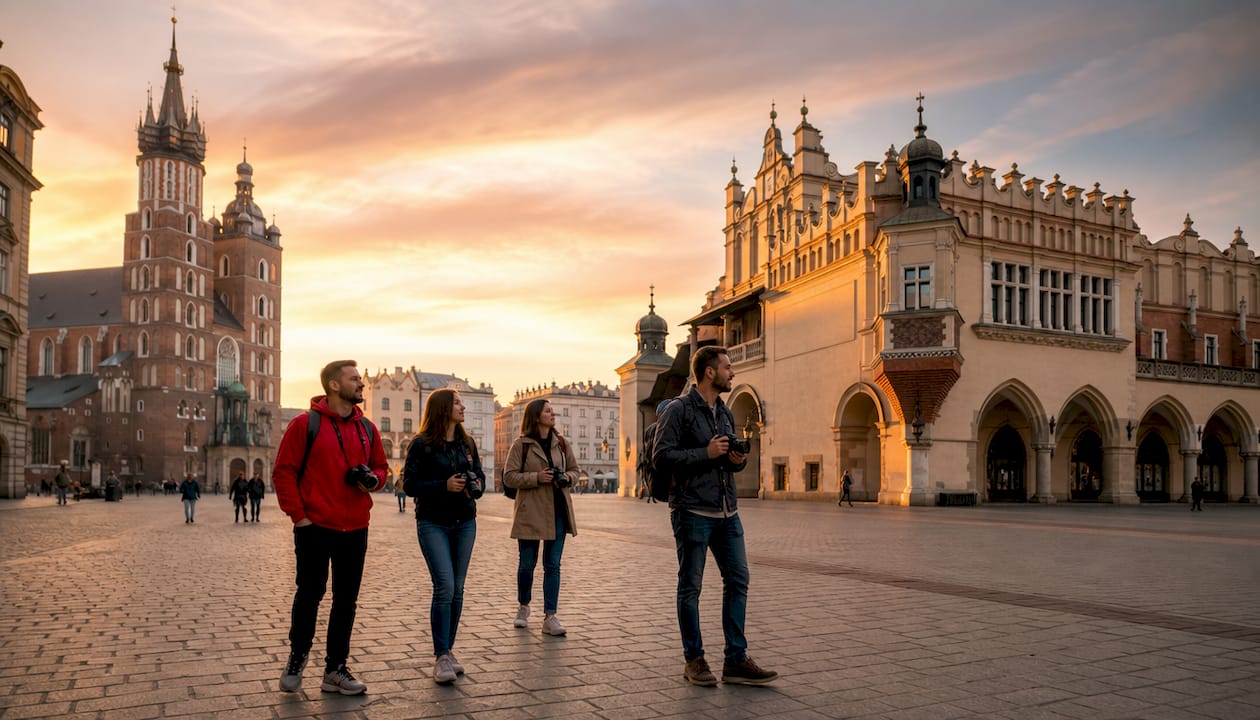
Three days in Krakow is the ideal window to experience the city’s medieval core, Jewish heritage, and two of Poland’s most significant UNESCO World Heritage sites without feeling rushed. A well-structured Krakow 3 day itinerary covers the Old Town and Wawel Castle on day one, Kazimierz and Podgórze on day two, and a focused day trip on day three. The key is giving each day a distinct theme rather than cramming every landmark into a single exhausting loop. Plan your transport and book key tickets before you arrive. That single habit separates a great trip from a frustrating one.
What does a Krakow 3 day itinerary look like?
The most effective structure treats each day as its own story. Day 1 anchors you in history, Day 2 immerses you in neighborhood culture, and Day 3 takes you beyond the city limits. This approach avoids the checklist mentality that leaves travelers exhausted and underwhelmed. A typical mid-range budget for three days runs 800–1,200 PLN per person, covering accommodation, meals, and entry fees to major attractions like Wawel Castle and the Wieliczka Salt Mine. That figure gives you a realistic baseline for planning without surprises.
Day 1: Old Town and Wawel Castle
Start at Main Market Square
Arrive at Main Market Square early to catch the city before the crowds arrive. The square is one of the largest medieval market squares in Europe, and the morning light on St. Mary’s Basilica is genuinely striking. The Basilica opens at 11:30 AM for tourists on weekdays, so time your arrival to be there right at opening. Climbing the Town Hall Tower gives you a panoramic view of the entire square and sets the spatial logic of the city in your mind.
After the Basilica, walk south along the Royal Road toward Wawel Hill. This route passes through the heart of the Old Town and takes about 15 minutes on foot. The walk itself is the experience. Stop at the Planty Park ring, a green belt that replaced the old city walls, and use it to decompress between sights.
Wawel Castle and Cathedral
Wawel Castle’s State Rooms, Crown Treasury, Cathedral, and Dragon’s Den give you a full afternoon of Polish royal history. Pick one or two interior exhibits rather than trying to see everything. The Crown Treasury and State Rooms together take about two hours and cover the most significant collections. The Cathedral is free to enter but charges separately for the royal crypts and Sigismund Tower bell.
- Main Market Square: Arrive before 9:00 AM for the best atmosphere
- St. Mary’s Basilica: Book tickets online to skip the queue
- Town Hall Tower: Open daily, short climb, excellent views
- Royal Road walk: 15 minutes south to Wawel Hill
- Wawel Castle: Choose Crown Treasury and State Rooms for the most impact
- Planty Park: Use the evening walk here to wind down
Pro Tip: Book Rynek Underground tickets at least two days in advance. This underground museum beneath the Market Square sells out fast, especially in summer. It is one of the most visually impressive museums in Poland and worth the extra planning.
For dinner, stay near the Old Town. The streets just off the main square have quieter restaurants with better value than the tourist-facing spots directly on the square.
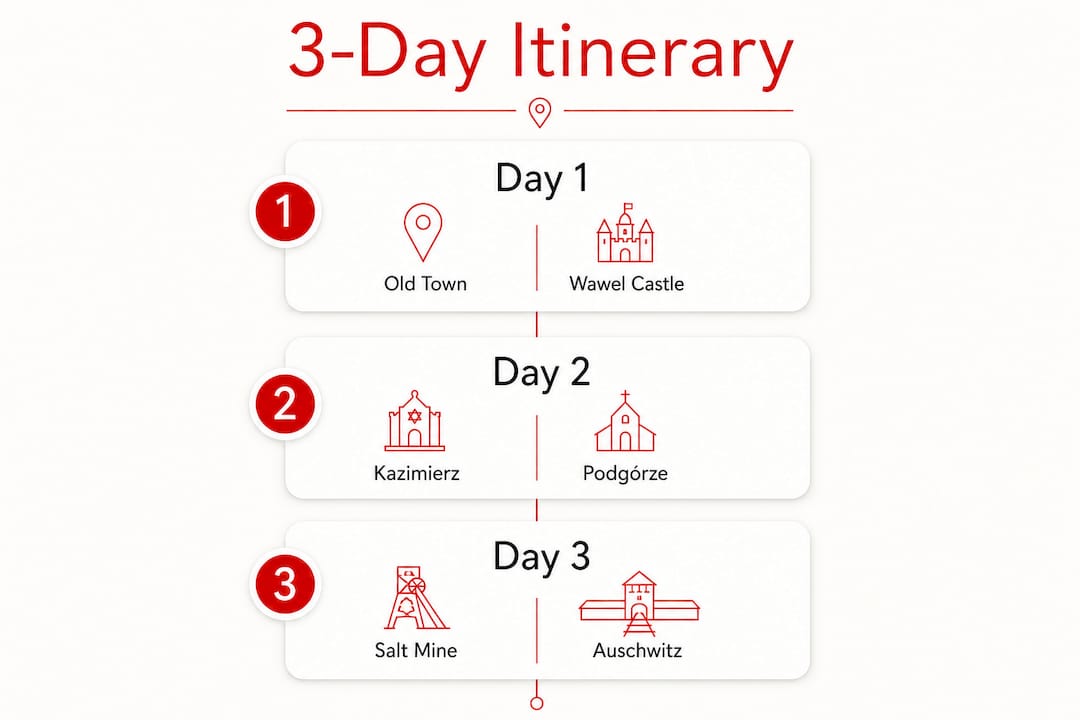
Day 2: Kazimierz, Podgórze, and Krakow’s Jewish heritage
Morning in Kazimierz
Kazimierz offers a local feel that the Old Town simply cannot replicate. The district combines synagogues, Jewish museums, street art, food stalls, and a genuine neighborhood energy. Start your morning at Szeroka Street, the historic center of the Jewish quarter, where you will find the Old Synagogue (now a museum) and the Remuh Synagogue with its Renaissance cemetery. Both are compact and can be visited within two hours.
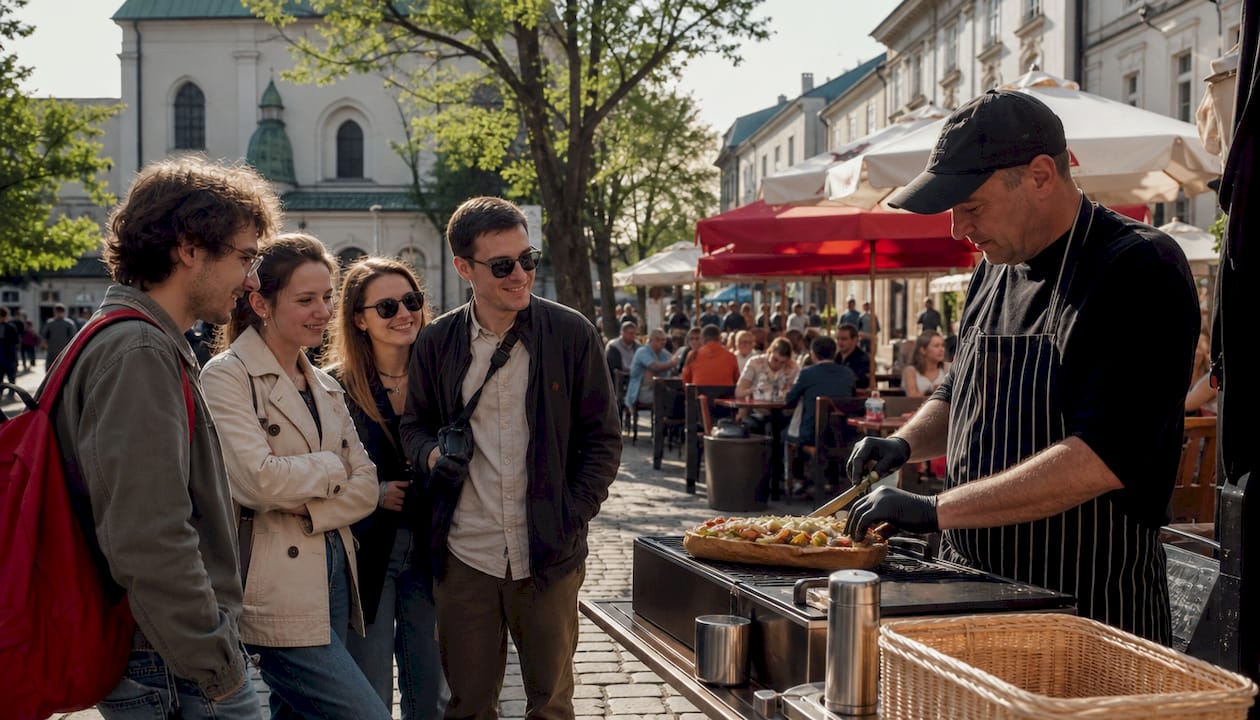
From Szeroka Street, walk west to Plac Nowy, the district’s central square. The zapiekanka stalls here open from mid-morning and serve the Polish version of an open-faced toasted baguette. It is cheap, filling, and genuinely local. Plac Nowy is also where Kazimierz’s street art scene begins. Comforttours runs a street art walking tour through the district that connects the murals to the neighborhood’s history in a way that self-guided walking misses entirely.
Afternoon in Podgórze
Cross the Vistula River into Podgórze for the afternoon. This district was the site of the Krakow Ghetto during World War II, and the weight of that history is present in every block.
- Schindler’s Factory Museum: One of the best-designed history museums in Poland. Book tickets in advance. The Schindler’s Factory experience covers the occupation of Krakow in immersive detail.
- Ghetto Heroes Square: The 33 metal chairs installed here represent the furniture left on the streets during the 1942 deportations. It is a quiet, powerful memorial.
- Eagle Pharmacy: A small museum inside the pharmacy that operated during the ghetto period. Less visited than Schindler’s Factory but deeply moving.
Pro Tip: Use Krakow’s tram network to move between Kazimierz and Podgórze. Tram line 3 and line 19 connect the districts quickly and cheaply. A 24-hour transit pass costs a few zloty and removes all the guesswork from getting around.
For the evening, return to Kazimierz. The district has the best bar and restaurant scene in the city, concentrated around Plac Nowy and Meiselsa Street. The atmosphere shifts noticeably after 7:00 PM, and the outdoor seating fills up fast in warmer months.
Day 3: Wieliczka Salt Mine and Auschwitz-Birkenau
Planning the logistics
Day 3 is the most logistically demanding day of your Krakow weekend trip. Combining Wieliczka Salt Mine and Auschwitz-Birkenau into one day is physically and emotionally exhausting. A typical combined tour runs approximately 12 hours with several hours of walking and significant emotional engagement. Plan for an early start and a quiet evening with no further sightseeing.
- Depart by 8:00 AM. Wieliczka is 14 kilometers southeast of Krakow. The guided tour of the mine takes 2–3 hours and covers 3 kilometers underground through carved chambers, chapels, and lakes.
- Transfer to Auschwitz-Birkenau. The memorial site is 70 kilometers west of Krakow. The transfer takes about 90 minutes from Wieliczka.
- Allow 3–4 hours at the memorial. Auschwitz I and Auschwitz II-Birkenau are separate sites. Most guided tours cover both.
- Return to Krakow by early evening. Dinner should be simple and close to your accommodation.
- Rest. Do not plan evening activities after this day.
Booking requirements for Auschwitz-Birkenau
Advance booking for Auschwitz-Birkenau is mandatory in 2026. Independent visitors need to book months ahead through the memorial’s official digital platform. Without a pre-booked slot, the only option is a guided tour with transport, which costs significantly more. Book as early as possible. Joint tours with hotel pickup handle the logistics of both sites in one booking and are the most practical option for most travelers.
Pro Tip: Krakow’s Clean Transport Zone restricts private vehicle access in the city center. Using a professional transfer service for day trips avoids the zone entirely and removes parking stress. Comforttours provides reliable day trip transfers with hotel pickup included.
What if you want a slower day 3?
Not every traveler wants to spend their final day on an emotionally intense excursion. A slower third day focused on in-city exploration is a legitimate and rewarding alternative.
The Krakow National Museum’s main branch on Aleja 3 Maja holds one of the best collections of Polish painting and decorative arts in the country. The Czartoryski Museum, recently reopened after a long renovation, houses Leonardo da Vinci’s “Lady with an Ermine.” Neither museum requires advance booking on most days.
| Option | Best for | Energy level | Booking needed |
|---|---|---|---|
| Wieliczka + Auschwitz day trip | First-time visitors, history focus | High | Yes, well in advance |
| In-city museums and galleries | Slower pace, art and culture | Low to medium | Rarely required |
| Kleparz market and café culture | Food lovers, relaxed finish | Low | None |
| Revisit favorite neighborhoods | Spontaneous explorers | Variable | None |
- Kleparz Market: A working local market north of the Old Town. Open mornings, excellent for Polish produce and street food.
- Kazimierz revisit: The district looks and feels different in the morning compared to the evening.
- Bookshops and galleries: The streets around Floriańska and Grodzka have independent shops worth an hour of browsing.
For shopping, the Cloth Hall in Main Market Square sells amber jewelry, folk art, and Polish crafts. Prices are fixed and quality is generally reliable.
Key Takeaways
A thematic Krakow 3 day itinerary, with one major focus per day and key tickets booked in advance, delivers the most rewarding first visit to the city.
| Point | Details |
|---|---|
| Three days is the right duration | A 72-hour visit covers Old Town, Kazimierz, and essential day trips without rushing. |
| Book tickets early | Auschwitz-Birkenau requires advance booking months ahead; Rynek Underground sells out fast. |
| Theme each day | Assign one district or experience per day to avoid fatigue and build genuine connection. |
| Use public transit | Krakow’s tram network connects districts cheaply; a 24-hour pass covers all transfers. |
| Plan for recovery after day 3 | The Wieliczka and Auschwitz combination runs 12 hours and demands a quiet evening. |
Why I think most Krakow itineraries get the pacing wrong
Most travel articles treat Krakow like a list of checkboxes. See the castle, tick. See the salt mine, tick. See Auschwitz, tick. That approach produces a trip that looks complete on paper but feels hollow in memory.
What I have found actually works is treating each day as a single, coherent experience rather than a collection of stops. Day 1 should feel ceremonial. You are meeting a city that has survived centuries of invasion, partition, and war. Walk slowly. Sit in the square. Let Wawel Castle register as something more than a photo opportunity.
Day 2 is where Krakow surprises most visitors. Kazimierz is not a museum. It is a living neighborhood with a complicated, layered identity. The Jewish heritage, the street art, the food scene, and the nightlife all exist in the same few blocks. Travelers who rush through it in two hours miss the point entirely.
Day 3 is the hardest call. Auschwitz-Birkenau is one of the most important sites in the world. Visiting it is not entertainment. It requires presence and emotional honesty. If you are not in the right headspace, a slower in-city day is not a lesser choice. It is the right one.
The one thing I would tell every first-time visitor: start earlier than you think you need to. Krakow’s major sites fill up by mid-morning in peak season. An 8:00 AM start at the Market Square feels early. By noon, you will be glad you did it.
— Damian Fort
How ComFort Tours Cracow makes your Krakow trip easier
Planning three days in Krakow involves a lot of moving parts: ticket bookings, transport logistics, and knowing which sites reward a guide versus self-exploration.
ComFort Tours Cracow specializes in small-group and private guided tours in Krakow that cover every major theme in this itinerary. From Old Town walking tours and Kazimierz cultural experiences to full-day Auschwitz-Birkenau and Wieliczka Salt Mine excursions with hotel pickup, the team handles the logistics so you focus on the experience. Group tour options keep costs manageable without sacrificing the personal storytelling that makes Krakow’s history land. Local guides bring the kind of context that no audio guide or travel app can match. Book directly through ComFort Tours Cracow to lock in your preferred dates before they fill up.
FAQ
How many days do you need in Krakow?
Three days is the widely recommended minimum for a first visit. This window covers the Old Town, Kazimierz, and at least one major day trip like Wieliczka Salt Mine or Auschwitz-Birkenau.
Do I need to book Auschwitz tickets in advance?
Yes. Advance booking for Auschwitz-Birkenau is mandatory in 2026. Independent entry requires booking months ahead through the official memorial platform; without it, you must join a guided tour with transport.
What is the best way to get around Krakow?
Krakow’s tram network is the most practical option for moving between districts. A 24-hour transit pass covers all tram and bus lines and costs only a few zloty.
Is Kazimierz worth visiting on a Krakow weekend trip?
Kazimierz is one of the most rewarding parts of any Krakow itinerary. The district combines Jewish heritage sites, street art, local food culture, and a vibrant evening scene that the Old Town cannot replicate.
Can I combine Wieliczka Salt Mine and Auschwitz in one day?
You can, but the combined tour runs approximately 12 hours and is physically and emotionally demanding. Plan a quiet evening afterward and avoid scheduling additional sightseeing on the same day.