
For most UK travellers, the quickest, least stressful way from Krakow to Tatra National Park is a direct bus or a private transfer to Zakopane, roughly two hours door to door. Book a direct bus for a budget solo trip, or arrange a private transfer if you’re travelling with family, ski gear, or want a guide who can plan your day for you.
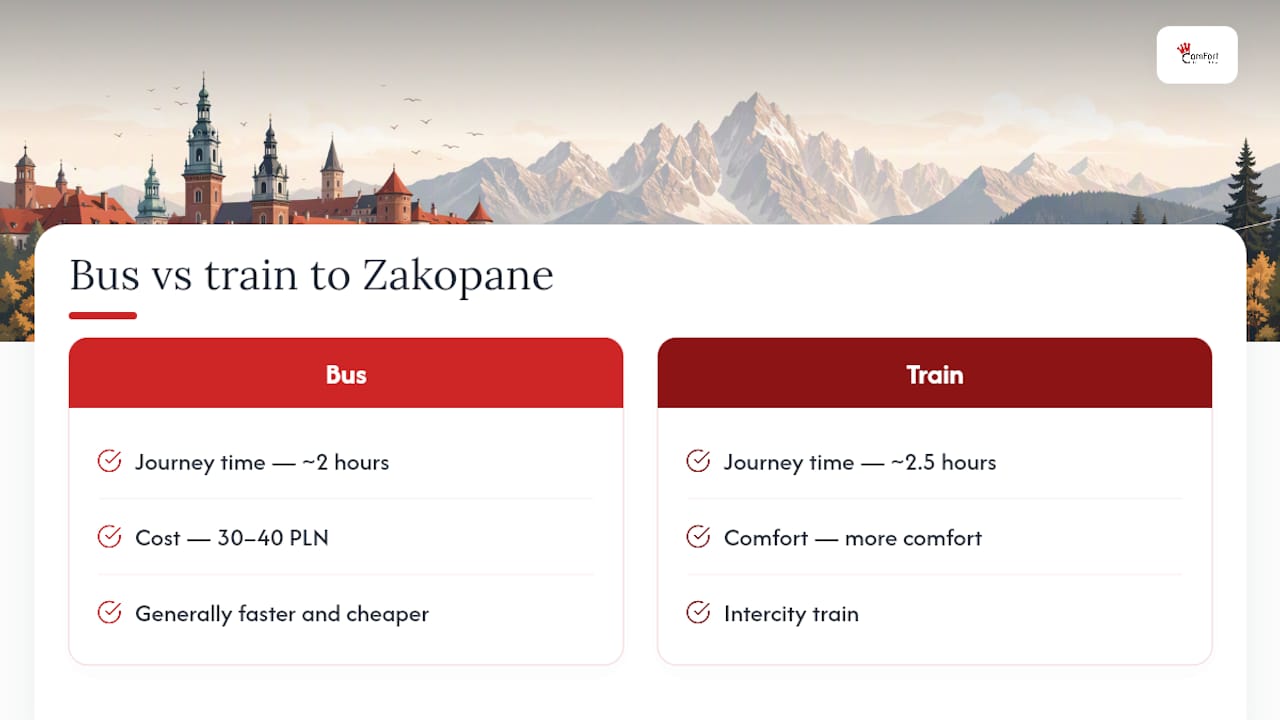
- Fastest for most people: direct bus or minibus, about two hours, around 30–40 PLN
- Best for winter/luggage/groups: a private transfer with a dedicated guided tour, which collects you from your hotel and handles ski bags without a fuss
- Next step: book your seat or transfer a few days ahead, especially for weekends, bank holidays, or ski season, when demand spikes
Key Takeaways
Getting from Krakow to Tatra National Park is straightforward, but which option suits you depends on luggage, group size, and how much of your day you want to spend planning rather than hiking.
| Point | Details |
|---|---|
| Bus is cheapest | Direct buses cost around 30–40 PLN and take about two hours to Zakopane. |
| Trains vary widely | Intercity trains take roughly 2.5 hours; regional trains can take up to four. |
| Book cable cars ahead | Kasprowy Wierch queues run long in summer, so reserve your slot online first. |
| Weekends need planning | Congestion on weekends and holidays can significantly extend journey times. |
| Guided transfers suit winter and groups | ComFort Tours Cracow offers private transfers and small-group tours with luggage handling for skis and bulky gear. |
Table of Contents
- Sample itineraries for a Krakow to Zakopane trip
- Getting around once you’re in the Tatras
- What UK travellers should know about money, language, and customs
- Where to stay near Tatra National Park
- Eating and drinking in and around the park
- Staying safe: altitude, weather, and emergency contacts
- What actually makes the Krakow to Tatra trip work
- Book your Tatra trip through ComFort Tours Cracow
- Sources
- FAQ
Sample itineraries for a Krakow to Zakopane trip
How you structure your time depends entirely on whether you want a taste of the mountains or a proper hiking day. A half-day trip only really works if you’re driving or on a private transfer, since public buses eat into your time badly. Realistically, most visitors either commit to a full day trip or stay overnight.
A day trip typically means an early departure from Krakow (7:00 to 7:30 AM), arrival in Zakopane by mid-morning, a few hours in the town or on a cable car, and the return journey by early evening. This suits travellers based in Krakow who don’t want to pack a bag.
An overnight stay opens up serious hiking, particularly the walk to Morskie Oko, which alone can consume most of a morning given its 9km paved approach road. Staying over also means you can catch sunrise light on Giewont or ride Kasprowy Wierch before the crowds arrive.
For an activity-focused visit, pair a morning cable car ride with an afternoon walk, or in winter, build the day around skiing and finish with a sleigh ride through snow-covered forest. If you’re short on planning time, a structured day trip itinerary removes the guesswork of sequencing transport, meals, and trail access.
Getting around once you’re in the Tatras
Zakopane town isn’t Tatra National Park itself, it’s the gateway. Once you arrive, you still need to reach the trailheads and viewpoints, and that’s where local transport options matter.
Local minibuses and shuttles run from central Zakopane to key access points like Kuźnice, the base station for the Kasprowy Wierch cable car, and Palenica Białczańska, the start of the Morskie Oko walk. These minibuses are frequent and cheap, and they’re the standard way hikers without their own car reach the park boundary.
For panoramic views without the walk, two cable cars dominate: Gubałówka, a short ride above the town centre good for photos and a relaxed lunch, and Kasprowy Wierch, which climbs much higher into genuine alpine terrain. Queues for Kasprowy Wierch can stretch for hours in summer, so booking your slot online in advance saves an entire wasted morning.
Walking trails within the park itself are well marked with coloured paint blazes, a system inherited from Polish mountaineering tradition rather than anything you’ll recognise from UK footpaths. Routes range from gentle valley walks to demanding ridge scrambles, and trail difficulty isn’t always obvious from a map. If you’re relying on public transport for the whole trip, factor in the shuttle time from Zakopane to your chosen trailhead. It adds up faster than most first-time visitors expect.
What UK travellers should know about money, language, and customs
Poland uses the złoty (PLN), not the euro, which catches out plenty of UK visitors expecting eurozone pricing across Central Europe. Cards are widely accepted in Zakopane’s restaurants, shops, and cable car kiosks, but smaller mountain huts and trail-side stalls sometimes take cash only, so carry some złoty for snacks and toilets on longer hikes.
English is spoken reasonably well in Zakopane’s tourist-facing businesses, less so in mountain refuges (schroniska) or by older residents in surrounding villages. A few basic Polish phrases go a long way, and Poles generally appreciate the effort even when your pronunciation is rough.
Highland culture in the Podhale region, the area around Zakopane, is distinct from the rest of Poland. Locals take pride in traditional dress, folk music, and regional dialect, and you’ll see this reflected in architecture, food, and souvenir stalls. It’s worth treating this as a cultural visit as much as an outdoor one.
Tipping follows standard Polish practice: 10% in restaurants for good service, rounding up for taxis. Queuing etiquette at cable car stations can feel looser than you’re used to, so don’t be shy about holding your place in line during busy periods.
Where to stay near Tatra National Park
Zakopane itself offers the widest range of accommodation, from budget guesthouses to smart mountain hotels with spa facilities, and staying there gives you walking access to restaurants, shops, and the minibus network to trailheads. Booking two to three months ahead is sensible for winter ski season and July to August, when rooms fill quickly and prices climb.
Smaller villages like Kościelisko and Poronin, just outside Zakopane, tend to offer quieter, often cheaper stays with easier access to certain trailheads, at the cost of needing your own transport or relying on local buses into town.
For a genuinely immersive stay, mountain refuges (schroniska) inside the park itself let you sleep close to the trails, though these are basic, often dormitory-style, and require advance booking through Polish mountain tourism networks rather than mainstream hotel booking sites.
Whichever option you choose, check whether your accommodation offers parking if you’re self-driving, since central Zakopane’s parking is limited and often paid. If you’ve booked a guided package, transport and accommodation logistics are usually handled together, which removes one more thing to coordinate on a short trip.
Eating and drinking in and around the park
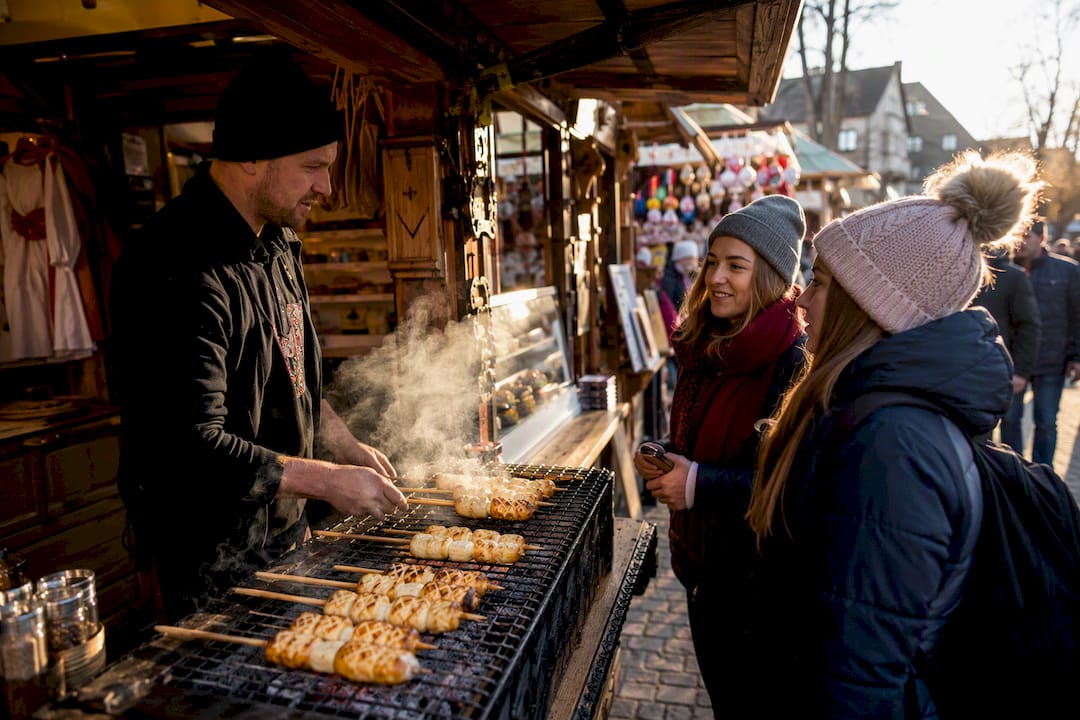
Zakopane’s Krupówki Street is the main strip for restaurants, and it’s where you’ll find the region’s signature dish, oscypek, a smoked sheep’s cheese often grilled and served with cranberry sauce. It’s sold from street stalls throughout the town and makes a solid, portable snack before a hike.
Highland cuisine leans hearty: think kwaśnica (sauerkraut soup), grilled trout, and slow-cooked pork knuckle, all designed for people who’ve spent the day outdoors. Restaurant prices in Zakopane run noticeably higher than elsewhere in Poland, reflecting its tourist status, though still modest by UK standards.
Inside the park itself, mountain huts (schroniska) along major trails sell simple hot meals, tea, and soup, a welcome stop on longer walks like the Morskie Oko route. Don’t expect extensive menus or fast service. These huts run on limited supplies carried in by staff, so patience is part of the experience. Carry water and snacks regardless, since not every trail passes a hut, and huts can close in poor weather or off season.
Staying safe: altitude, weather, and emergency contacts
Tatra weather changes fast, and that’s the single biggest risk factor for UK hikers unused to alpine conditions. A clear morning can turn to fog, wind, and dropping temperatures within an hour, even in summer, so proper layers and waterproofs aren’t optional extras.
Altitude in the Tatras isn’t extreme by global standards, Kasprowy Wierch sits at roughly 1,987 metres, but sudden ascent by cable car can still leave some visitors lightheaded or short of breath, particularly if they’re unfit or dehydrated. Take it slowly at the top and drink water before and after the ride.
Trail difficulty is graded but not always obvious to visitors unfamiliar with the marking system. Some routes involve chains and exposed scrambling that go well beyond a casual walk. Stick to routes matching your fitness and experience, and check conditions before setting out. Snow can linger on higher trails into late spring.
For mountain emergencies, dial 601 100 300, the number for TOPR (Tatra Volunteer Search and Rescue), Poland’s dedicated mountain rescue service. For general emergencies anywhere in Poland, dial 112, which connects to police, ambulance, or fire services and works from any UK mobile with roaming enabled. Tell someone your planned route before heading into the park, particularly for longer routes like Morskie Oko or anything above the tree line.
What actually makes the Krakow to Tatra trip work
Most guides treat this as a simple transport comparison: bus versus train versus car. That misses the real decision point, which is what you’re doing once you arrive. A guide who knows the current queue situation at Kasprowy Wierch, or which trailhead shuttle actually saves time, is worth more than any transport method on paper.
Pro Tip: If you’re travelling in winter with skis or bulky bags, say so when booking your transfer, rather than turning up and hoping the vehicle has room.
Book your Tatra trip through ComFort Tours Cracow
Bus timetables and cable car queues are manageable if you’ve got flexible time and no luggage to worry about. If you do, a private transfer removes both problems in one booking. ComFort Tours Cracow runs small-group and private tours from Krakow to Zakopane and the Tatras, with multilingual guides who plan the day around your interests, whether that’s Morskie Oko, the cable cars, or the highland villages.
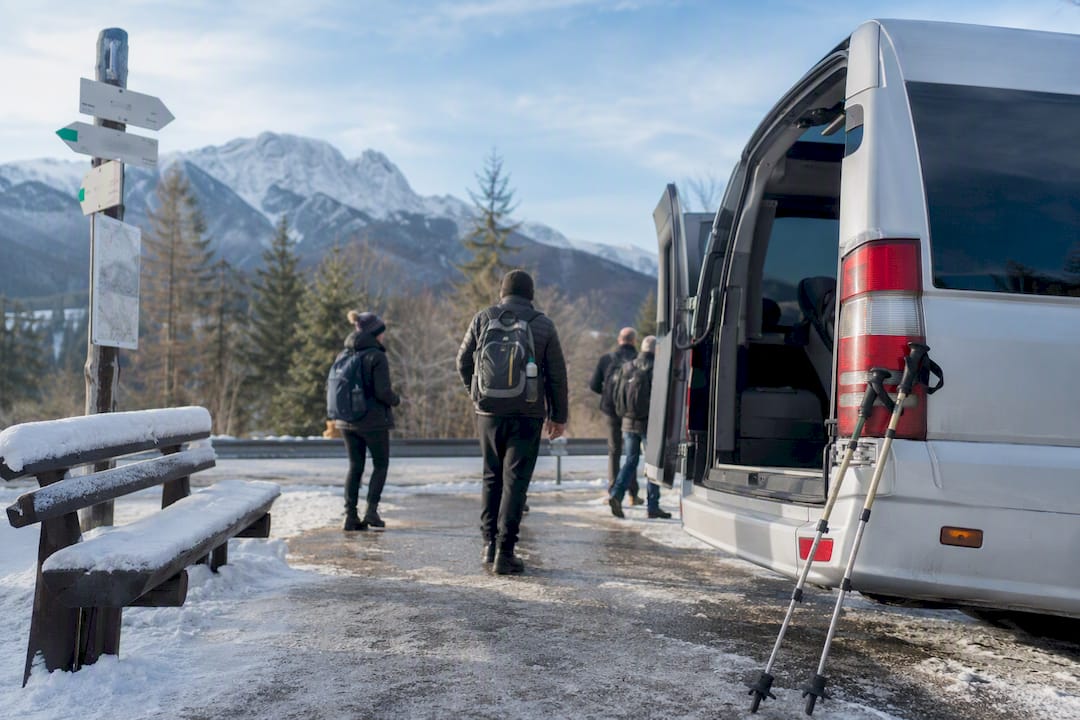
If you’re travelling in winter, mention ski bags or bulky luggage when you book, so the right vehicle gets allocated instead of leaving you cramped for a two-hour drive. Group and private options are both available, and guided days typically include hotel pickup and a set itinerary rather than one you have to build yourself. Check available dates and what’s included on the Tatra Mountains full-day tour page, or browse the wider tour catalogue to compare options before you book.
Sources
- Krakow to Tatra Mountains and Zakopane – Explore Poland
- Krakow to Zakopane Day Trip: How to Go, What to Do & Costs (2026)
- Tatra National Park Visitor Guide Travel Guide | Poland Wander
FAQ
How long does it take to get from Krakow to Tatra National Park?
By direct bus, the journey to Zakopane takes about two hours; driving via the S7 expressway takes 1.5 to 2 hours depending on traffic.
Is it better to take a train or bus from Krakow to Zakopane?
Buses are generally faster and cheaper, at roughly two hours and 30 to 40 PLN, while intercity trains take about 2.5 hours and offer more comfort.
Can you do Tatra National Park as a day trip from Krakow?
Yes, a full day trip is possible with an early start, though an overnight stay gives you far more time for serious hikes like Morskie Oko.
Do I need to book cable cars in advance?
Booking Kasprowy Wierch online ahead of time is strongly recommended, since summer queues can run for hours without a reservation.
What’s the advantage of a private transfer over public transport?
A private transfer with ComFort Tours Cracow includes hotel pickup, a multilingual guide, and proper handling of ski bags or bulky luggage, which public buses and trains don’t offer.