
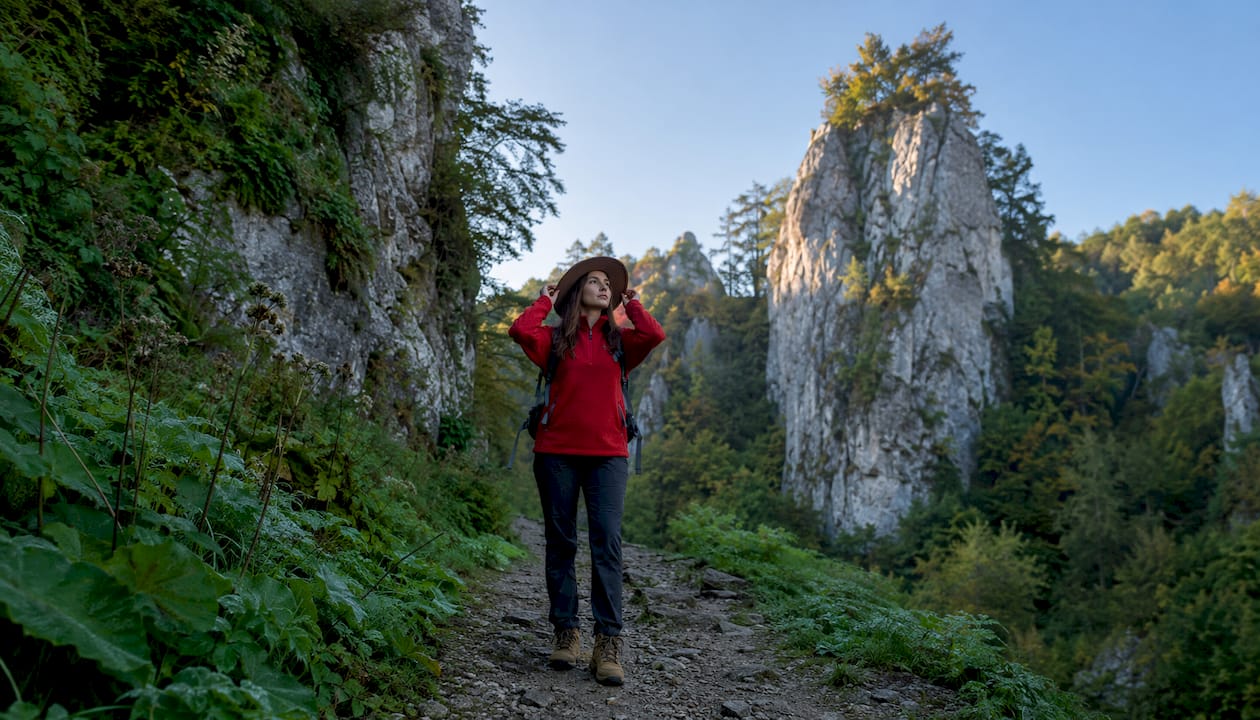
Poland’s smallest national park, covering 21.46 km² as of 2026, packs more into its charming area than most parks ten times its size. Ojców National Park, established in 1956 and located north of Kraków, combines dramatic limestone cliffs, medieval castle ruins, and about 700 caves into a single valley system that takes less than a day to reach from the city center. What you get here is rare: genuine wilderness pressed right up against 14th-century stonework.
Here is a quick snapshot of what the park offers:
- Castles: Ojców Castle ruins and the Renaissance Pieskowa Skała Castle, both on the Trail of the Eagles’ Nests
- Caves: King Łokietek Cave and Dark Cave, open seasonally to visitors, with access controlled to protect bat habitats
- Wildlife: 19 species of bats, the park’s official symbol, plus beavers, badgers, and a diversity of bird species
- Rock formations: Hercules’ Club, Kraków Gate, Deotyma’s Needle, and The Glove
- Trails: Forest paths, valley floors, and ridge routes connecting all major sites
- Visitor amenities: Information boards throughout, a nature exhibition at the Educational Centre in Ojców, and parking areas at key trailheads
Accessibility varies by trail. Most valley-floor paths are manageable for families, while routes climbing to cave entrances or ridge viewpoints require solid footwear and a reasonable fitness level.
What makes Ojców National Park’s landscape so distinctive?
The park sits on karst topography, where centuries of water dissolving limestone have carved out the Prądnik and Sąspówka river valleys, leaving behind cliffs, ravines, and about 700 caves. The result looks almost theatrical: pale rock columns rising from dense beech and fir forest, with a clear stream running along the valley floor below.
Several rock formations have become landmarks in their own right:
- Hercules’ Club (Maczuga Herkulesa): A 25-meter limestone column that appears to defy gravity, widening toward the top
- Kraków Gate: A natural rock arch framing the entrance to the Prądnik Valley
- Deotyma’s Needle (Igła Deotymy): A slender spire rising above the valley near Ojców village
- The Glove (Rękawica): A formation shaped like an outstretched hand, visible from the main trail
The sunlit cliff faces support rare thermophilous plant communities, including species that thrive only on warm limestone surfaces. Photographers get the best light on the western-facing cliffs in the late afternoon, when the rock turns amber against the green canopy below.
Pro Tip: Visit in late October for the most dramatic scenery. The beech trees turn gold and copper, the crowds thin out, and the low-angle light hits the rock formations at the best angle of the year.
Ecologically, these formations act as micro-habitats. The crevices shelter nesting birds, the shaded north-facing walls support mosses and ferns found nowhere else in the region, and the cave openings below provide year-round shelter for bat colonies.
What caves can you visit in Ojców National Park?
Two caves are open to the public, and they could not be more different from each other. King Łokietek Cave, the longer of the two at 320 meters deep, takes its name from the legend that King Władysław I Łokietek hid here from his enemies in the 14th century. The cave features stalactites, stalagmites, and a series of chambers that guides walk visitors through on a fixed route. The approach from the ticket office involves a steep, slippery uphill path that catches many visitors off guard, so proper footwear is not optional.
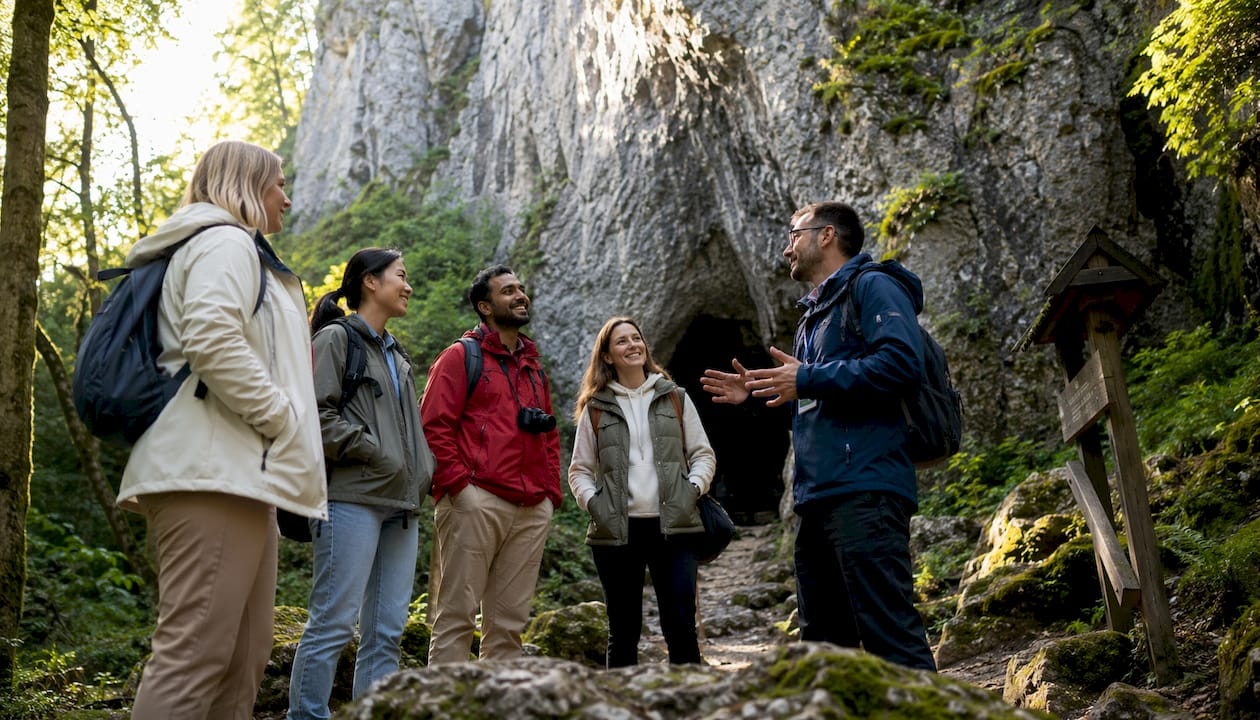
Dark Cave (Jaskinia Ciemna) is shorter but archaeologically richer. Recent excavations uncovered remains of Neanderthal humans, making it one of the most significant prehistoric sites in Poland. A viewing platform and life-size Neanderthal figures stand outside the entrance, giving context before you go in.
Key facts for planning your cave visit:
- Seasonal access: Both caves are generally open april through november; winter closures protect hibernating bats
- Advance checks: Opening hours and conditions change; always verify on the park’s official website before you go
- Group sizes: Cave tours run in guided groups with limited capacity, so early arrival on busy days matters
- Physical demands: The path to Dark Cave from the valley floor is 400 meters of steep trail; King Łokietek Cave’s approach is similarly demanding
The caves serve a function beyond tourism. The park is home to 19 bat species that hibernate in cave systems through the winter, which is exactly why access shuts down from late autumn. Bats are the park’s official symbol, and the conservation logic behind the closures is straightforward: disturbing hibernating colonies causes them to burn energy reserves they need to survive until spring.
Pro Tip: Book a weekday morning slot for cave tours. Weekend afternoons bring the longest queues, and the caves’ limited capacity means you could wait over an hour at peak times.
Wierzchowska Cave, located just outside the park boundary, offers an alternative if the main caves are at capacity or closed for maintenance. It runs considerably longer than either park cave and is worth knowing about as a backup.
What castles and cultural sites does the park contain?
The park’s cultural layer is as dense as its geological one. Two medieval castles anchor the heritage trail, and several smaller monuments fill in the gaps between them.
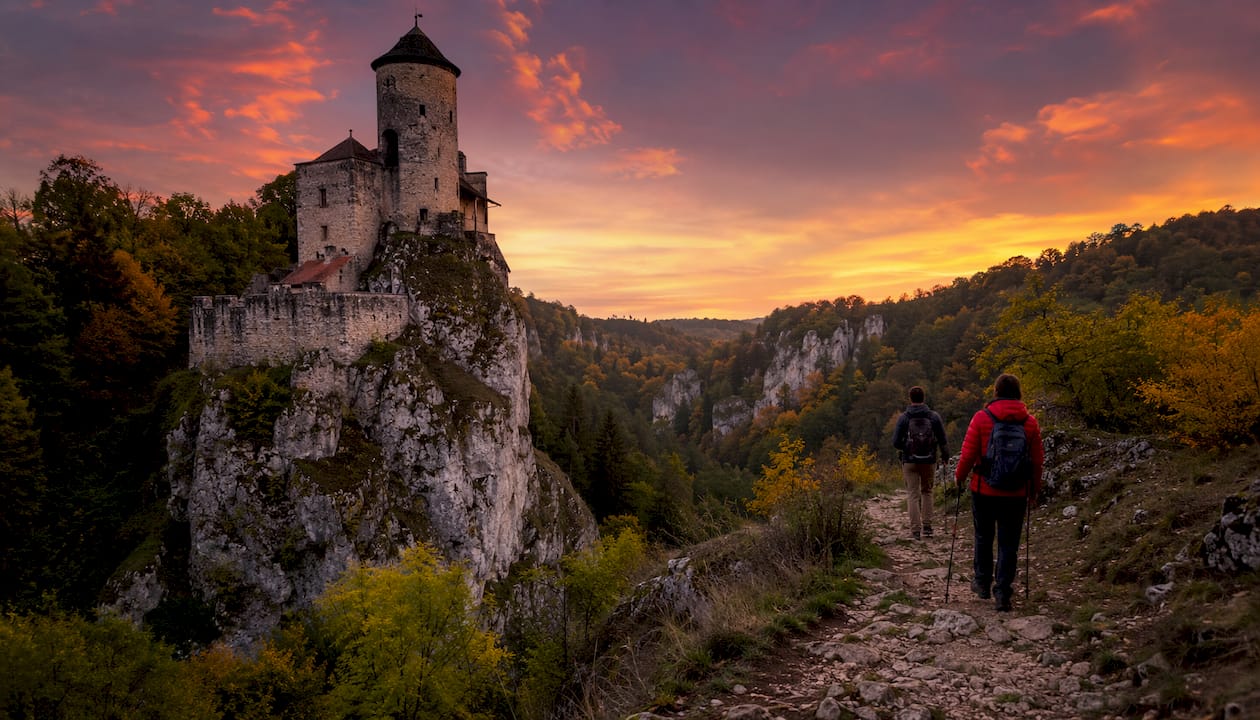
Ojców Castle survives today as a single tower and a gatehouse, perched on a limestone outcrop above the Prądnik Valley. King Casimir the Great built the original fortress in the 14th century as part of a defensive line protecting southern Poland. The ruins are freely accessible, and the tower is visible from the valley floor long before you reach it. Standing at the base, you get a clear sense of why the site was chosen: the cliff drops sharply on three sides.
Pieskowa Skała Castle, about 5 km up the valley, is in far better shape. The Renaissance courtyard, rebuilt in the 16th century, houses a branch of the Kraków-based National Art Collection, with permanent exhibitions covering European decorative arts. The castle’s loggia and courtyard architecture draw direct comparisons to Wawel Castle in Kraków, and the setting above the Prądnik River adds to the effect.
Key heritage sites in the park:
- Ojców Castle ruins: 14th-century Gothic fortress, free access, dramatic cliff-top position
- Pieskowa Skała Castle: Renaissance castle with museum, paid entry, open year-round except Mondays
- The Little Church on the Water (Kaplica na Wodzie): A 19th-century wooden chapel built on piles over the Prądnik stream, one of the most photographed spots in the park
- Historic wooden villas: Several 19th-century health resort buildings survive in Ojców village, including Villa “Under the Crown” (Willa pod Koroną)
The Trail of the Eagles’ Nests connects both castles as part of a longer defensive chain stretching from Kraków to Częstochowa. Medieval Polish kings built this network of fortresses along the Kraków-Częstochowa Upland to guard the kingdom’s western border. Walking the section through Ojców gives you the historical context that makes the ruins feel like more than just old stones.
What hiking trails run through the park?
The park’s trail network covers the main valley floor, the side valleys, and the ridges above, giving you options from a gentle 30-minute stroll to a half-day loop that takes in caves, castles, and viewpoints. Most visitors start in Ojców village and work outward from there.
Popular routes and what they cover:
- Sąspowska Valley to Złota Góra: The green trail climbs through beech forest past diverse rock formations, then descends back to Ojców village through the castle ruins. It passes the Dark Cave and offers the best ridge-top views in the park.
- Prądnik Valley floor path: A flat, easy walk connecting Ojców village to Pieskowa Skała Castle along the river. Suitable for families and anyone who wants the scenery without the elevation.
- Cave circuit: A loop linking King Łokietek Cave and Dark Cave with the castle ruins, covering the park’s main highlights in a single route.
- Ridge trail above Dark Cave: The section above the cave entrance passes the remains of a medieval stronghold from the time of Konrad of Masovia and delivers the widest panoramic views in the park.
The terrain varies sharply. Valley floors are flat and well-maintained, but the paths climbing to cave entrances or ridge viewpoints involve steep sections on limestone rock that gets slippery when wet. The valleys themselves are cut deep into the upland plateau, so even trails that look short on a map involve real elevation changes.
Pro Tip: Visit mid-week if you can. Weekends bring heavy traffic into Ojców village, and parking becomes genuinely difficult by mid-morning. A Tuesday or Wednesday visit gives you the trails largely to yourself.
Bring sturdy shoes with ankle support regardless of which trail you choose. Sandals and flat sneakers are the most common reason people turn back before reaching the caves. Water and a light rain layer are worth carrying even on clear days, since the valley microclimate can shift quickly.
How can a guided tour improve your visit to Ojców?
Visiting the park independently is entirely possible, but a guided tour changes what you actually take away from it. The difference is context. Standing in front of Ojców Castle ruins without knowing the Trail of the Eagles’ Nests story, or walking past Dark Cave without understanding what the Neanderthal finds mean for Polish prehistory, leaves a lot of the park’s depth untapped.
ComFort Tours Cracow runs small-group and private guided tours from Kraków to Ojców National Park, with local guides who cover the geology, medieval history, and ecological significance of each site in plain language. Transport is included, which removes the parking problem entirely. Itineraries can be tailored to focus on the castles, the caves, or the hiking trails depending on what your group wants most.
Key advantages of booking with ComFort Tours Cracow:
- Small group sizes: Personal attention from the guide rather than a lecture to a crowd
- Local expertise: Guides with deep knowledge of Polish history and the specific stories attached to each site
- Flexible itineraries: Options for private and group tours covering Ojców alongside other regional highlights
- Comfortable transport: Door-to-door service from Kraków, no rental car or bus schedule to manage
- Historical storytelling: The kind of detail about King Łokietek, the Eagles’ Nests defensive chain, and the Neanderthal discoveries that turns a scenic walk into something memorable
For travelers combining Ojców with other sites near Kraków, ComFort Tours Cracow also covers the Wieliczka Salt Mine, Auschwitz-Birkenau, and Zakopane in the Tatra Mountains, making it straightforward to build a multi-day itinerary around a single booking contact.
Ready to see Ojców with a guide who knows every rock formation by name? Browse ComFort Tours’ tour options and find the right fit for your group.
Key Takeaways
Ojców National Park rewards visitors who come prepared, whether they are chasing medieval history, cave wildlife, or just a solid half-day hike through limestone scenery an hour from Kraków.
| Point | Details |
|---|---|
| Size and location | Poland’s smallest national park, covering 21.46 km² as of 2026 and located north of Kraków, established in 1956. |
| Cave access is seasonal | King Łokietek Cave and Dark Cave are generally open in warmer months, with winter closures to protect hibernating bat colonies. |
| Wildlife highlight | The park hosts 19 bat species, the official park symbol, along with over 135 bird species and mammals including beavers and badgers. |
| Two castles, one trail | Ojców Castle ruins and Pieskowa Skała Castle both sit on the Trail of the Eagles’ Nests, a medieval defensive chain across southern Poland. |
| Go mid-week | Weekends bring parking and crowding problems in Ojców village; a guided tour from Kraków sidesteps both issues entirely. |
Recommended
- Wycieczka do Parku Narodowego z Krakowa – Odkryj Urok
- Morskie Oko Hike: Your Complete 2026 Trail Guide
- Tytuł: Wyjątkowe doświadczenie dwugodzinnego wycieczki po otwartym Zoo w Krakowie Opis: Odwiedź krakowskie Zoo, zobacz unikalne zwierzęta i spędź przyjemny czas na świeżym powietrzu. Idealne dla wszystkich.
- Ojcowski Park Narodowy | Comfort Tours Cracow