Zakopane in winter is genuinely one of Central Europe’s best-kept secrets, though the secret is getting out fast. Tucked into the Tatra Mountains in southern Poland, this compact highland town transforms from November onward into a snow-covered playground that draws skiers, snowshoers, foodies, and anyone who wants to feel like they’ve stepped into a mountain village from another century. The ski season runs from mid-December to early April, with January being the coldest month, averaging highs of -2°C and lows of -9°C. Snow is reliable, the mountains are dramatic, and the prices are a fraction of what you’d pay in the Alps.
Here’s what makes Zakopane worth the trip in winter:
-
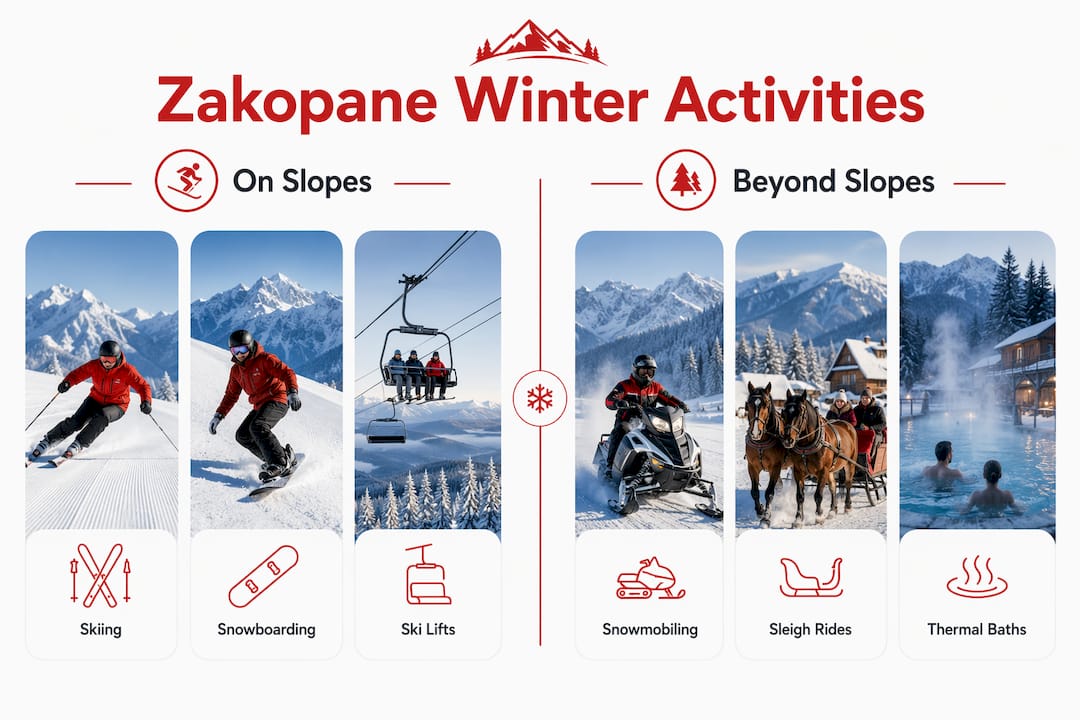
Skiing and snowboarding on slopes ranging from gentle beginner runs to challenging alpine terrain at Kasprowy Wierch
-
Cable cars and funiculars to Gubałówka and Kasprowy Wierch for panoramic Tatra views even without skis
-
Morski Oko lake, one of Poland’s most beautiful, accessible via a scenic winter hike
-
Thermal baths at Termy Chochołowskie and Termy Bania for post-adventure recovery
-
Highlander culture: oscypek cheese, Góral folk music, and horse-drawn sleigh rides called Kulig
-
Krupówki street lined with restaurants, markets, and Christmas lights through the winter season
-
Snowmobiling, sledging, ice skating, and dog sledding for non-skiers
Table of Contents
Skiing and snowboarding in Zakopane: what to expect
Zakopane earns its reputation as Poland’s winter capital largely on the strength of its ski terrain. The options range from mellow learning slopes to genuine alpine challenges, so there’s something for every level.
Kasprowy Wierch is the crown jewel. The cable car climbs to 1,987 meters, where you’ll find runs on both the Polish and Slovak sides of the ridge. Conditions here are the most reliable in the region, with longer seasons and better snow coverage than lower resorts. Intermediate and advanced skiers should make this a priority.
Polana Szymoszkowa sits closer to town and offers a more relaxed atmosphere, with good grooming and a gondola that makes access easy. It’s a solid choice for families or those who want a full day on the slopes without the crowds that Kasprowy Wierch attracts on weekends.
Nosal is the beginner’s go-to. Ski schools and rental facilities at Nosal and Polana Szymoszkowa are well-established, with patient instructors and gentle slopes that make learning far less intimidating than a steep alpine resort. If you’re bringing kids who’ve never skied, start here.
A few practical notes:
-
Book cable car tickets for Kasprowy Wierch in advance, especially on weekends and during Polish school holidays in January and February
-
Night skiing is available at some slopes, including Szymoszkowa, which extends your options considerably
-
Equipment rental is widely available near every major slope, so you don’t need to haul gear from home
-
The area around Białka Tatrzańska, about 20 km from Zakopane, is another popular ski hub worth the short drive
Pro Tip: Arrive at the Kasprowy Wierch cable car station before 9 AM on weekends. Lines can stretch to two hours by mid-morning during peak season, and the mountain conditions are often best in the early hours before the sun softens the snow.
Beyond the slopes: snowmobiling, sleigh rides, and more
Not everyone comes to Zakopane to ski, and the town doesn’t make non-skiers feel like second-class visitors. The range of winter leisure activities is genuinely impressive.
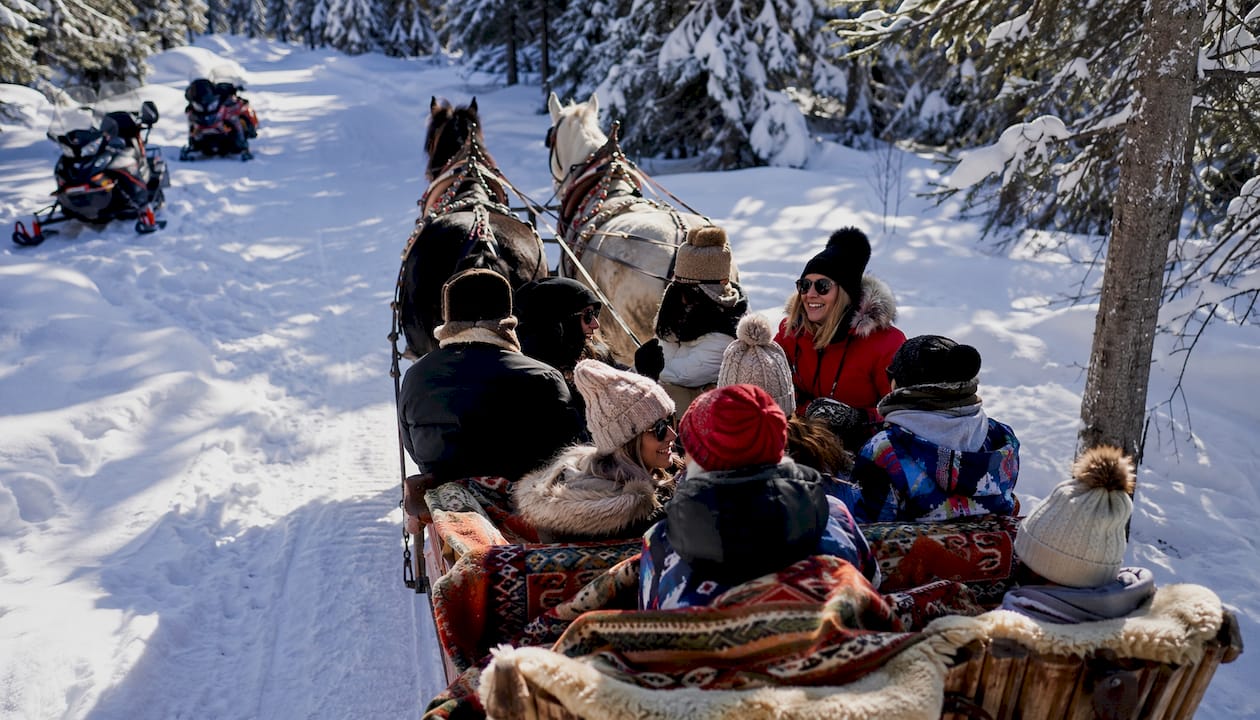
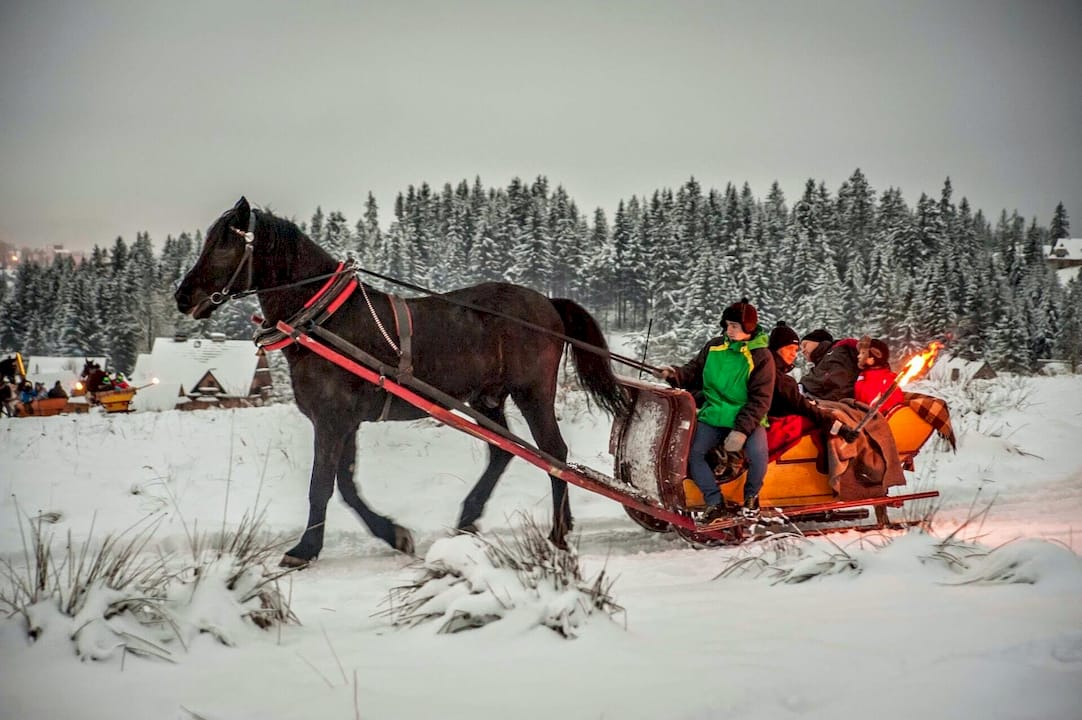
Horse-drawn sleigh rides (Kulig) are a Zakopane tradition that feels nothing like a tourist gimmick once you’re actually in one. These rides typically include a bonfire, mulled wine or hot tea, and live Góral folk music. The Chochołowska Valley is one of the best settings for a Kulig, with snow-covered meadows and wooden shepherd huts lining the route. Comforttours offers a Tatra mountain sleigh ride from Krakow that packages the whole experience with transport included.
Here’s a quick rundown of other popular activities:
-
Snowmobiling: guided tours operate throughout the season, ranging from short circuits to longer backcountry routes
-
Ice skating: Tatra Ice, near Krupówki, is the main rink with skate rentals on-site
-
Sledging: several hills around town are set up for sledging, and rental sleds are easy to find
-
Snowshoeing: a quieter alternative to hiking, with rentals available and guided walks into the Tatra National Park
-
Dog sledding: husky sled rides are available from operators near Zakopane, a genuinely thrilling option for families and adventure seekers
-
Cross-country skiing: trails at Równia Krupowa, Biały Potok, and Kościelisko offer groomed tracks for all levels
The thermal baths deserve their own mention here. Termy Chochołowskie and Termy Bania both offer warm pools with water temperatures from 34–38°C, set against mountain backdrops. Soaking outdoors while snow falls around you is one of those experiences that sounds clichéd until you’re actually doing it.
Sightseeing and winter hikes off the slopes
Gubałówka funicular
The Gubałówka funicular is the most accessible way to get above the town without any hiking effort. Tickets are reasonably priced, and the ride takes just a few minutes. At the top, you get a sweeping panorama of the Tatra range with Zakopane spread out below. There are restaurants, souvenir stalls, and a small sledging hill up there, so it’s worth spending an hour or two rather than just snapping a photo and heading back down.
Kasprowy Wierch cable car
Even if you’re not skiing, riding the cable car to Kasprowy Wierch is worth doing purely for the views. On a clear day, you can see across the High Tatras into Slovakia. The summit is genuinely alpine, with wind, snow, and the kind of silence that’s hard to find anywhere near a town. Dress warmly; the temperature difference between Zakopane and the summit can be dramatic.
Morski Oko lake
Morski Oko is one of the most beautiful lakes in Poland, and the winter version is arguably better than summer. Snow-covered peaks surround a partially frozen lake, and the wooden mountain hut on the shore serves hot food and drinks. Getting there requires a bus from Zakopane to Palenica Białczańska (about 30 minutes), followed by a roughly 2-hour walk on a well-maintained road. Horse-drawn carriages are also available for part of the route.
Top off-slope winter excursions at a glance:
-
Gubałówka funicular for panoramic town and mountain views
-
Kasprowy Wierch cable car for high-alpine scenery without skiing
-
Morski Oko lake via the Palenica Białczańska trail
-
Strążyska Valley for an easy winter walk ending at a frozen waterfall (Siklawica)
-
Hala Gąsienicowa and Murowaniec mountain hut for more experienced winter hikers
-
Chochołowska Valley for a flat, scenic snowshoe or cross-country ski route
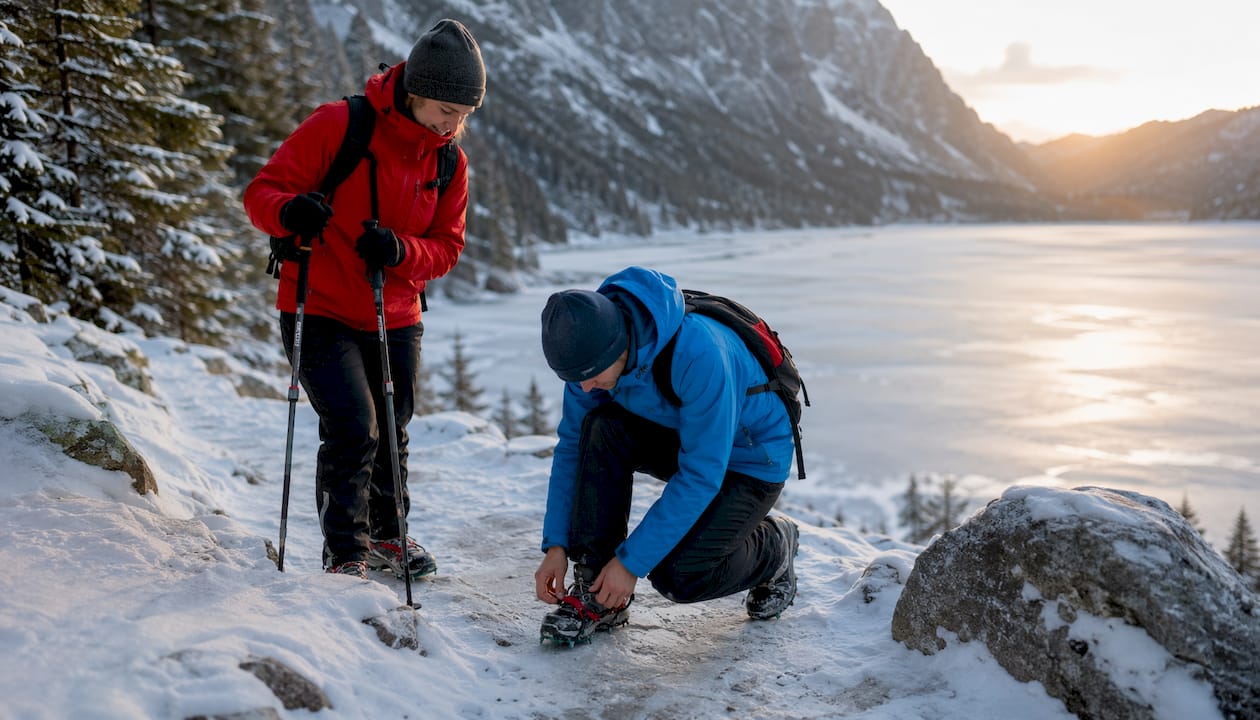
Pro Tip: For the Morski Oko hike, wear waterproof boots with good grip or pick up a pair of slip-on crampons in town. The road is packed snow and ice for most of the winter, and regular sneakers will have you sliding backward within the first kilometer.
Local culture and cuisine worth seeking out
Zakopane’s Góral (highlander) culture is one of the most distinct regional identities in Poland, and winter is when it feels most alive. The cold draws people indoors to warm restaurants where folk music plays and the food is built for mountain weather.
Oscypek is the thing to try. This smoked sheep’s milk cheese is a protected designation of origin product, meaning authentic oscypek can only be produced in the Tatra region using traditional methods. You’ll find vendors grilling it on Krupówki street, serving it with cranberry jam. It’s salty, slightly smoky, and unlike anything you’ll find outside this region.
Other foods and drinks worth ordering:
-
Bigos: a hearty hunter’s stew of sauerkraut, meat, and mushrooms, perfect after a cold day outside
-
Żurek: sour rye soup often served in a bread bowl
-
Hot mead (miód pitny): a honey-based alcoholic drink that warms you from the inside
-
Grilled kielbasa from street stalls along Krupówki
For the cultural side, Krupówki is the obvious starting point, but the real Zakopane is one street back. Side streets off Krupówki offer traditional Góral wooden architecture and quieter cafes where locals actually eat. The Villa Koliba, designed by Stanisław Witkiewicz in the distinctive Zakopane Style, is worth a look even from the outside.
Winter festivals add another layer. The FIS Ski Jumping World Cup typically comes to Zakopane in January, drawing large crowds and a genuinely electric atmosphere around the Wielka Krokiew jump. World Snow Day, also in January, brings free ski lessons and family events. These dates fill accommodation fast, so book early if you’re planning around them.
Practical travel tips for Zakopane in winter
Getting there
The nearest major airport is Kraków John Paul II International Airport (KRK), about 100 km from Zakopane. From Krakow, you can reach Zakopane by:
-
Bus: PKS buses run regularly from Krakow’s main bus station (Dworzec Autobusowy) and take roughly 2 hours
-
Private transfer: faster and more comfortable, especially with luggage or a group; Comforttours offers transfers from Krakow to Zakopane with flexible pickup
-
Train: limited direct options; most routes require a change and take longer than the bus
Getting around Zakopane
The town center is walkable, but reaching ski resorts and trailheads usually requires a local bus or taxi. Minibuses (busy, cheap, and frequent) run to most major destinations including Kuźnice, the starting point for Kasprowy Wierch and several hiking trails.
Weather and what to pack
Tatra mountain weather shifts fast, and conditions in town can be completely different from what’s happening 500 meters higher. Layer up with moisture-wicking base layers, an insulating mid-layer, and a waterproof outer shell. For hiking or any time you’re leaving the town center, waterproof non-slip boots and crampons are not optional.
Packing checklist for winter in Zakopane:
-
Waterproof, insulated boots
-
Slip-on crampons (buy them in Zakopane for around 20–30 PLN if you don’t own a pair)
-
Thermal base layers
-
Waterproof outer jacket and pants
-
Warm hat, gloves, and a neck gaiter
-
Sunglasses or goggles (snow glare is intense on clear days)
-
Sunscreen (UV exposure at altitude is higher than most people expect)
Money and safety
Carry Polish Złoty (PLN) cash for mountain huts, park entry points, and smaller food stalls. Cards are widely accepted in hotels and larger restaurants, but don’t count on them everywhere. ATMs are available on Krupówki.
Mountain safety matters. The Tatra Volunteer Mountain Rescue (TOPR) operates year-round and responds to emergencies in the national park. Before any hike above the town, check the avalanche risk level posted at trailheads and on the TOPR website. Never hike alone in the higher terrain in winter, and always tell someone your planned route.
Pro Tip: Download the Polish weather app Meteo.pl before your trip. It gives localized mountain forecasts that are far more accurate for the Tatras than generic weather apps, and it updates several times daily.
What ComFort Tours Cracow offers for a Zakopane winter visit
ComFort Tours Cracow been running small-group and private tours in and around Krakow for years, and their Zakopane offerings are among the most thoughtful ways to experience the region without the logistical headaches of planning everything yourself.
Their winter lineup includes:
-
Dog sledding adventure: a guided husky sled experience in the Tatra foothills, suitable for families and first-timers
-
Tatra mountain sleigh ride: a traditional Kulig with bonfire, music, and transport from Krakow included
-
Thermal baths at Białka Tatrzańska: a full-day excursion combining Zakopane sightseeing with a relaxing soak in the thermal pools
-
Private Zakopane tours: fully customized itineraries for families, couples, or small groups who want a guide without a fixed schedule
-
Airport and group transfers: door-to-door transport from Krakow airport or city center to Zakopane
What separates a ComFort Tours experience from booking activities piecemeal is the guide. Their team brings local knowledge that no app or map can replicate, from knowing which cable car line is shortest on a given morning to understanding the cultural context behind a Góral folk song. Group sizes stay small, which means you’re not shuffled through attractions in a crowd.
Damian Fort, who leads many of ComFort Tours’ Zakopane tours, has guided visitors through the Tatras across all seasons and holds deep expertise in both the mountain environment and the region’s Góral cultural traditions. His tours consistently draw praise for combining practical mountain knowledge with genuine storytelling, giving visitors context that transforms a scenic trip into a memorable one.
ComFort Tours makes your Zakopane winter trip easier
Planning a winter trip to the Tatras involves more moving parts than most people expect: airport transfers, mountain transport, activity bookings, weather contingencies, and the constant question of what to do if conditions change. ComFort Tours handles all of it.
Their Zakopane winter packages are built around small groups and private options, so you get a personalized experience rather than a bus tour. Whether you want a full-day dog sledding adventure, a thermal bath excursion after a morning on the slopes, or a private guided hike to Morski Oko, ComFort Tours puts together the itinerary and handles the logistics. Transport from Krakow is included in most packages, which removes the single biggest friction point for visitors flying into KRK.
Browse the full range of winter tours and experiences and book directly online. If you’re not sure which package fits your group, the team responds quickly to inquiries and can build a custom itinerary around your dates and interests.
Key Takeaways
Zakopane in winter delivers a rare combination of serious alpine terrain, accessible cultural experiences, and thermal relaxation, all within two hours of Krakow.
| Point | Details |
|---|---|
| Snow season timing | The ski season runs mid-December to early April, with January the coldest month averaging highs of -2°C and lows of -9°C. |
| Top sightseeing priorities | Gubałówka funicular, Kasprowy Wierch cable car, and Morski Oko lake are non-negotiable stops. |
| Gear essentials | Waterproof boots and slip-on crampons are necessary for icy streets and winter trails outside the town center. |
| Cash is still king | Carry Polish Złoty (PLN) for mountain huts, park entries, and street food stalls that don’t accept cards. |
| ComFort Tours winter tours | Small-group and private tours covering dog sledding, sleigh rides, thermal baths, and Zakopane transfers from Krakow. |