
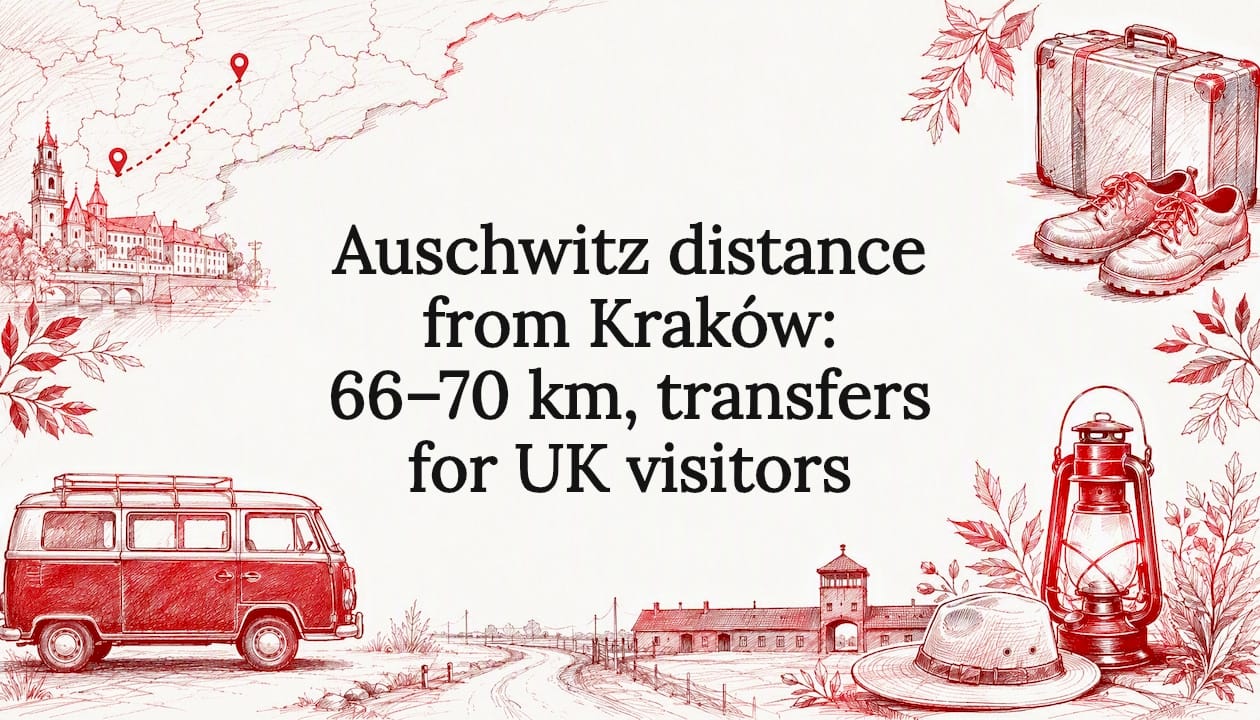
Auschwitz-Birkenau sits roughly 66 to 70 km (41 to 44 miles) west of Kraków, and most journeys take between 60 and 90 minutes depending on your chosen route. A guided tour or direct bus gets you straight to the Memorial entrance with no fuss. The train is cheaper but leaves you with a short final leg into Oświęcim. Whichever you pick, check Auschwitz before travelling, since entry rules and reservation slots do shift with the season.
TL;DR:
- Guided tours with transport and entry coordination tend to be cheaper and less stressful than organizing individual travel, especially during peak season.
- Travel times from Kraków to Auschwitz typically range from 60 to 90 minutes, with options including guided coaches, buses, trains, and self-driving, each with different costs and logistical considerations.
- Visitors should allocate a full day for the trip, including travel, guided tours of Auschwitz I, and transfers to Birkenau, with bookings ahead strongly recommended in high season.
- Public transport options vary in convenience, with buses costing around 14 to 22 PLN and train travel requiring an additional 1.5 to 2 km walk, while private transfers offer door-to-door ease.
- Carrying cash in Polish złoty is advisable for local expenses, and booking organized transport ensures a more reflective experience free from logistical worries.
Table of Contents
- Quick facts: distance, time and cost at a glance
- How to get from Kraków to Auschwitz: your transport options
- Getting around once you’re there: distances on-site
- How much time should you set aside, and when to book
- What UK travellers should know before setting off
- Why organised transport changes how the visit feels
- Book a stress-free transfer with ComFort Tours Cracow
- Where to check before you travel
- FAQ
Quick facts: distance, time and cost at a glance
The distance between Auschwitz and Kraków is consistently quoted at 66 to 70 km, and the fastest way to close that gap is the A4 motorway heading west from Kraków’s Old Town. Drivers should expect electronic toll charges on parts of that road, so keep some change or a toll app ready if you’re self-driving.
Here’s how the main options stack up for time and rough cost:
| Transport | Typical journey time | Approximate cost |
|---|---|---|
| Car (A4 motorway) | 60–70 minutes | Fuel + tolls, plus parking |
| Guided tour coach/minibus | 60–90 minutes | £30–£60 per person |
| Scheduled bus (e.g. Lajkonik) | ~90 minutes | 14–22 PLN |
| Train to Oświęcim | 40–90 minutes | Varies by service |
| Taxi/private transfer | 60 to 70 minutes | Higher, but door to door |
Traffic around Kraków’s ring road can add 15 to 20 minutes at peak times, so if you’re driving yourself, mornings tend to move faster than early afternoon.
How to get from Kraków to Auschwitz: your transport options
Every option gets you to the same place. What changes is how much hassle you’re willing to absorb along the way.
Guided tours bundle transport, a licensed guide and coordinated entry into one booking, which matters more than it sounds. Auschwitz operates strict guided-entry rules during busy months, and turning up without a reservation can mean queuing or being turned away from popular time slots. Tours typically run 7 to 10 hours door to door, including roughly 3 to 3.5 hours on-site, and prices generally sit in the £30 to £60 range depending on group size and inclusions.
Direct bus services are the simplest public transport route. Operators such as Lajkonik depart from the MDA bus station near Kraków Główny, take about 90 minutes, and drop passengers right at the Memorial entrance. Fares run approximately 14 to 22 PLN, though services can be less frequent outside peak season, so check timetables the night before.
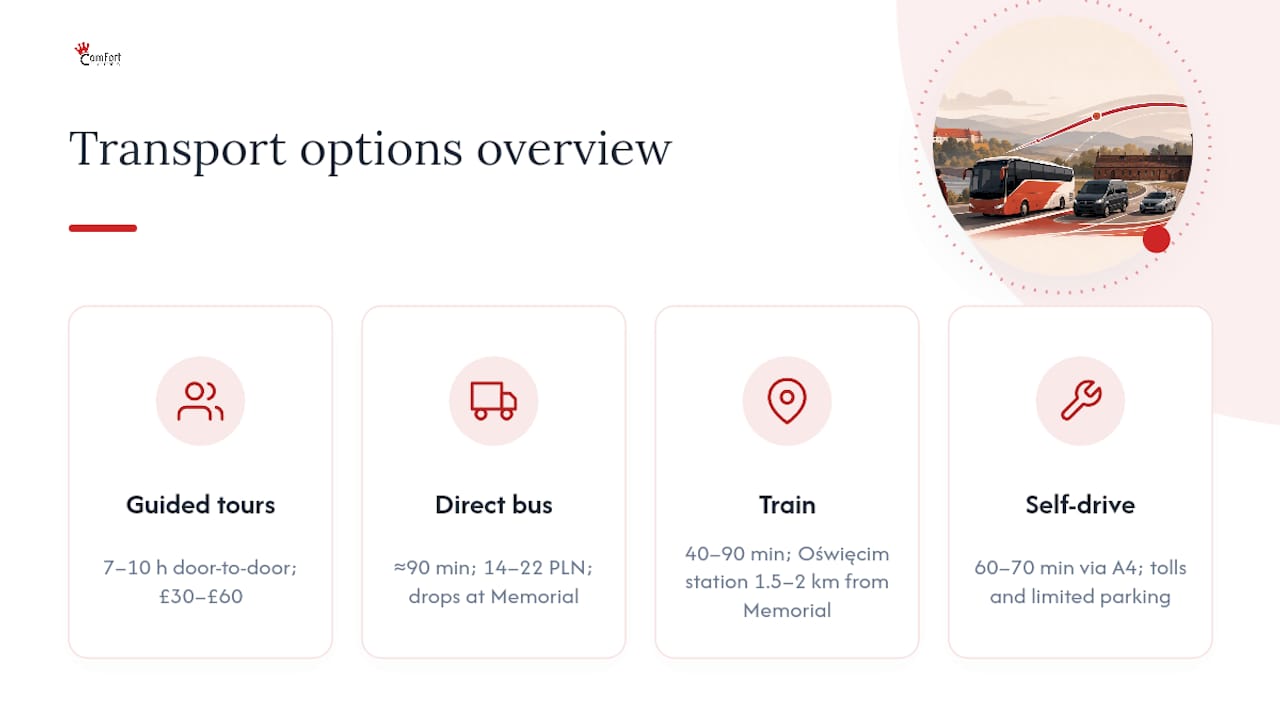
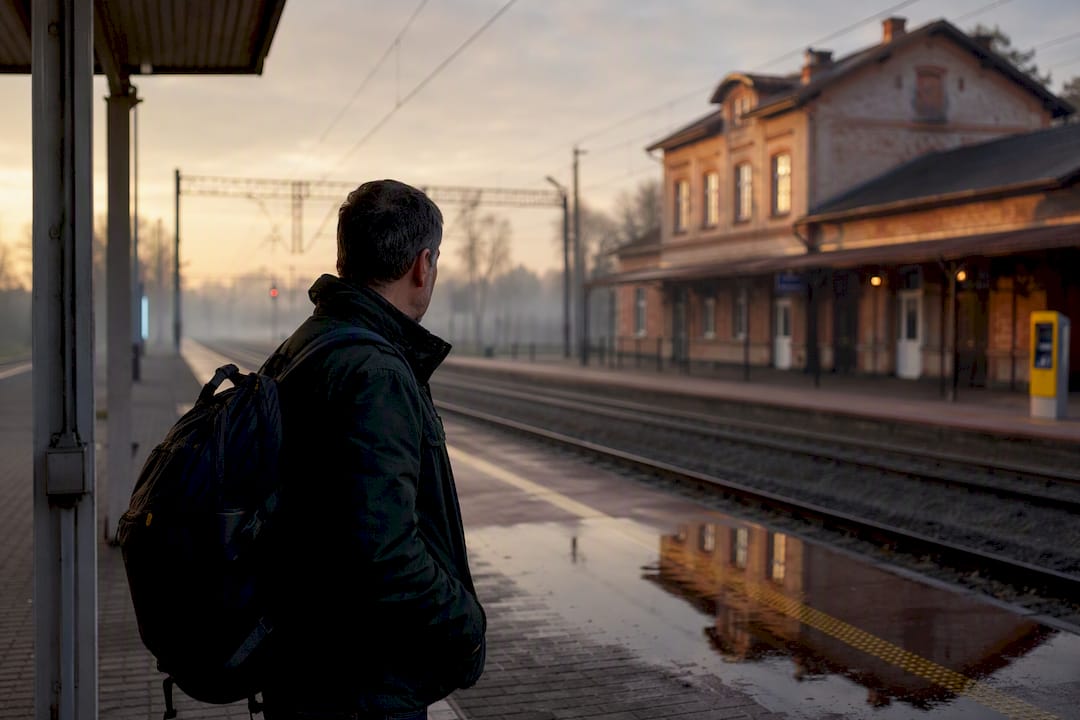
Trains to Oświęcim vary more than you’d expect. Depending on the service, journey times range from 40 to 90 minutes, and tickets are bought through Poland’s national rail operator or at the station. The catch is that Oświęcim station isn’t the Memorial. You’ll need a further 1.5 to 2 km on foot, by local bus, or by taxi, which many first-time visitors don’t account for.
Self-drive via the A4 is the fastest route on paper at 60 to 70 minutes, but it comes with two practical snags: electronic tolls on certain stretches and limited on-site parking during peak months. Sat-nav apps handle the route reliably, though double-check your rental car’s toll transponder before setting off.
Taxi or private transfer is the most convenient door-to-door option, particularly if you’re travelling with family or heavy luggage. Costs sit higher than the bus or train, but pre-booking through a reputable operator avoids the guesswork of flagging a cab and negotiating a fare on the spot.
Pro Tip: If you’re short on time or travelling with older relatives, a guided coach transfer usually works out cheaper than a taxi once you factor in the guide, entry coordination and return journey all being handled for you.
Getting around once you’re there: distances on-site
The Memorial isn’t one single site. Auschwitz I and Birkenau are separate camps about 3.5 km apart, and that gap catches out visitors who assume they’re within easy walking distance of each other.
- A seasonal shuttle bus runs between the two sites in warmer months, and most guided tours use it rather than walking.
- Walking the 3.5 km is possible, but it eats into your visiting time and energy, especially in summer heat.
- Oświęcim railway station is about 1.5 km from the Visitor Services Centre, so budget an extra 20 to 30 minutes on foot, or use a local bus or taxi for that final stretch.
- The Visitor Services Centre has lockers, a café and toilets, and it’s where most guided tours begin and end.
- Mobility-friendly routes and limited accessible transport exist on-site, but it’s worth confirming specific needs with the Memorial directly ahead of your visit.
How much time should you set aside, and when to book
Plan for a full day. Most visitors leaving Kraków should budget a full day in total once you include travel both ways, the guided walk through Auschwitz I, and time at Birkenau.
A realistic breakdown looks like this:
- 60 to 90 minutes travelling out from Kraków
- 3 to 3.5 hours on a standard guided tour of Auschwitz I
- Additional time at Birkenau, often using the seasonal shuttle
- 60 to 90 minutes back to Kraków
Entry to the Memorial is free, but during high season (April to October), guided-entry slots fill quickly, and independent visitors without a reservation can find themselves without a place. Booking a morning slot also tends to mean lighter crowds and cooler temperatures if you’re visiting in summer. Reserve ahead through the official channel or a tour operator to avoid disappointment.
What UK travellers should know before setting off
Carry some Polish złoty even if you’re paying by card everywhere else. Local buses and small kiosks near the site often expect cash, and bus fares are quoted in PLN rather than sterling.
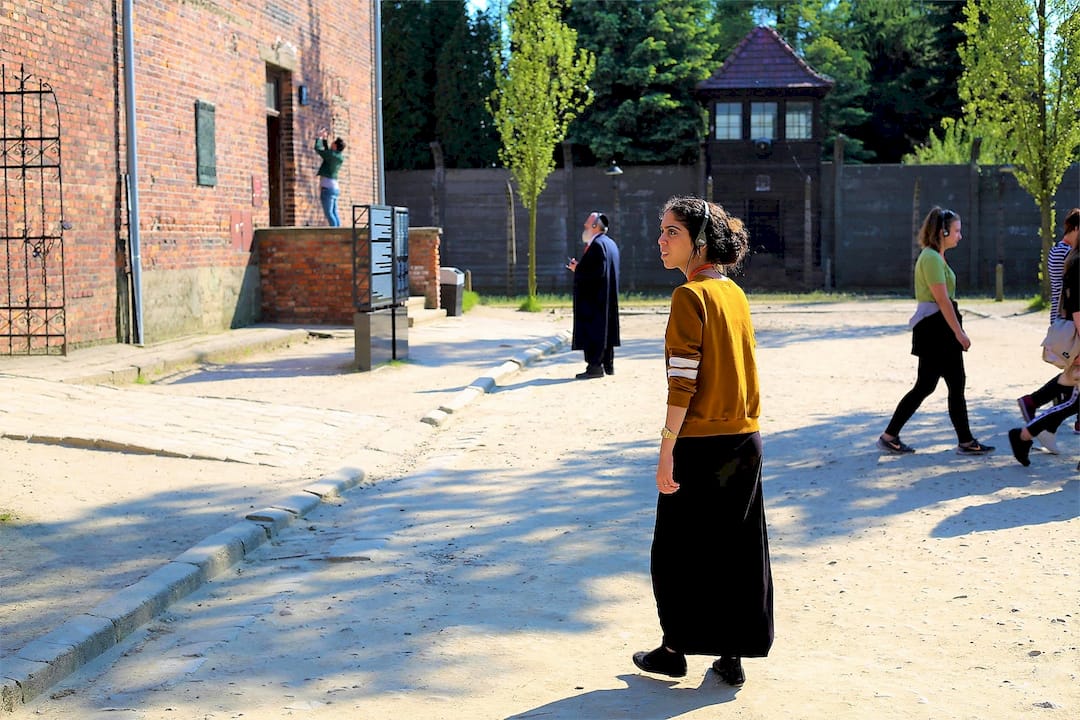
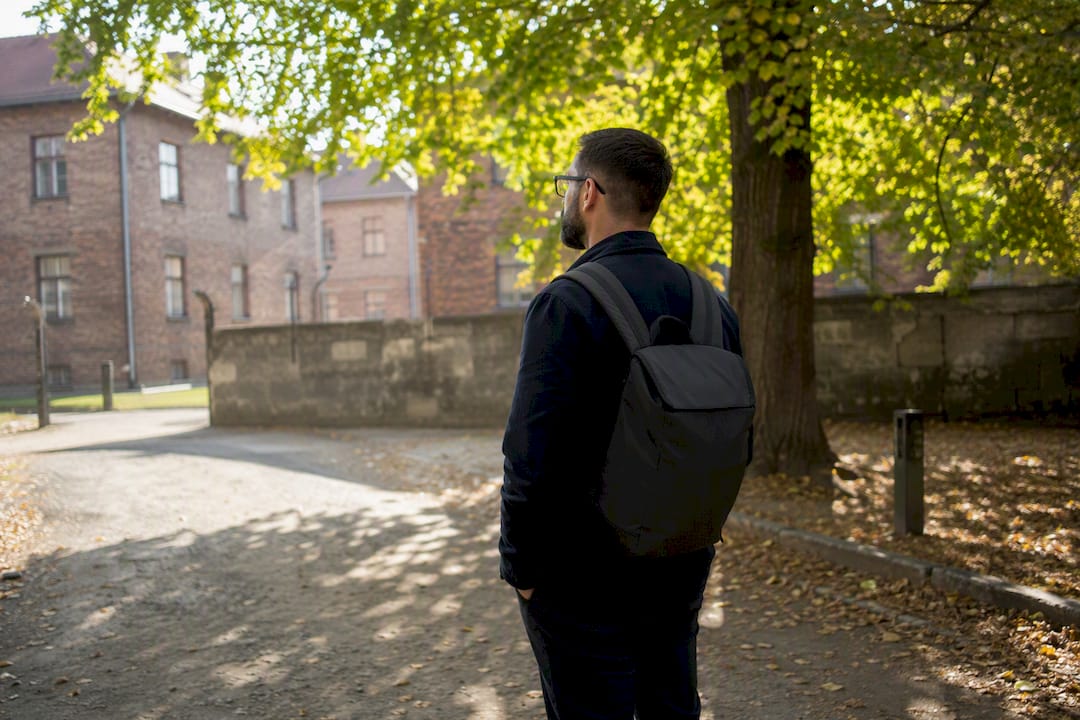
If reduced mobility is a concern, mention it when booking, since some paths and buildings have limited step-free access. The site itself asks for quiet, respectful behaviour throughout: no loud conversation, no eating within the grounds, and photography is permitted in most areas but discouraged inside certain buildings, including the exhibition spaces with personal belongings. Dress is a personal choice, though modest, comfortable clothing suits the tone of the place better than beachwear or anything overtly casual.
Pro Tip: Always check auschwitz.org shortly before you travel. Reservation systems, opening hours and shuttle schedules occasionally shift with public holidays and seasonal demand.
Why organised transport changes how the visit feels
Auschwitz-Birkenau is not a site you rush. The emotional weight of it lands differently when you’re not simultaneously checking bus times or working out whether you’ve missed your entry slot.
That’s the real argument for small-group or private transport. It’s not about comfort for its own sake. It’s about removing the logistics so your attention stays where it should be. For UK visitors unfamiliar with Polish transport patterns, having a licensed guide handle entry coordination and pacing means less time worrying and more time actually reflecting on what you’re seeing.
— Damian Fort
Book a stress-free transfer with ComFort Tours Cracow
ComFort Tours Cracow is the alternative to piecing together buses, trains and timetables yourself: a private or small-group transfer from central Kraków straight to the Memorial entrance, with a licensed guide and your entry slot already sorted before you leave the hotel.
That matters most for the parts of the journey that trip up independent travellers: no Oświęcim station walk, no checking whether the Lajkonik bus is running to schedule, no scrambling for a reservation during peak season. Groups stay small, guides speak fluent English, and pick-up times are built around your day rather than a public timetable. Have a look at the Auschwitz tour from Kraków page for current departure times and pricing, or get in touch to arrange a private transfer suited to your group.
Where to check before you travel
Confirm current entry rules and hours directly on the official Memorial site, and browse ComFort Tours Cracow’s own Auschwitz visiting guide for planning checklists and sample itineraries.
FAQ
Is it possible to take a day trip from Kraków to Auschwitz?
Yes. Most visitors complete the round trip, including travel and a guided visit, within 7 to 10 hours from Kraków.
How much is the entry fee for Auschwitz?
Entry to the Memorial is free, though guided-entry slots and reservations are strongly recommended during high season from April to October.
How close is Kraków to Auschwitz?
The Auschwitz distance from Kraków is roughly 66 to 70 km (41 to 44 miles), with driving times typically between 60 and 90 minutes depending on traffic and route.
Can you wear jeans to Auschwitz?
Jeans are fine. There’s no strict dress code, though modest, comfortable clothing is more appropriate than beachwear given the nature of the site.