
Krakow works for wheelchair users and travellers with mobility challenges, provided you plan around a handful of genuine obstacles: medieval cobbles, a salt mine with 380 steps, and a few state rooms you simply won’t reach. The compact Old Town, strong local operators, and a growing set of fully accessible museums mean most itineraries succeed with the right sequence of bookings.
Start here, in this order:
- Book PRM (passenger with reduced mobility) assistance for your flights and reserve an adapted transfer from John Paul II International Airport Krakow-Balice.
- Confirm an accessible guided tour or private tour with a local operator like ComFort Tours Cracow before you fly.
- Decide your big day trips early. Wieliczka Salt Mine and Auschwitz-Birkenau both need advance contact to arrange partial or accessible routes.
Key Takeaways
Accessible Krakow travel succeeds when bookings follow a fixed sequence: PRM assistance, adapted transfer, then confirmed tour and attraction slots with written accessibility details.
| Point | Details |
|---|---|
| Book PRM assistance early | Confirm special assistance with your airline at least 48 hours before flying into Krakow. |
| Call ahead for Wawel and Wieliczka | Both sites require advance contact to arrange partial or vehicle access to certain areas. |
| Choose equipment carefully | Powered wheelchairs and large pneumatic wheels handle Old Town cobbles better than manual chairs. |
| Cluster fully accessible sites | Schindler’s Factory, MOCAK, and Rynek Underground Museum form a reliable step-free day. |
| Use a local specialist operator | ComFort Tours Cracow arranges private transport and tailored itineraries around confirmed mobility needs. |
Table of Contents
- Which accessible tours Krakow visitors should book first
- Which Krakow attractions are actually wheelchair accessible?
- How do I get around Krakow with limited mobility?
- Packing and equipment checklist for cobbles and slopes
- What should you ask before booking an accessible tour?
- How ComFort Tours Cracow builds trips around your mobility needs
- What emergency and medical support exists for mobility challenges in Krakow?
- Which hotels near Krakow’s attractions are wheelchair accessible?
- What the guidebooks get wrong about accessible Krakow
- Book an accessible tour in Krakow with local support
- Sources
- FAQ
Which accessible tours Krakow visitors should book first
Not every tour format suits every mobility need, and picking the wrong one wastes a day you won’t get back. Here’s how the main options actually compare.
- Private adapted tours. A vehicle booked to your specifications, a guide who adjusts pace to you, and no waiting on strangers. Best for powered wheelchair users and anyone needing door-to-door transfers between sites.
- Small-group adapted tours. Cheaper than private hire and still manageable if the operator caps group size and confirms vehicle access beforehand. Works well for manual wheelchair users travelling with a carer.
- Electric golf-cart sightseeing. A genuinely useful workaround for the Old Town’s cobbled streets, letting you cover the Rynek Główny and surrounding lanes with guided commentary and none of the jolting a manual chair takes on stone setts, as local accessibility guides note.
- Museum days and accessible day trips. Pairing fully accessible sites into one itinerary, rather than mixing them with partial-access venues, reduces the chance of a wasted afternoon.
Private tours cost more but eliminate the biggest risk: turning up to find a vehicle that can’t take a powered chair, or a guide unprepared for slower pace. Booking a private slot two to three weeks ahead, longer in peak summer, gives operators time to confirm ramp specifications and adjust the itinerary.
Pro Tip: Ask any operator whether their vehicle has a ramp or a lift, and get the ramp’s gradient in writing. A steep fold-out ramp can be unusable for a heavier powered chair even when the operator calls it “wheelchair accessible.”
Which Krakow attractions are actually wheelchair accessible?
Accessibility in Krakow splits cleanly into three tiers: sites built or renovated with step-free access, historic sites offering partial access with advance notice, and sites where the standard route simply won’t work for a wheelchair.
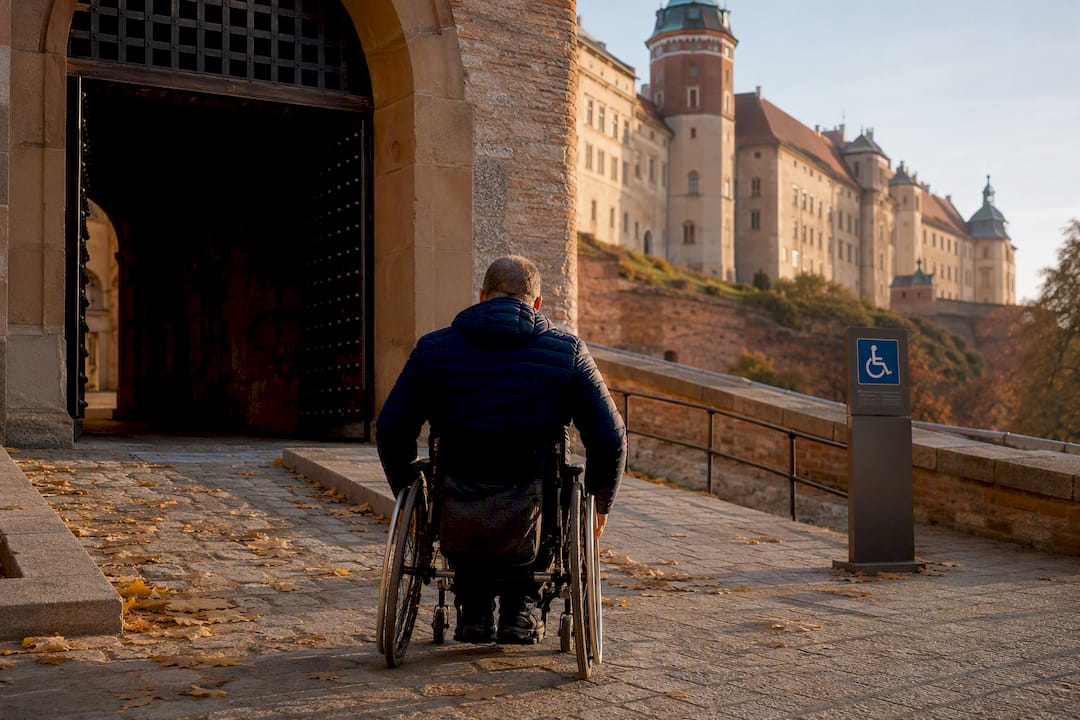
Wawel Royal Castle sits in the middle tier. The castle publishes its own accessibility guidance and can arrange vehicle access to parts of the hill on request, but several state rooms remain only partially accessible because of original stone stairs and narrow doorways that can’t be retrofitted.
Wieliczka Salt Mine is the trickiest big-ticket item. The standard tourist route runs to 380 steps through narrow underground passages, ruling out the ordinary visit for most wheelchair users. The mine can sometimes arrange a partial-access visit or a surface-level alternative, but this has to be organised with the mine office directly, with contingency time built in for lift scheduling.
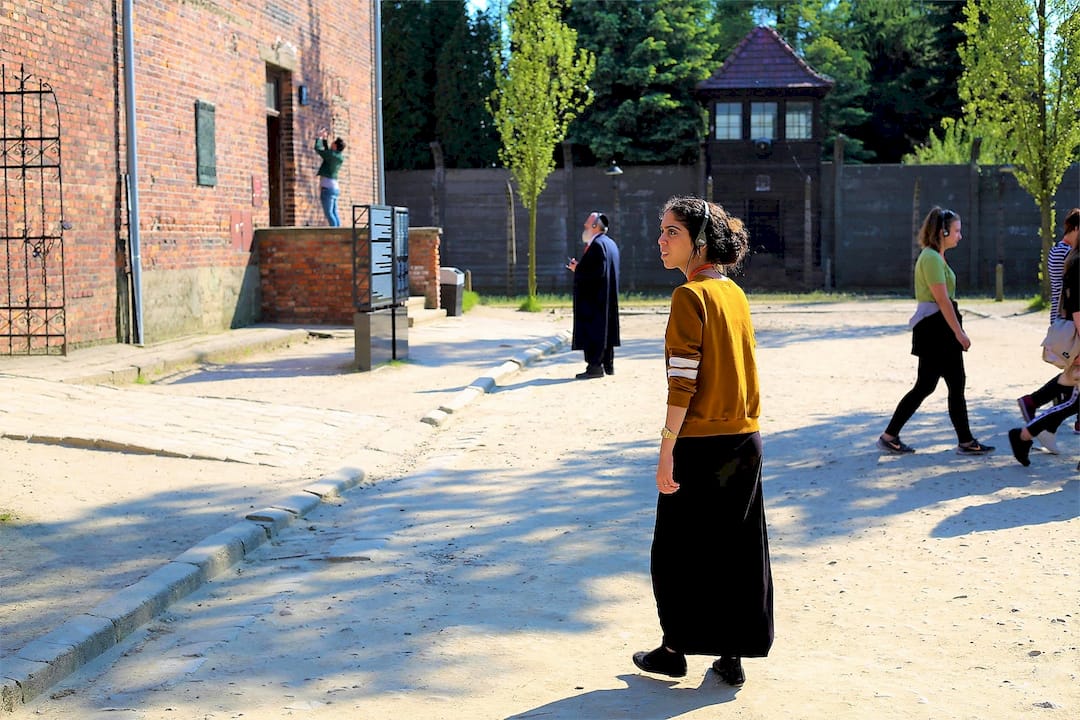
Auschwitz-Birkenau Memorial and Museum does maintain accessible routes and facilities, and contacting the Memorial ahead of your visit is the standard way to confirm exactly which paths and buildings you’ll be able to reach on the day.
The good news sits with Krakow’s modern museums. Schindler’s Factory, MOCAK, and the Rynek Underground Museum are generally fully accessible, and stringing them together makes for a reliable, step-free day without a single phone call needed beforehand.
If cobbles are wearing you down, Nowa Huta and Planty park offer flatter, smoother surfaces than the Old Town’s historic core, useful for a lower-effort afternoon between bigger excursions. Watch ticketing too: reduced and companion fares exist at most major sites, but peak-season slots (June to September) sell out for accessible time bands faster than standard ones, so book those specifically, not just any available ticket.
How do I get around Krakow with limited mobility?
Getting into and around the city reliably comes down to booking transport before you land, not sorting it on arrival; choosing an accessible tour provider and arranging suitable transport can make all the difference, as shown by La Dolce Waiheke Wine Tour.
- Book PRM assistance at Krakow Airport at least 48 hours before your flight, as the airport itself recommends. This gets you priority boarding and staff assistance from the gate to arrivals.
- Reserve an adapted transfer in advance, whether a private minivan or an accessible taxi. Krakow’s compact layout, with its major sites clustered close to the centre, keeps transfer times short once you’re on the ground.
- Treat public transport as a backup, not a default. Some tram lines run low-floor vehicles, but bus accessibility varies route to route, and you can’t always tell which vehicle will turn up. Taxis or a pre-booked driver remove that guesswork entirely.
- Build in extra connection time at both ends of any journey. Boarding a low-floor tram or loading a chair into a taxi takes longer than the timetable assumes.
Packing and equipment checklist for cobbles and slopes
Krakow’s Old Town cobbles are the single biggest physical challenge you’ll face, and the equipment you bring matters more than most people expect.
- Powered wheelchairs and chairs with large pneumatic wheels handle cobblestones and slopes far better than manual chairs or small-wheeled pushchairs, according to guidance from Wawel’s own accessibility notes.
- If hiring equipment locally, check the provider supplies UK-compatible charging adaptors and secure overnight storage for batteries, and confirm your travel insurance covers hired mobility equipment abroad.
- Carry your European Disability Card or its UK equivalent, plus any carer documentation, since most attractions request proof for reduced or companion tickets.
- Book the first or last tour slot of the day where possible. Quieter timings mean more space to manoeuvre and staff with time to help.
Pro Tip: Ask every operator what type of ramp their vehicle uses, portable or fixed, and its angle. A portable ramp steep enough to worry a manual chair user is a common day-of surprise that a five-minute question avoids entirely.
What should you ask before booking an accessible tour?
Get specifics in writing before you pay a deposit. Vague reassurances (“yes, we’re accessible”) cause more ruined days than outright refusals.
- Book in this order: flights with PRM assistance, then your adapted transfer, then tour and attraction time slots, then any equipment hire.
- Ask exact numbers, not opinions: doorway clearance in centimetres, ramp gradient, vehicle ramp type, and internal lift dimensions where relevant.
- Contact Wawel, Wieliczka, and Auschwitz-Birkenau at least two to three weeks ahead, longer in July and August, since accessible arrangements at these sites often need staff scheduling.
- Get confirmations in writing, ideally by email, and treat a vague verbal “should be fine” as a signal to ask a follow-up question, not an answer.
How ComFort Tours Cracow builds trips around your mobility needs
ComFort Tours Cracow runs small-group and private tours across Krakow and the surrounding region, including Wieliczka Salt Mine and Auschwitz-Birkenau, with itineraries built around the traveller rather than a fixed script.
- Private transport arranged to your specifications, including vehicle type and ramp requirements confirmed before the day.
- Small group sizes as standard, which keeps pace flexible for wheelchair users and carers alike.
- Local guides who know exactly which routes at each site are workable and which need an alternative.
- Simply flag your mobility needs when booking. Advance notice lets the team confirm vehicle access and adjust timing on your Auschwitz visit or Wieliczka excursion before you set foot in Poland.
What emergency and medical support exists for mobility challenges in Krakow?
Krakow has a full range of hospitals and emergency services, and the practical question for most travellers with mobility challenges isn’t whether help exists but how quickly you can reach it.
Dial 112 for any emergency in Poland; the operators handle English-language calls, and it connects to police, fire, or ambulance services as needed. The University Hospital in Krakow (Szpital Uniwersytecki) runs a 24-hour accident and emergency department and is the most commonly used facility for visitors requiring urgent care in the city centre.
If you’re travelling with a powered wheelchair or specialist equipment, carry a card noting your equipment’s make, model, and any medical conditions relevant to emergency staff, since language barriers can slow things down at the worst possible moment. It’s also worth noting your travel insurer’s assistance hotline number somewhere accessible, not just saved in a phone that might be lost or run out of battery.
For less urgent issues, most central pharmacies (apteka) stock standard supplies and several operate extended hours near the Old Town. If you’re on a tour with ComFort Tours Cracow or a similar operator, your guide will typically already know the nearest pharmacy and hospital relative to wherever you’re visiting that day, which matters more than it sounds when you’re relying on someone else’s local knowledge rather than your own.
Which hotels near Krakow’s attractions are wheelchair accessible?
Accommodation accessibility in Krakow varies sharply between purpose-built modern hotels and converted historic townhouses, and the difference isn’t always obvious from a booking site’s tick-box filters.
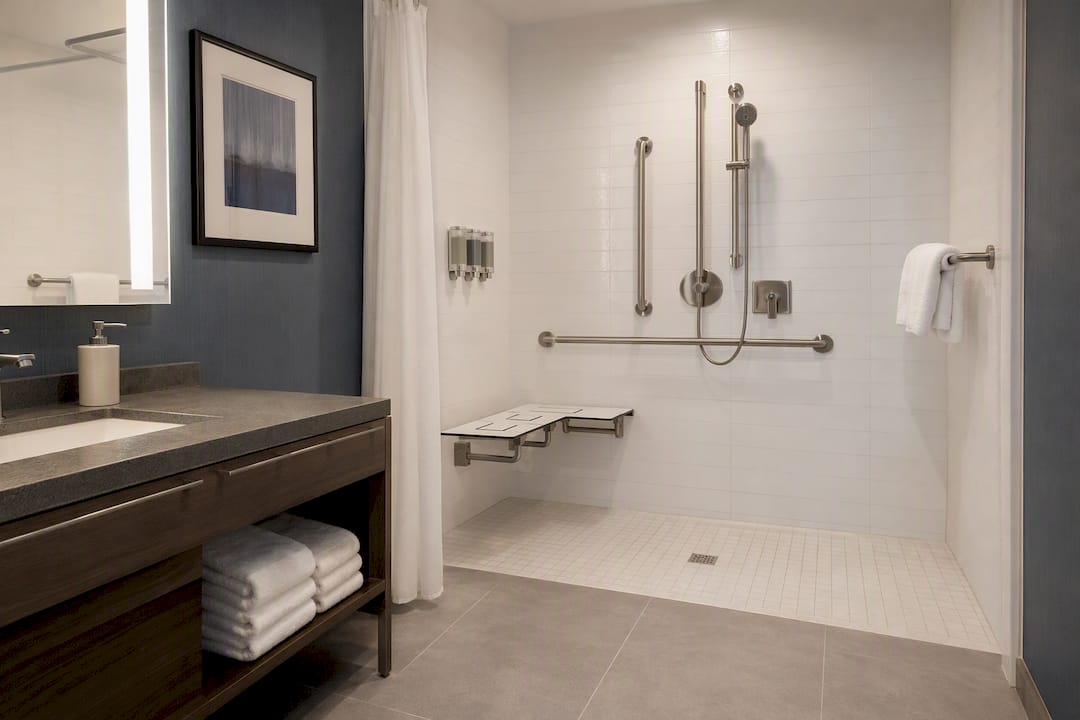
International chain hotels near the Old Town and around Krakow Główny railway station tend to offer the most reliable accessibility: step-free entrances, lifts to all floors, and accessible bathrooms with roll-in showers or grab rails as standard. These sit within a short adapted transfer of Wawel, the Rynek Underground Museum, and Schindler’s Factory, which keeps daily transport simple.
Boutique hotels inside restored historic buildings are where problems crop up. A charming converted townhouse near the market square might have a step-free ground floor but no lift to upper rooms, or a lift too small for a powered chair. Always ask for exact doorway widths and lift cabin dimensions before booking, the same way you would with a tour vehicle, rather than trusting a general “accessible” label on a listing.
Location matters as much as the room itself. Staying within Krakow’s compact centre, rather than further out, cuts down on transfer time and means a bad transport day doesn’t wreck your whole schedule. If a hotel can’t answer specific accessibility questions by email, treat that as a reason to keep looking rather than hoping it works out on arrival.
What the guidebooks get wrong about accessible Krakow
Most general travel advice treats “accessible” as a single tick box: a city either has it or it doesn’t. Krakow proves that’s the wrong frame entirely. This is a city with genuinely excellent modern museum access sitting a few hundred metres from a castle hill that still can’t fully accommodate a wheelchair, and no amount of general optimism changes that mismatch.
The bigger failure in most guides is treating advance contact as optional advice rather than the actual mechanism that makes a visit possible. Calling Wieliczka or Wawel isn’t a nice-to-have step for the cautious traveller. For several parts of those sites, it’s the only route to access at all. Guides that bury this in a single line under “tips” undersell how central it is to whether your day works.
What I’d prioritise differently: spend less energy researching which single attraction is “the most accessible” and more energy building a booking sequence, flights, transfer, tours, equipment, in that order, with written confirmations at each step. A traveller with a solid sequence and average luck will have a better trip than one who picked the “perfect” accessible attraction but sorted transport as an afterthought.
Book an accessible tour in Krakow with local support
ComFort Tours Cracow is the practical alternative to piecing together your own transfers, tour bookings, and accessibility calls separately. Rather than juggling airport PRM forms, a separate taxi firm, and a tour operator who’s never confirmed your chair’s dimensions, one local team handles the whole sequence and already knows which vehicles and routes actually work.
That matters most on the two trickiest days of any Krakow trip: Wieliczka and Auschwitz-Birkenau. Both need advance contact with the site itself, and ComFort Tours Cracow’s guides have already made those calls before, so your questions about ramp gradients and lift dimensions get answered by someone with direct experience rather than a generic call-centre script. Private transport is arranged to your specifications, group sizes stay small, and itineraries adjust around your pace rather than a fixed script written for a coach party.
If you’re ready to plan your trip, browse ComFort Tours Cracow’s private and small-group tours and flag your mobility requirements when you enquire, or book your airport transfer first so the rest of your itinerary has a reliable starting point.
Sources
- Krakow Airport — PRM information
- Wawel Castle accessibility
- Wieliczka Salt Mine — tourist route information
- Auschwitz-Birkenau Memorial and Museum
FAQ
Is Krakow disabled friendly?
Krakow is broadly accessible for wheelchair users, with fully accessible modern museums and a compact centre that shortens transfers, though the Old Town’s cobbles and a few historic sites like Wawel need advance planning.
Where is the best place to travel for people with limited mobility?
Compact European cities with clustered attractions, such as Krakow, tend to suit travellers with limited mobility best because transfer distances between accessible sites stay short.
Are the salt mines in Krakow wheelchair accessible?
The standard Wieliczka Salt Mine tourist route involves 380 steps and narrow passages, making it unsuitable for most wheelchair users on the ordinary tour; contact the mine directly about partial-access alternatives.
Is three days in Krakow too much?
Three days suits most itineraries well for travellers with mobility challenges, allowing one day for the accessible museum cluster, one for a day trip like Auschwitz-Birkenau, and one with built-in rest between bookings.