
Yes, you can take photographs inside the Wieliczka Salt Mine, but the rules are stricter than most tourists expect. Photography for private, personal use is allowed throughout the standard guided tour, and most visitors will need a small photography permit purchased on site. Three rules matter more than any other:
- Private photography only. Commercial photography or filming needs the Mine’s prior written consent before you switch the camera on.
- A permit is standard practice. Buy your photography sticker at the ticket office rather than assuming your entry ticket covers it.
- Kit limits apply underground. No flash in sensitive chambers, tripods are rarely practical, drones are banned outright, and your guide has the final word.
Key Takeaways
Photography at Wieliczka is permitted for private use with a purchased sticker, while commercial work always needs the Mine’s written consent in advance.
| Point | Details |
|---|---|
| Buy the sticker on arrival | Photography permits are sold at the ticket office; check current prices on the official site before travel. |
| Skip the tripod | Fast lenses and in-body stabilisation work better than a tripod in a moving, crowded tour group. |
| Know the no-flash zones | Chapel areas ban flash outright, and the underground lake lights up only briefly when a group arrives. |
| Commercial work needs written consent | Filming or shoots for publication require prior approval from the Mine, arranged well ahead of your visit. |
| Small groups help most | ComFort Tours Cracow runs small-group visits with pre-briefed photography rules, giving photographers extra room to work. |
Table of Contents
- Wieliczka photography rules at a glance
- Where do you buy the Wieliczka photography permit?
- What’s allowed and what isn’t underground
- How do you actually get good photos on the tour?
- Which areas have extra photography restrictions?
- Applying for commercial photography permission
- What happens if you break the photography rules?
- Why small-group tours make compliance easier
- Book a Wieliczka tour that works for photographers
- Sources
- FAQ
Wieliczka photography rules at a glance
Sort these out before you leave home and the visit runs itself.
- Buy the photography sticker at the ticket office when you arrive, or check the official booking channel in advance if you’re pre-purchasing tickets online.
- Leave the tripod at the hotel. Space in the passages is tight, groups move constantly, and a fast lens with in-body stabilisation does more work anyway.
- Drones are banned everywhere in the mine, and larger professional rigs (lighting stands, gimbals, multiple bodies) usually need approval arranged beforehand.
- Stay with your guide’s pace. The tour is a moving group, not a private shoot, so a long exposure that blocks a passage will get you moved along.
Pro Tip: Pack one versatile lens rather than a bag of options. You won’t get time to swap glass in a moving group, and a 24 to 70mm equivalent covers chambers, portraits, and the wider caverns without fuss.
Where do you buy the Wieliczka photography permit?
The photography sticker is issued at the ticket office when you arrive, alongside your standard entry ticket. It’s a small add-on fee rather than a separate booking, so you don’t need to arrange it weeks in advance, but it’s worth budgeting for as part of your total visit cost.
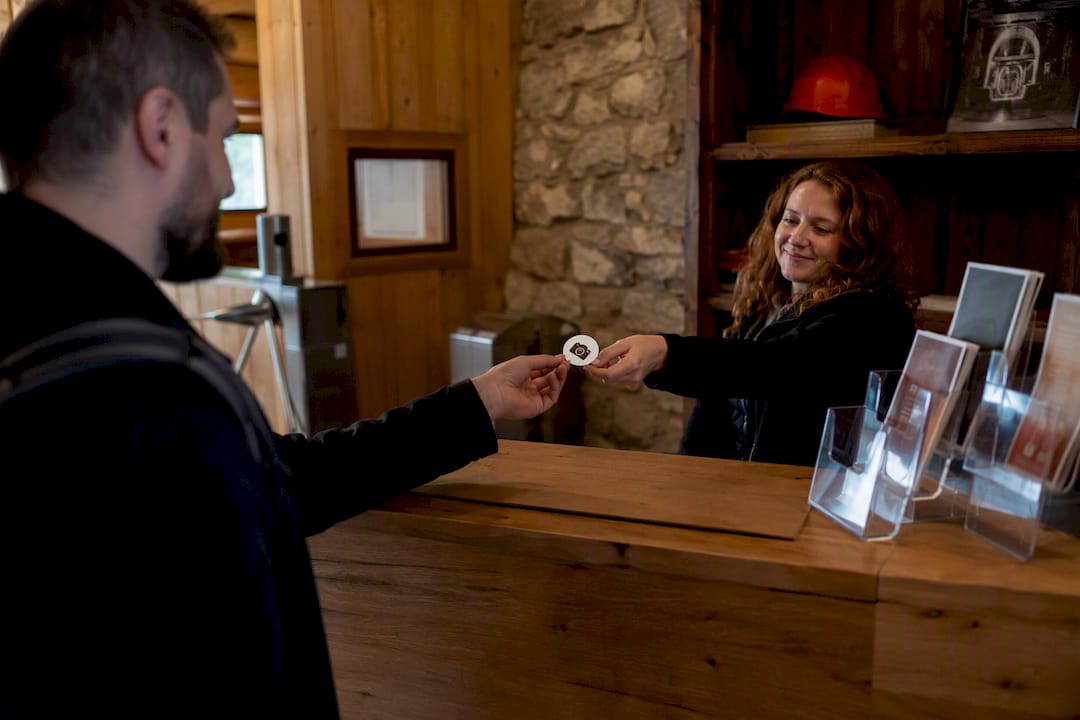
That sticker covers one thing only: private photography during a standard guided tour. It doesn’t extend to filming for publication, product shoots, or any use beyond your own personal memories and social sharing. If your plans go further than a holiday album, you’re into commercial territory, and that’s a different process entirely, covered further down.
For UK visitors, a few practical points make the ticket desk less stressful:
- Prices are set in Polish złoty, so check the official Wieliczka regulations and current pricing page shortly before travel, since fees do get revised.
- Card payment is standard practice at Polish tourist attractions, but carrying some cash covers you if the terminal queue is long.
- If you’re booking through a tour operator, ask in advance whether the photography sticker is bundled in or needs buying separately on arrival.
What’s allowed and what isn’t underground
The official regulations are clear on the core distinction: photography and filming for private purposes are permitted during the tour, while commercial use of any kind requires the Mine’s prior written consent.
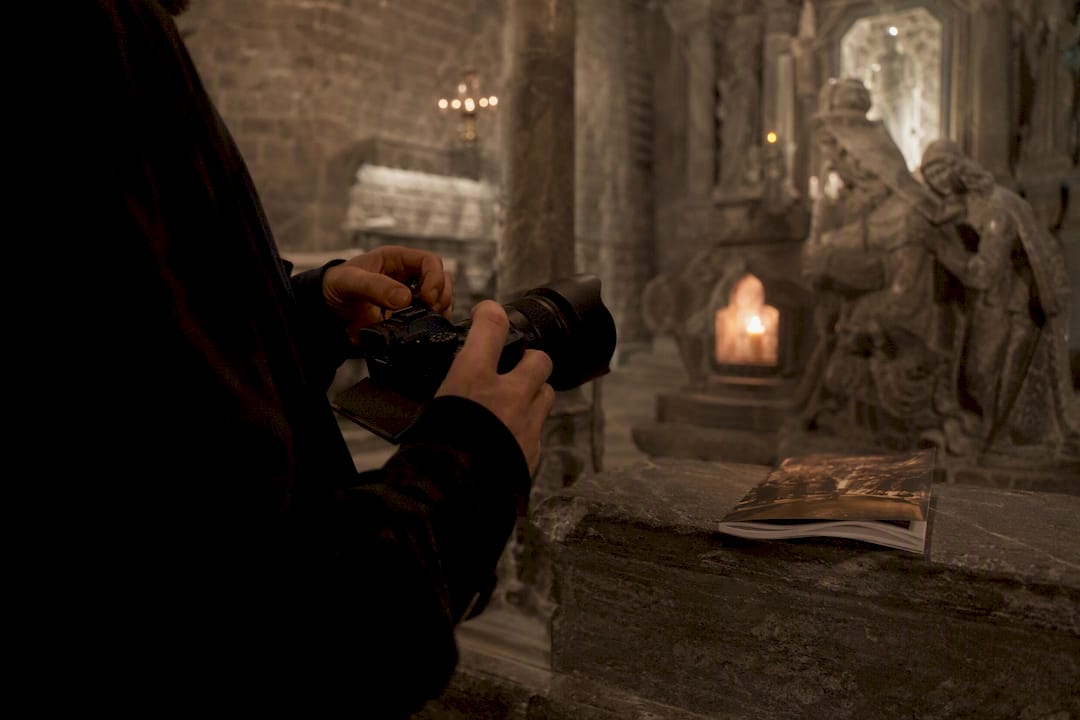
Beyond that headline rule, a few technical restrictions come up repeatedly. Flash is off in chapel spaces, where the underground temperature sits around 17 to 18°C year-round and the atmosphere is treated with more reverence than the rest of the route. Tripods are technically permitted but rarely workable given the crowds and pace. Drones aren’t an option anywhere below ground. On top of that, the Mine asserts copyright and exclusive industrial property rights over certain carved works and installations, which matters if you’re thinking about publishing or selling images later.
How do you actually get good photos on the tour?
Working within these constraints is entirely possible if you plan your kit and technique around a moving group rather than fighting it.
- Choose fast glass over flash. A wide-aperture prime or a bright zoom, paired with a higher ISO, does the job that flash isn’t allowed to do.
- Pre-focus before the moment arrives. At standout spots like the underground saltwater lake, lighting activates only when a group is present and often for a brief window, so you need your settings dialled in before the lights come on, not after.
- Lean on stabilisation, not tripods. In-body or lens-based stabilisation lets you shoot handheld at slower shutter speeds without holding up the group.
- Let your gear acclimatise. Moving from warm surface air into the cool, stable underground environment invites condensation on lenses and sensors, so give kit a few minutes to settle before shooting.
- Carry spares. Cold, damp air drains batteries faster than you’d expect on a two-hour tour.
Pro Tip: Book the earliest or latest tour slot the schedule allows. Smaller groups mean more breathing room to compose a shot, and if transport timing is tight, check routes from Kraków to Wieliczka before you commit to a slot.
Which areas have extra photography restrictions?
A handful of locations carry tighter rules than the general tour, for reasons that are more about conservation and courtesy than bureaucracy.
- The chapel spaces ban flash outright and carry an unspoken expectation of quiet, respectful behaviour. Long exposures that hold up other visitors don’t go down well here.
- The underground lake only lights up while a group is present, and often only briefly, so you get one real chance rather than a leisurely setup.
- Certain carved sculptures and installations fall under the Mine’s copyright protections, meaning publication of close-up images may need separate permission.
- Staff can restrict photography at short notice anywhere on the route, for conservation or safety reasons, and their instruction overrides anything printed in a guidebook.
Applying for commercial photography permission
Commercial photography or filming needs written consent arranged directly with the Mine well ahead of your visit; a standard entry ticket, sticker included, doesn’t cover it.
- Contact the Mine through its official regulations and enquiry channel with your intended shoot date, crew size, and full equipment list.
- Include proof of insurance, a clear statement of intended use, and the territories where the footage or images will be distributed.
- Build in a generous lead time. Approval isn’t instant, and additional location fees or conservation conditions are common for larger productions.
What happens if you break the photography rules?
The Mine holds copyright and exclusive industrial property rights over parts of its exhibition, and infringing them isn’t a purely theoretical risk.
- Unauthorised commercial use can trigger a civil claim from the Mine, not just a polite warning.
- On-site breaches (drones, banned flash use, ignoring staff instructions) can mean confiscated footage or being asked to leave.
- If you publish images featuring identifiable people, UK data protection and privacy expectations still apply once those photos reach the internet, so get consent where you reasonably can.
Why small-group tours make compliance easier
Photography rules at Wieliczka aren’t complicated, but a large tour group makes them harder to work with. Space runs out, guides move faster, and your one shot at the lit lake vanishes into someone else’s shoulder. Smaller groups simply give photographers more room to breathe within the same rules, and a guide who briefs the group early on flash and pacing saves everyone frustration underground.
— Damian Fort
Book a Wieliczka tour that works for photographers
ComFort Tours Cracow keeps groups small on purpose, which matters more underground than anywhere else on a Kraków itinerary. A crowded tour leaves you jostling for the one bright moment at the lake; a small group gives you the extra seconds to actually use it. Our guides brief every group on the photography rules before you descend, so nobody’s caught out at the ticket desk or told off in the chapel.

If your plans stretch beyond personal photos into commercial or press work, that approval still has to come directly from the Mine. What we can do is get you underground in a group small enough to make the most of what’s permitted. Have a look at our Wieliczka tour options and pick a slot that suits your photography plans, or read more about what to expect at the mine before you book.
Sources
- Regulations of visiting the Wieliczka Salt Mine (official visitor regulations)
- Regulations of visiting the ‘Wieliczka’ Salt Mine — official site
- Visiting the Wieliczka Salt Mine: What to expect underground — Hecktic Travels
- Wieliczka travel notes and photography tips — Sumfinity travel
FAQ
Do I need a permit to photograph inside Wieliczka Salt Mine?
For private use, most visitors buy a small photography sticker at the ticket office; it covers personal photos during the standard guided tour, not commercial use.
Can I photograph other visitors during the tour?
You can capture general scenes, but UK privacy expectations still apply once images go online, so seek consent before publishing identifiable close-ups of strangers.
Are tripods allowed in the Wieliczka Salt Mine?
Tripods are technically permitted but rarely practical given the crowds and pace of a guided group, and photographers generally get better results from stabilised handheld shooting.
Can I use flash photography underground?
Flash is restricted in sensitive areas, particularly the chapel spaces, so a fast lens and higher ISO setting are the better workaround throughout the tour.
What happens if I want to sell or publish my Wieliczka photos?
Any commercial use, including sale or publication, requires the Mine’s prior written consent, since the site holds copyright and industrial property rights over parts of its exhibition.