
Budget 90 minutes for a guided tour of Schindler’s Factory Museum; plan 1.5 to 2 hours if you’re going self-guided, and allow up to 2.5 hours if you intend to read every panel and watch every film. Arrive somewhat early, typically at least 15 minutes before your ticketed time, to clear security. Entry is enforced within a strict 15-minute window around your ticketed time, so arriving late may result in losing your slot.
TL;DR:
- Guided tours last around 90 minutes and cover the core exhibition, including key areas like the Krakow ghetto and Schindler’s office, while self-guided visits typically take 1.5 to 2 hours.
- Visitors who want to thoroughly read and watch all testimonies should allocate up to 2.5 hours, including temporary exhibits and memorial spaces, to avoid feeling rushed.
- Arriving 15 to 20 minutes before your timed entry window is essential to avoid losing your slot, and last entries are permitted only 90 minutes before closing.
- Booking early, especially during peak months from May to September, ensures access to preferred time slots, ideally before 10 am or after 4 pm to beat the crowds.
- The museum recommends the exhibition for visitors aged 14 and older due to intense subject matter, and flexibility in pacing is best achieved through private or small-group guided visits.
Table of Contents
- Schindler factory tour length: what most visitors actually spend
- Guided tour or self-guided visit: which suits your schedule?
- What you’ll actually see at each duration
- Booking and entry rules that trip up first-time visitors
- When to book to avoid the queues
- Is it suitable for children and younger travellers?
- Fitting the visit into your Krakow itinerary
- Why pacing matters more than people expect
- Book a Schindler’s Factory visit that fits your pace, not a queue’s
- Sources
- FAQ
Schindler factory tour length: what most visitors actually spend
The confusion around Schindler factory tour length usually comes down to one thing: people conflate the guided tour with the general museum visit, and they’re not the same experience. A guided tour of the permanent exhibition runs to roughly 90 minutes, led by a licensed museum educator who moves you through the fixed route at a set pace. A self-guided visit is a different animal, and it’s the option most independent tourists actually book.
Self-guided visits typically run 1.5 to 2 hours. That’s the baseline the museum itself quotes, and it holds up for most travellers who want to absorb the exhibition without a guide setting the tempo. Where it stretches is obvious once you’re inside: this isn’t a museum you skim. The permanent exhibition is dense with personal testimony, video footage, and reconstructed spaces, and stopping to read a wall of survivor accounts adds up fast.
Here’s how that plays out in practice, depending on how you like to travel:
- Quick visitors who want the highlights and have another site booked afterwards: closer to 90 minutes, sticking to the guided format or moving briskly through the self-guided route.
- Standard visitors with a normal appetite for museum reading and no rigid schedule: 1.5 to 2 hours, which covers the exhibition properly without lingering on every exhibit.
- Immersive visitors who want to read every panel, watch every documentary clip, and sit with the material: up to 2.5 hours, which also leaves room for temporary exhibitions running alongside the permanent collection.
A typical visit, taken across all visitor types, lands somewhere in the 90 to 120 minute range, with the guided route covering the main sections including Oskar Schindler’s reconstructed office. If your itinerary has any flexibility at all, build in the extra half hour. Rushing the last few rooms because you’re watching the clock is the single most common complaint from visitors who booked too tight a window.
Guided tour or self-guided visit: which suits your schedule?
The choice isn’t really about which is “better”. It’s about what you want from the 90 to 120 minutes you’re spending inside a former enamel factory that became one of the more unusual rescue stories of the Second World War.
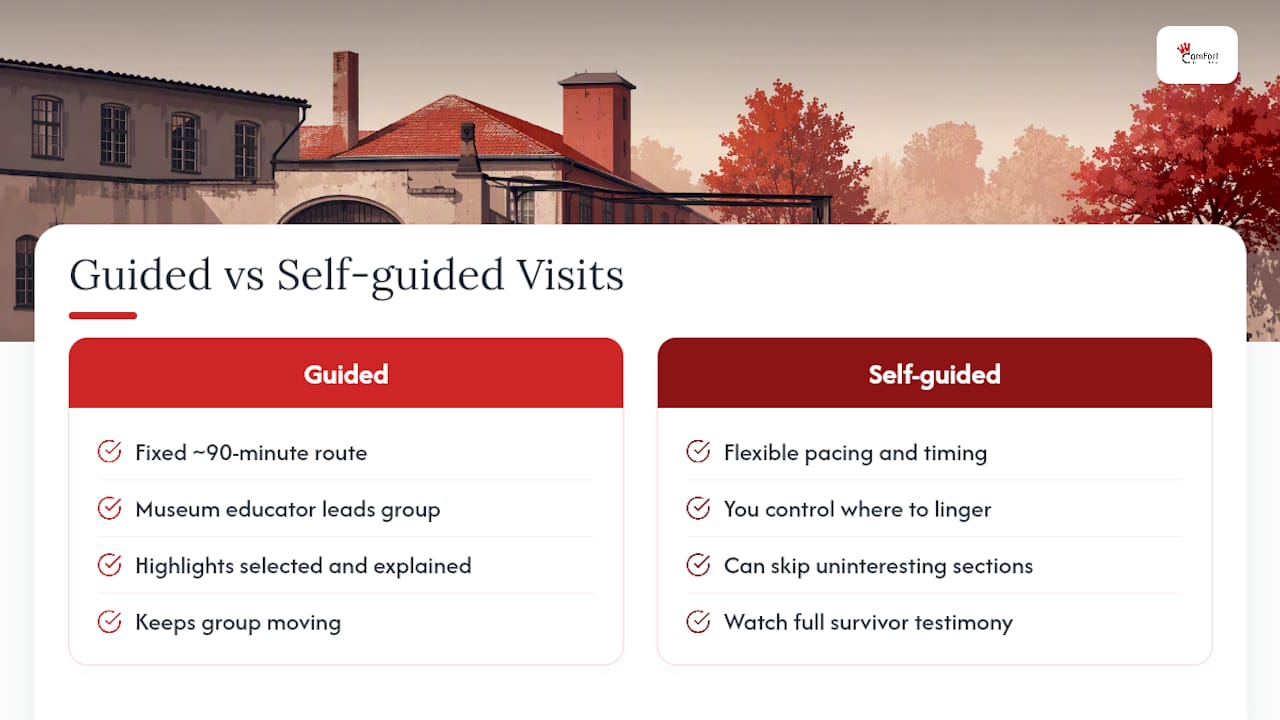
A guided tour gives you structure. You get a fixed 90-minute route led by a museum educator who selects the highlights, explains context you might otherwise miss, and keeps the group moving so nobody gets stuck reading captions for ten minutes in one room. It’s the better fit if your time in Krakow is tight, if you’re travelling with people who won’t want to linger, or if you simply prefer a narrated experience over self-navigation.
Self-guided visits suit the opposite instinct: visitors who want to control their own pace, skip sections that don’t interest them, and spend extra time where something genuinely grabs their attention. If you’re the sort of traveller who reads every information board in a museum, or who wants to watch the full survivor testimony footage rather than a curated excerpt, self-guided is the format that lets you do that without holding up a group.
Language matters here too. Guided tours are offered in selected languages on specific days, so English-language slots don’t run every hour. Check the schedule before you commit to a date, particularly if you’re building a tight multi-city trip and can’t shift days easily.
Pro Tip: If you’re torn between formats, book the guided tour for the narrative and structure, then simply arrive slightly early or stay a little after to wander back through any room that struck you. The 90-minute guided slot doesn’t force you out the door the second it ends.
What you’ll actually see at each duration
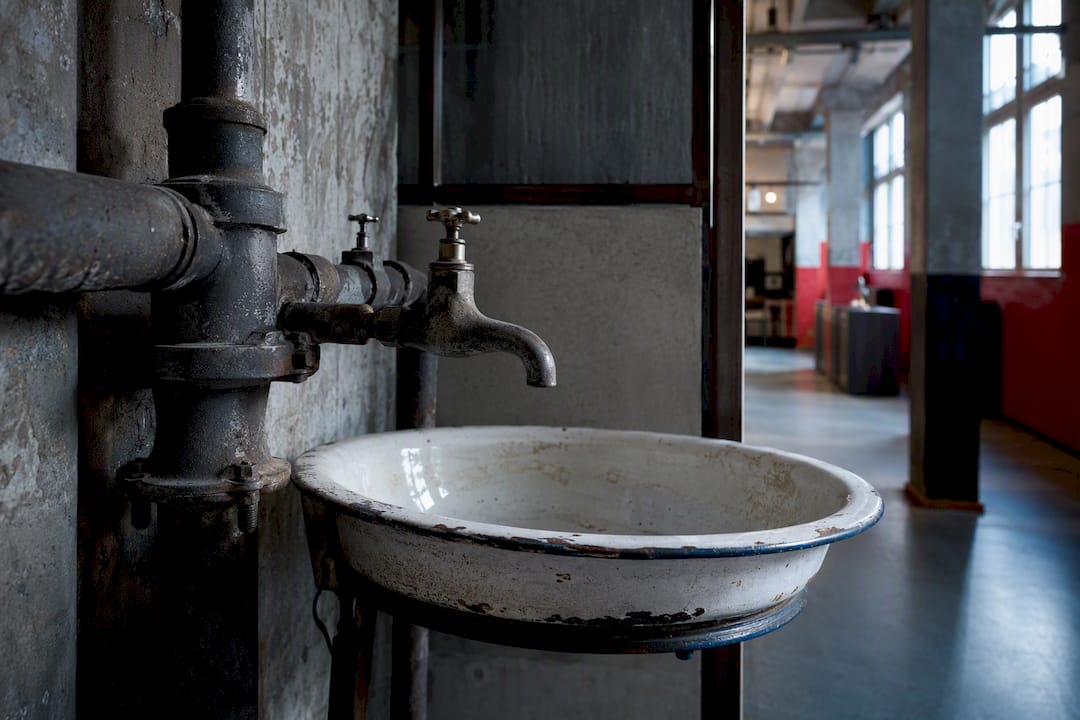
Under 90 minutes (guided tour route). You’ll be walked through the core exhibition path: Kraków under Nazi occupation, the transformation of the Podgórze district into the ghetto, and Schindler’s own office, preserved with the enamel factory’s original industrial fittings. A guide selects which testimonies and artefacts to pause at, so you see the spine of the story rather than every branch of it.
1.5 to 2 hours (typical self-guided visit). This is where most independent visitors land. You’ll cover the same core rooms as the guided route but at your own pace, which usually means pausing longer at the ghetto section, the deportation displays, and the room dedicated to Schindler’s list itself. Two hours gives you breathing room to actually process what you’re reading rather than moving past it.
2 to 2.5+ hours (the immersive visit). Set aside this much time if you want to:
- Read every information panel in full, including the smaller supporting text alongside the main displays.
- Watch complete video testimonies rather than excerpts, several of which run several minutes each.
- Take in any temporary exhibition running alongside the permanent collection.
- Sit for a few quiet minutes in the memorial spaces rather than moving straight through them.
- Revisit an earlier room once something later in the exhibition puts it in a different light.
Pacing matters more here than in most museums. The subject matter is heavy, and visitors who try to power through in under an hour often report leaving feeling like they missed the point rather than saved time. Equally, treating it as an all-day event isn’t necessary. Two and a half hours is genuinely enough to see and absorb everything, including the temporary galleries, without feeling rushed at either end.
Booking and entry rules that trip up first-time visitors
The single biggest planning mistake UK visitors make isn’t underestimating the Schindler factory tour length. It’s misjudging the entry rules around timed tickets.
The museum runs a 15-minute entry window attached to every timed slot. Arrive too late and staff aren’t obliged to let you in on that ticket; arrive too early and you’ll simply be asked to wait outside until your window opens. Neither is a disaster, but both eat into the visiting time you actually planned for.
- Arrive 15 to 20 minutes before your printed time to clear security and be standing ready when your window opens.
- If you bought a personal online ticket, bring the original ID used at purchase. A photo of it on your phone often won’t be accepted.
- Online ticket sales close roughly six hours before the visit date, and there’s a limit on how many tickets one purchase can cover.
- The ticket office does sell same-day tickets subject to availability, but don’t rely on this in peak months.
- Last permitted entrance is 90 minutes before closing, which matters if you’re trying to fit this in as a late add-on to your day.
If you do miss your window, speak to staff at the desk immediately rather than assuming you’re locked out. Policies can flex on quiet days, though you shouldn’t count on it during the busy season. Building a 20 to 30 minute buffer before your slot is the cheapest insurance against losing part of your visit to a queue at security or a delayed tram.
When to book to avoid the queues
Morning slots and late-afternoon slots are consistently quieter than the midday rush, when tour groups and day-trippers from other parts of Poland tend to cluster. If your schedule allows any flexibility, book either end of the day.
Crowding follows a predictable seasonal pattern. Peak months run May through September, and tickets in that window can sell out several days in advance, particularly around weekends and Polish public holidays. Timed entry and the fixed guided-tour schedule both help spread visitors out through the day, but they don’t eliminate the crush entirely. A midday slot in July will still feel busier than a 9am slot in November, timed ticketing or not.
Pro Tip: If you’re visiting between May and September, book at least a week ahead and pick a slot before 10am or after 4pm. You’ll spend your allotted time actually looking at the exhibits rather than negotiating space in front of them.
Is it suitable for children and younger travellers?
The museum itself recommends the exhibition for visitors aged 14 and older, and that guidance is worth taking seriously rather than treating as a formality. The subject matter covers the Nazi occupation of Kraków, the ghetto, and the deportation of Jewish residents to camps, presented through original testimony and unflinching imagery. It’s not a museum designed to soften the material for younger audiences.
If you’re travelling with a family and considering bringing a younger child, a few things help:
- Talk through the basic historical context before you arrive, so the displays aren’t the first introduction to the subject.
- Consider splitting the group, with one adult taking younger children through more selectively while others take the full self-guided route.
- Group leaders organising school or educational visits should check current guidance directly with the museum, since content advisories can be updated.
All primary texts are displayed in Polish and English, so language isn’t a barrier for UK visitors, whatever age group you’re planning for.
Fitting the visit into your Krakow itinerary
Block out half a day if you’re pairing this with anything else nearby. A 90-minute guided tour plus travel time comfortably fits alongside a wander through Kazimierz, Kraków’s former Jewish quarter, which sits a short walk or tram ride away. Add the immersive 2.5-hour version and you’re realistically looking at that visit as the main event of your afternoon, with Kazimierz saved for either side of it.
A few practical points for UK travellers:
- Pair a morning museum slot with an afternoon in Kazimierz or the Rynek Główny (Main Market Square), rather than trying to do both districts back to back.
- If you’re staying in the Old Town, factor in tram or taxi time to Podgórze, where the factory sits across the river.
- Multi-day trips give you far more room to fit this in without rushing. Our three-day Kraków itinerary shows how the museum sits alongside other major sites without cramming.
- If Auschwitz-Birkenau is also on your list, treat it as a separate day. Our guide to visiting Auschwitz from Kraków covers the transport timing involved.
For a deeper walk through the wider Schindler’s List filming locations across the city, our piece on Kraków’s Schindler’s List clusters maps out a full day covering several sites on foot.
Why pacing matters more than people expect
Most guides to this museum focus on ticket prices and opening hours. What gets underplayed is how much the pace of a visit shapes what you take away from it, and that’s where I think a lot of first-time visitors get their planning wrong.
A rushed 90-minute guided tour works well for visitors who want context and structure without a huge time commitment, and there’s nothing wrong with that choice. But the museum rewards patience in a way a stopwatch doesn’t capture. The rooms dealing with the ghetto and deportations aren’t built for skimming, and visitors who try to treat this like a standard city-break museum stop tend to leave feeling they missed something they can’t quite name.
Small groups solve this better than large ones, simply because a guide leading six people can read the room and slow down where it matters, rather than sticking rigidly to a script built for forty. For most UK travellers, a paced 90 to 120 minute guided visit hits the right balance. For anyone who wants to set their own rhythm entirely, a private visit is worth the extra planning.
— Damian Fort
Book a Schindler’s Factory visit that fits your pace, not a queue’s
Guided visits are built around the time visitors want to spend, not a fixed script designed for the largest possible group. Small groups mean guides can slow down in the rooms that need it and move briskly through the ones that don’t, rather than herding large groups through on a rigid 90-minute clock.

Guides work in English and other languages depending on the date, and the logistics of entry windows, ID requirements for personal tickets, and timing slots around the quieter parts of the day are handled. Private visits with flexible pacing can be arranged, alongside connections to nearby sites like Kazimierz or a full-day pairing with Auschwitz-Birkenau. Check availability and book your Schindler Museum tour directly, or browse our full range of Kraków tours to build the rest of your day around it.
Sources
Before you travel, check the museum’s own plan your visit page for current opening hours and guided tour schedules, and the Museum of Kraków’s visitor regulations for ticketing and ID rules, since these can change seasonally. The permanent exhibition page also covers age suitability and language availability in more detail than most third-party guides repeat.
- Plan Your Visit to Schindler’s Factory Museum
- Oskar Schindler’s Enamel Factory – Museum of Krakow
- Schindler’s Factory – Guided Tours
FAQ
How long does it take to walk around Schindler’s Factory?
A guided tour runs about 90 minutes, while a self-guided walk through the exhibition typically takes 1.5 to 2 hours, or up to 2.5 hours if you read and watch everything on display.
Is Oskar Schindler’s factory worth visiting?
Yes. The museum’s reconstructed spaces and personal testimony give a grounded, specific account of the Kraków ghetto and Schindler’s own role that’s hard to get from a book or film alone, though it’s an emotionally demanding visit rather than a light afternoon out.
Can you buy tickets to Schindler’s Factory at the door?
The ticket office does sell same-day tickets subject to availability, but online sales close roughly six hours before your visit date, and tickets commonly sell out in peak months, so booking ahead is the safer route.
Can I take a guided tour of Schindler’s Factory?
Yes, guided tours run on a fixed 90-minute schedule with licensed museum educators, with language availability varying by day, and providers such as ComFort Tours Cracow also offer small-group and private guided visits with flexible pacing.