The Auschwitz-Birkenau Memorial and Museum caps organised guided groups at 30 visitors, with headphones required once a group passes 10 people. Standard museum guided tours run to fixed size bands, commonly small, medium and large groups, and tour operators market “small group” very differently from that official ceiling. Some cap at sizes considered more intimate, others stretch the label to the full maximum allowed, and a few coach operators fill vehicles beyond the official group size before you enter the site.
If you want an intimate visit, book a provider that guarantees a written maximum group size in the lower teens. If a standard museum-led group up to the official maximum suits your budget and schedule, that’s a perfectly reasonable choice too, just don’t expect the same pace or personal attention.
- Official cap: organised museum groups have a maximum size set by the museum, with headsets generally required for groups over a modest size.
- Reservation is compulsory: book via the museum’s own system, not at the gate.
- Get it in writing: ask any operator for their maximum group size and headset arrangement before you pay.
Key Takeaways
The most reliable way to judge any Auschwitz tour is a written maximum group size, since the museum’s own cap of 30 sets the outer limit but says nothing about what an individual operator will actually deliver.
| Point | Details |
|---|---|
| Official cap is 30 | The museum limits organised guided groups to 30 visitors, with headsets required above 10. |
| “Small group” varies widely | Operators use the term for anything from 8 to 30, so always confirm the exact number. |
| Two group sizes matter | Your transfer vehicle size and the museum’s on-site guided group are often different figures. |
| Book at least a month ahead | Availability for smaller groups and preferred slots tightens fastest during busy months. |
| ComFort Tours Cracow caps tighter than the museum requires | It guarantees group size in writing and arranges private transport from Kraków. |
Primary sources and further reading
- Tour options and guided visits: the museum’s own overview of guide licensing and booking advice.
- Guided tours for individual visitors: confirms entry passes are online-only, not sold at the gate.
- Official price list: the definitive source for group-size bands and fees.
Always check live availability on the museum’s own site before finalising any travel plans.
Table of Contents
- What is the official Auschwitz tour group size limit?
- What do operators actually mean by “small group”?
- What’s the best group size for a respectful visit?
- Why some operators cap groups tighter than the museum requires
- What should UK travellers do to book and prepare?
- Ten questions to ask before you book
- Why does Auschwitz use headsets and group caps?
- Want a genuinely small group at Auschwitz?
- Sources
- FAQ
What is the official Auschwitz tour group size limit?
Every organised visit to Auschwitz-Birkenau runs through the museum’s own booking system, and the tour options page makes clear that groups must be accompanied by a licensed guide-educator, not a freelance guide or a driver doubling as narrator. The museum recommends booking a guide at least a month ahead in busy periods, which for UK travellers usually means March through October.
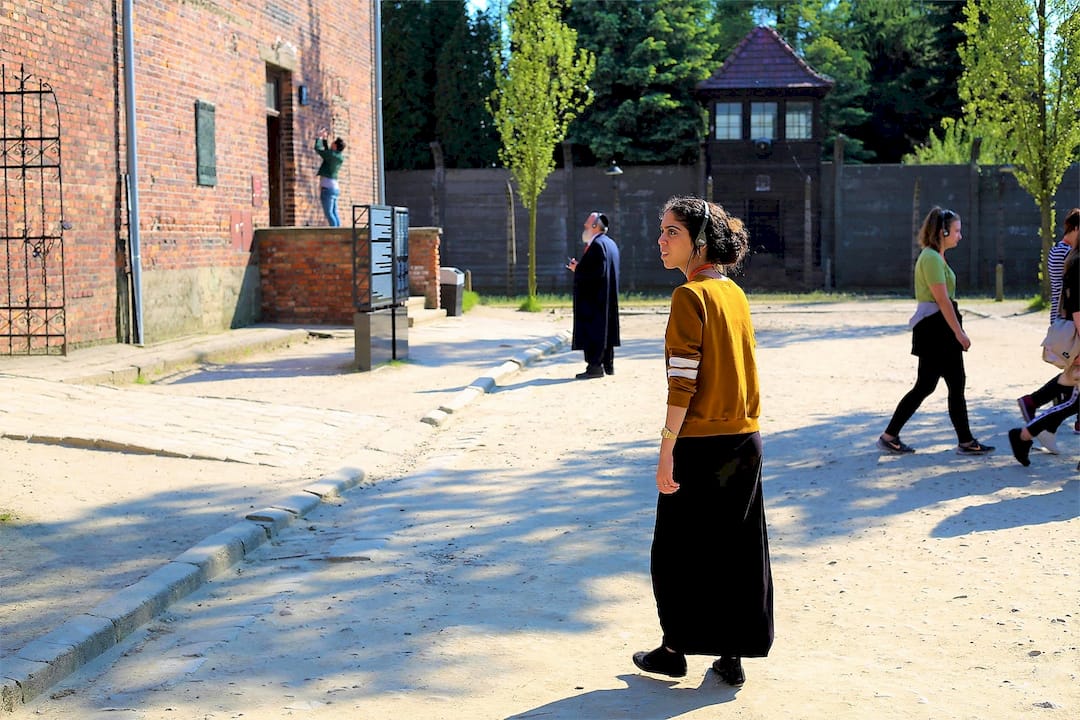
Group-size bands sit at the centre of how the museum prices and organises visits. The official price list uses tiers such as up to 10, up to 20 and up to 30 visitors, with fees and headset requirements changing at each threshold. Anything over 10 people needs headphones, both for the guide’s voice to carry and to stop competing tour groups from drowning each other out in tight spaces like the barrack interiors.
Standard guided tours last 2.5 to 3.5 hours, covering the main Auschwitz I site and Birkenau. Study visits and specialist tours run longer. One detail catches out a surprising number of visitors: entry passes are not sold at the gate. If you haven’t reserved online, you may simply be turned away.
- Reserve through the museum’s own system, never on arrival.
- Confirm which price band your group falls into, since it affects both cost and headset provision.
- Ask whether your guide is a licensed museum educator, which the museum requires for all organised groups.
Pro Tip: Screenshot your museum booking confirmation before you travel. Mobile signal near the Memorial car park is patchy, and staff will want to see your reservation reference, not just an email you can’t load.
What do operators actually mean by “small group”?
“Small group” is one of the least reliable phrases in UK tour marketing. Industry guidance from Begovo treats 8 to 16 as the range where a small-group product genuinely feels different from a coach tour, yet plenty of operators stretch the term to cover parties of 20 or even 30.
Two separate group sizes matter here, and conflating them causes most of the confusion. The first is your transport: the minivan or car that collects you from Kraków. The second is the museum’s own guided group, which follows the official caps regardless of how you arrived. A “small-group” transfer of 8 people can still merge into a museum-led group of 30 once you’re through the gate, unless the operator has arranged a private guided visit specifically.
- A minivan transfer of 8 tells you nothing about your group size once inside the Memorial.
- The museum’s cap of 30 per organised guided group applies no matter which operator sold you the ticket.
- Only a confirmed private booking guarantees you won’t be merged with strangers on site.
Coach operators selling budget day trips from Kraków sometimes run vehicles carrying up to 50 passengers, splitting them into two or three museum groups on arrival. That’s a very different experience from a capped small-group visit, even when both are advertised under similar language.
What’s the best group size for a respectful visit?
Somewhere between 8 and 16 people tends to work best for actually hearing the guide, moving through narrow corridors without a bottleneck, and having a moment to reflect without feeling herded. Travel journalism on group tours generally backs this up: The Age found that 12 to 14 offers enough variety in a group without anyone feeling submerged in a crowd.
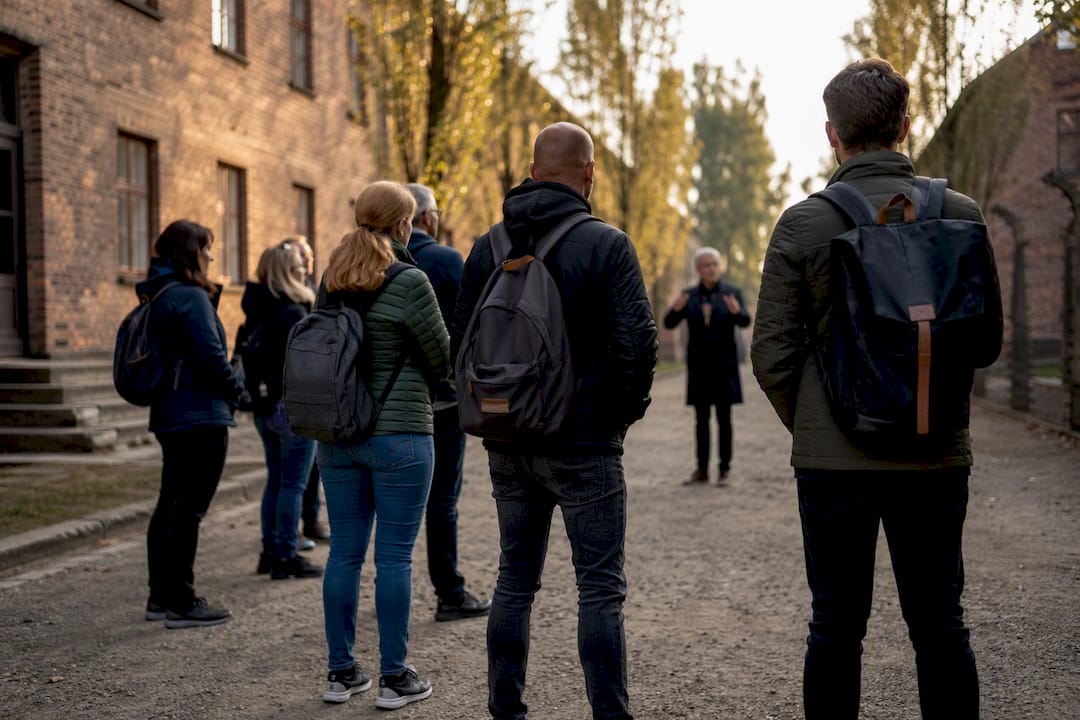
The trade-off is straightforward. Smaller groups cost more per person because the fixed costs of a guide and vehicle spread across fewer people, but they’re easier to manage and less likely to disturb other visitors at a site where hundreds of thousands of people move through in a single busy month. Standard museum groups of up to 30 remain a completely valid option if budget matters more than intimacy, and the guide-educator model still delivers accurate, licensed narration either way.
Size affects pace more than most people expect. A group of 30 needs longer at each stop simply to let everyone see and hear, which means more queuing at security and toilets, and less flexibility if someone needs a slower pace through Block 11 or the Birkenau railway platform.
- Target 8–16 for a genuinely small, easy-to-follow visit.
- Accept up to 30 if you’re happy trading some intimacy for a lower price.
- Ask about pace and stop frequency, not just headline group size.
Pro Tip: If intimacy matters more than price, ask the operator in writing whether you’ll be in a private vehicle before you even reach the museum group assembly point. Some “small group” tours still bus several minivans’ worth of guests into one guided party at the gate.
Why some operators cap groups tighter than the museum requires
At ComFort Tours Cracow, groups are capped well below the museum’s own ceiling because a guide speaking to 12 people communicates very differently to one addressing 30. Private transport from Kraków and a licensed guide-educator are standard parts of that setup, not add-ons.
The reasoning is operational as much as it’s about tone. Tight spaces inside the barracks and the Birkenau exhibition rooms genuinely struggle with large groups; narration gets harder to follow, and the pace of the whole visit slows to accommodate the slowest members. A capped group also means less waiting at pinch points like the entrance security checks and the gas chamber ruins at Birkenau.
Before booking with any operator, ask for these in writing:
- The maximum group size, stated as a number, not a range.
- Confirmation of the guide’s museum licence.
- Whether headsets are supplied or need renting on arrival.
- Exact pick-up and return times from your Kraków accommodation.
A written cap is the single clearest signal that an advertised “small group” will hold up once you’re standing at the gate. Verbal assurances tend to evaporate the moment a coach operator needs to fill a few extra seats.
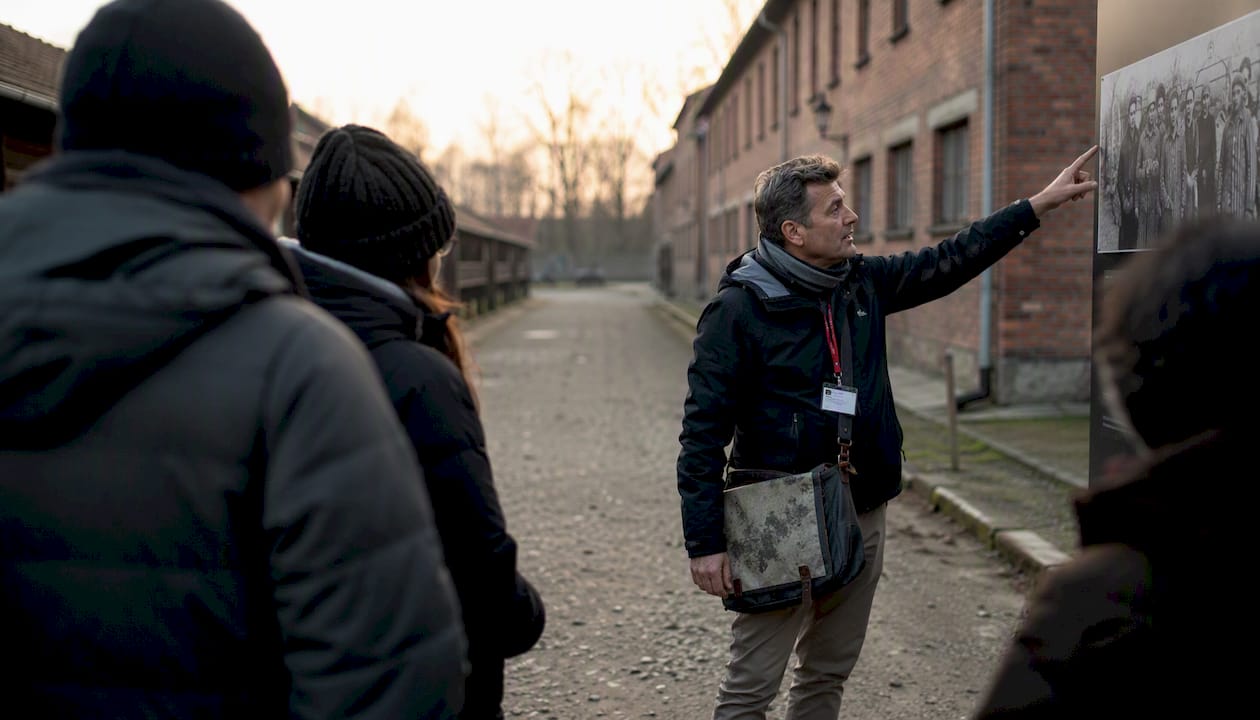
A guide talking to twelve people can pause, answer a quiet question, let someone stand still in front of a single photograph. A guide talking to thirty is managing traffic. Both are valid ways to see Auschwitz. Only one of them lets the guide actually notice you.
What should UK travellers do to book and prepare?
Book well ahead. The museum recommends reserving guided tours at least a month in advance during the busier months, and popular slots and smaller operator groups fill first. If you’re arranging things through ComFort Tours Cracow’s Kraków transfer service, the same logic applies: earlier booking means more choice over group size and pick-up time.
Get written confirmation of five things before you pay: maximum group size, whether your vehicle is private, whether you’ll be merged into a museum group on site, headset provision, and the cancellation policy. A UK guide from the Sheffield Star notes organised tours from the UK typically cost between £40 and £80, with price driven largely by group size and what’s included.
Plan your morning carefully. Arrive with enough margin for airport-style security screening, dress modestly and quietly (this isn’t the place for shorts or loud conversation), and bring water and comfortable shoes for several hours of walking on uneven ground.
- Bring your printed or digital booking confirmation and photo ID.
- Wear comfortable, weather-appropriate clothing and sturdy shoes.
- Leave space afterwards; most visitors want quiet time, not an immediate onward activity.
Ten questions to ask before you book
- What is the guaranteed maximum group size, in writing?
- Will we travel privately or as part of a shared coach transfer?
- Are headsets included, or do we need to rent them separately?
- Which licensed guide-educator leads the museum portion of the tour?
- Will we be merged with another group once inside the Memorial?
- What time is pick-up from Kraków, and what time do we return?
- What happens if the museum cancels or reschedules our slot?
- Is the tour price per person inclusive of entry fees, or extra?
- How long does the guided portion last, and is free time included?
- What is the refund policy if we need to cancel?
Pro Tip: Save the operator’s written answers, whether by email or screenshot, as part of your booking record. If anything changes on the day, that record is your strongest ground for a refund.
Why does Auschwitz use headsets and group caps?
Headsets exist because a guide’s voice simply doesn’t carry across a group of 20 or 30 people inside a stone barrack without shouting, which would be both impractical and disrespectful at a memorial site. The group caps protect both the flow of visitors through narrow exhibition spaces and the consistency of what each guide-educator can actually deliver.
- Headsets let a guide speak at a normal volume even in crowded rooms.
- Capacity bands stop bottlenecks forming at pinch points like doorways and stairwells.
Pro Tip: If you need hearing support, contact the museum or your operator in advance. Assistive listening options and smaller private groups can both be arranged, but rarely at short notice.
A guide’s honest note on why smaller is often better
I’ve come to think the loudest argument for capped groups isn’t comfort, it’s attention. When a guide can see every face in the group, they notice who’s struggling to keep up, who wants a second longer at a particular photograph, who needs a quieter moment. That’s harder to give thirty people. It’s why we hold our own groups tight, even when a bigger booking would be simpler to fill.
Want a genuinely small group at Auschwitz?
ComFort Tours Cracow caps its Auschwitz-Birkenau groups well below the museum’s 30 person ceiling, and puts that number in writing before you pay, not after.
That written guarantee is the whole point. You know your guide is licensed by the museum, your vehicle from Kraków is private rather than shared with strangers, and your group size won’t quietly grow between booking and pick-up. Browse the current Auschwitz and Kraków tour options to see availability, or check the group tours page if you’re travelling with a party that wants its own dedicated slot. Either way, get your dates in early. The museum’s own booking window fills fastest in the summer months, and smaller operator groups go first.
Sources
- Tours options / Visiting / Auschwitz-Birkenau
- Guided tours for individual visitors
- Price list and terms (Auschwitz-Birkenau Memorial and Museum)
- How to plan your first Auschwitz tour from the UK – Sheffield Star
FAQ
How many people visit Auschwitz per day?
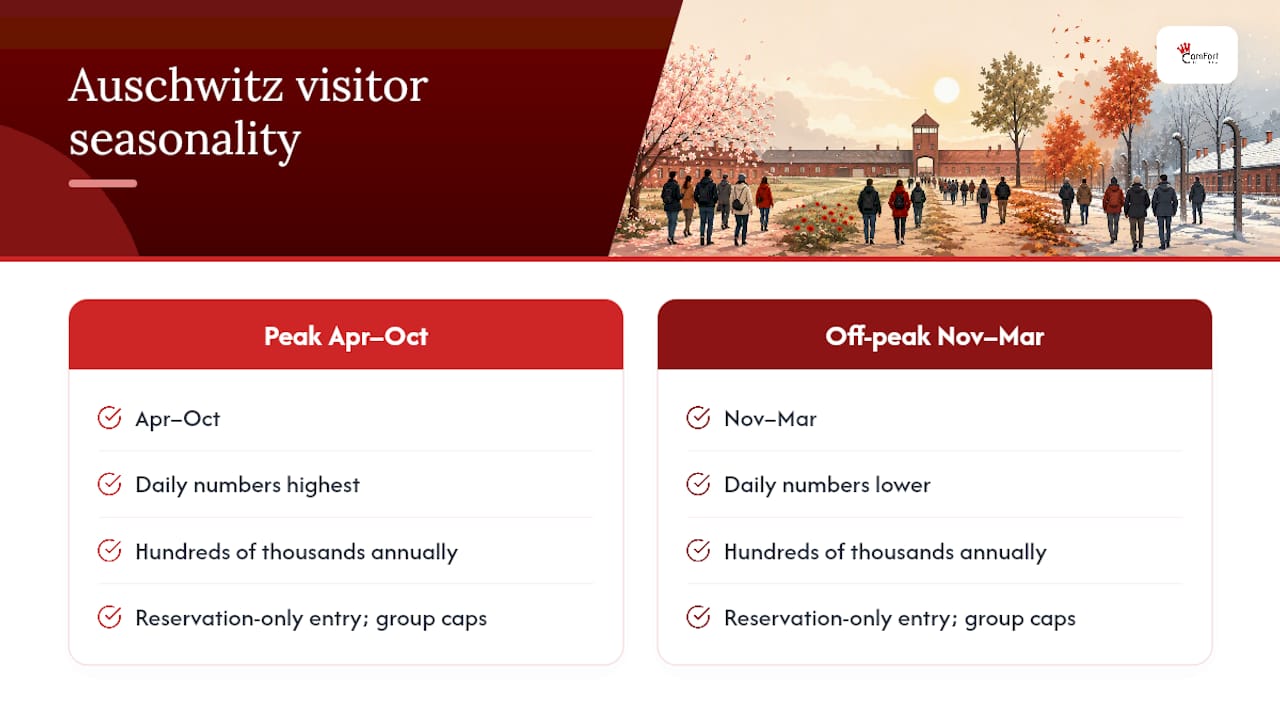
The Memorial receives hundreds of thousands of visitors annually, with daily numbers highest between April and October, which is exactly why the museum enforces reservation-only entry and fixed group caps.
Which tour company is best for visiting Auschwitz?
There’s no single “best” operator, but the strongest indicator of quality is a written guaranteed maximum group size; ComFort Tours Cracow, for example, states its cap and guide licensing details before you book.
Is it okay to wear jeans to Auschwitz?
Jeans are fine as long as clothing is modest and practical; the site asks for respectful dress rather than a strict code, so avoid shorts, sleeveless tops or anything overly casual.
Is two hours enough for Auschwitz?
Two hours is tight; the museum’s standard guided tours run 2.5 to 3.5 hours to properly cover both Auschwitz I and Birkenau, and rushing the visit undercuts the point of going at all.