
Oscypek is a smoked, spindle-shaped cheese made from sheep’s milk in the Podhale region around Zakopane, and genuine oscypek carries a protected EU designation of origin (PDO). In practice, that means it’s sold whole, never pre-sliced, and should carry a PDO mark or clear producer labelling. On Krupówki you’ll see it grilled to order and served with cranberry jam, but not everything on that street is the real thing.
- What it is: smoked sheep’s-milk cheese, PDO-protected, made only in the Podhale/Tatra area.
- How it’s sold: whole spindles, weighing between 0.6 and 0.8 kilograms.
- Your first check: ask for the PDO logo or producer details before you buy, especially if you plan to take a piece home.
Key Takeaways
Authentic oscypek in Zakopane is a PDO-protected, whole-sold sheep’s-milk cheese, and spotting the real thing comes down to checking the label, the shape, and where you buy it.
| Point | Details |
|---|---|
| Check the PDO mark | Look for the Chronioną Nazwą Pochodzenia logo before buying, especially for export. |
| Buy whole, not sliced | Genuine oscypek is sold as a whole 0.6 to 0.8 kilogram spindle, never pre-cut. |
| Shop beyond Krupówki | Nowy Targ market, dairy shops, and bacówki offer better odds of authentic cheese. |
| Mind the season | Traditional production runs roughly May to September, so winter stock needs extra scrutiny. |
| Check gov.uk before flying | Import rules for animal-origin foods change, so verify current allowances ahead of travel. |
Table of Contents
- How to spot genuine oscypek vendors Zakopane sellers
- Where can you buy or taste oscypek in Zakopane?
- Why does the PDO label and production season matter?
- Can you bring oscypek home to the UK, and how do you store it?
- How is oscypek eaten in Zakopane, and how can you enjoy it at home?
- Why a guided visit beats guessing on Krupówki
- What are the UK customs rules for bringing oscypek home?
- How do you store oscypek once you’re back in the UK?
- An honest take on the Krupówki cheese trade
- Sources
- FAQ
How to spot genuine oscypek vendors Zakopane sellers
Genuine oscypek has a fairly narrow set of physical features, and once you know them, spotting a fake takes seconds rather than guesswork.
- Shape and size: a tapered spindle, 17 to 23 centimetres long, with a rind that’s pale straw to light brown, not deep black or sooty.
- Weight: between 0.6 and 0.8 kilograms per piece, sold whole rather than cut into wedges or slices.
- Labelling: look for the words “Chronioną Nazwą Pochodzenia” or a PDO logo on packaging, and don’t be shy about asking whether the piece meets the regional milk-content rules requiring at least 60% sheep’s milk.
- Provenance: a good stallholder will happily tell you the cheese came from Podhale; hesitation or vague answers (“it’s local highland cheese”) are a warning sign.
- What to avoid: small, decorative pieces sold as souvenirs, unnaturally dark or uniform rinds, and anything pre-sliced into snack packs.
Vendors on Krupówki typically sell by weight or by the piece rather than haggling over price, so don’t expect much room to negotiate. A polite question about origin usually gets you further than trying to talk the price down.
Pro Tip: Snap a photo of the label or ask the seller to write down the producer’s name. If you want to buy for export later, that detail matters more than the receipt.
Where can you buy or taste oscypek in Zakopane?
Not every spot in town gives you the same odds of getting the real thing, and knowing the difference saves you from paying PDO prices for a tourist copy.
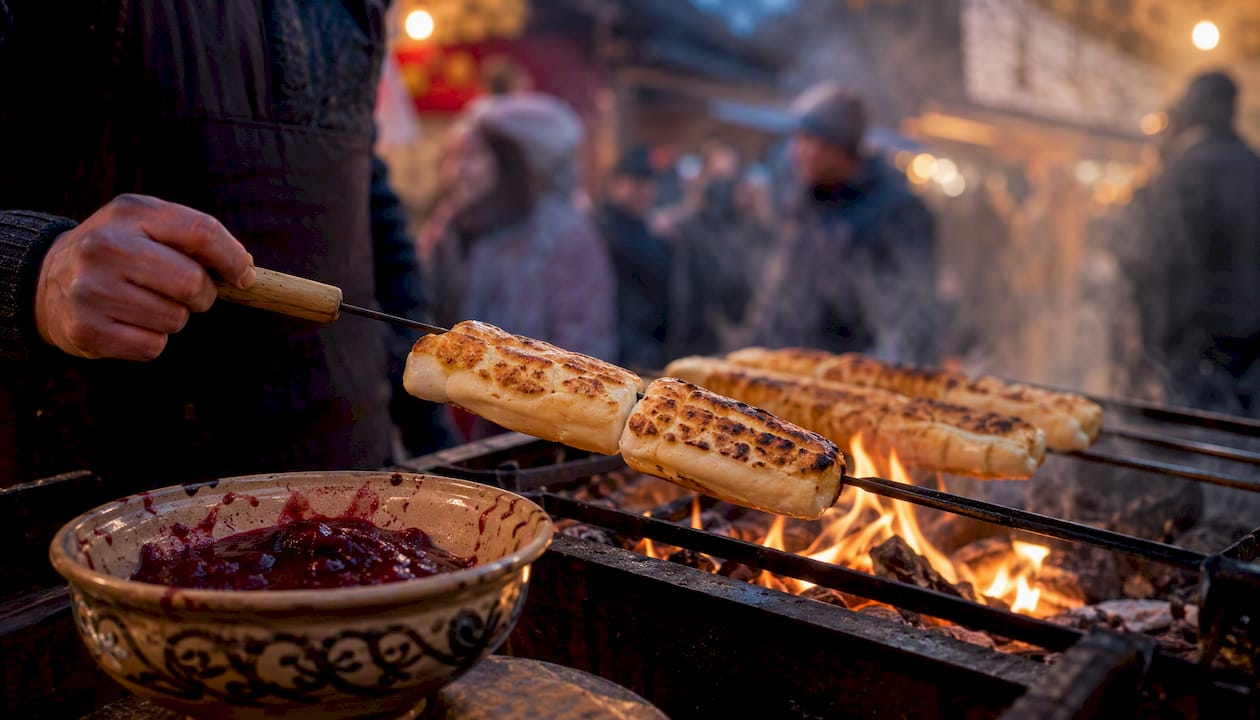
Krupówki’s street stalls are the easiest option and the most fun: vendors grill oscypek to order and hand it over warm with cranberry jam, which makes for a great snack regardless of strict authenticity. For a piece to take home, though, you want more certainty than a street grill can offer.
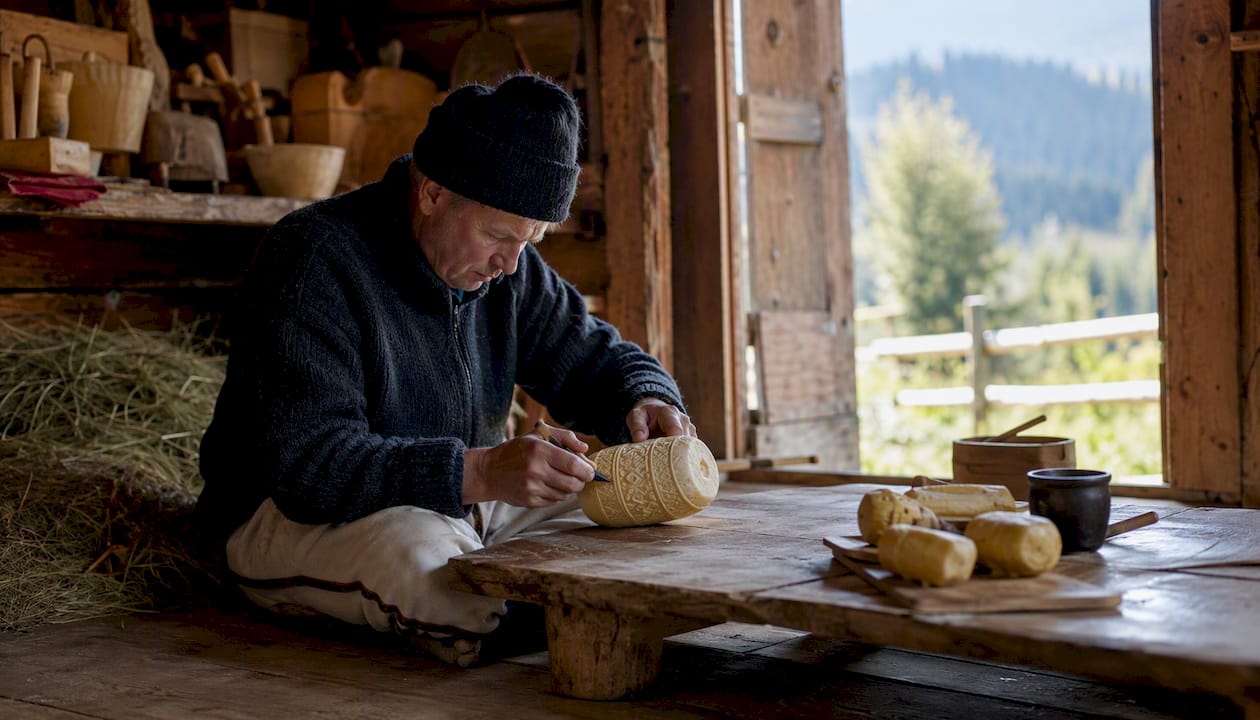
The Nowy Targ market, held a short drive from Zakopane, and dedicated dairy shops in town carry a better hit rate for properly labelled, whole PDO pieces, since these outlets deal directly with regional producers rather than reselling to tourists. If you can arrange a visit to a bacówka, a traditional shepherd’s hut where the cheese is actually made, you get the clearest picture of authenticity along with the chance to sample cheese at different stages of smoking. Locals or a guide can usually point you toward one that welcomes visitors.
Supermarkets and souvenir shops are the least reliable source. Much of what’s sold there is styled as “highland cheese” without PDO status, made to look the part without meeting the production rules. Wherever you buy, remember oscypek is sold as a whole piece, never pre-sliced, so pre-cut portions in plastic trays are your first clue something’s off.
Why does the PDO label and production season matter?
The EU’s protected designation of origin spec for oscypek is precise, and it’s the single strongest tool a traveller has for telling real cheese from a copy. It fixes the production area to Podhale, requires the spindle shape and 0.6 to 0.8 kilogram weight range, and states the cheese may only be sold whole.
Timing matters just as much as labelling. Traditional oscypek is made during the mountain grazing season, running roughly from late April through October, with much regulatory documentation pointing to May to September as the core window. Buy a piece marketed as fresh, artisanal oscypek in the depths of winter and there’s a reasonable chance it was made earlier in the year, frozen, or isn’t fully compliant with the seasonal rhythm the tradition depends on.
Demand for oscypek increased sharply after its PDO registration in 2008, and with sheep’s milk supply naturally limited, that pressure has pushed some traders toward shortcuts, including cheeses that look authentic but aren’t made to the protected standard.
That single fact explains most of what you’ll encounter on Krupówki: plenty of cheese, not all of it genuine.
Can you bring oscypek home to the UK, and how do you store it?
Smoking extends oscypek’s shelf life well beyond a typical fresh cheese, but it’s not indefinite, and how you pack it for the journey home matters.
- Packing for travel: ask the seller for vacuum-packing if you’re not eating it within a day or two; a whole, unsliced piece keeps its texture and smoke flavour far better than pre-cut portions.
- Refrigeration: keep it cool during transit where possible, and refrigerate as soon as you can, ideally within a few hours of purchase if you’re travelling in warm weather.
- UK import rules: animal-origin foods like cheese fall under specific import controls, and the rules do shift, so check Gov before you travel rather than relying on what a fellow traveller told you last year.
- At the point of sale: ask for sealed, labelled packaging that clearly shows the producer’s details. That’s useful both for customs and for proving what you actually bought.
- When to skip buying for export: if you’ve got a long, unrefrigerated journey ahead, or the vendor can’t confirm the packaging is sealed properly, it’s not worth the risk to your luggage or your stomach.
Pro Tip: If your itinerary includes a long train or coach journey before your flight home, buy oscypek on your last day in Zakopane rather than your first. Less time unrefrigerated means less risk of it sweating in your bag.
How is oscypek eaten in Zakopane, and how can you enjoy it at home?
The classic Zakopane way to eat oscypek is grilled or pan-fried until the outside blisters slightly, then served warm with a spoonful of tart cranberry jam, which cuts through the smoky, salty flavour beautifully. Stallholders on Krupówki cook it in front of you, so it’s worth watching how quickly it softens on the grill before you try it at home.
- Recreate it with a hot, dry griddle pan; a minute or two per side is usually enough.
- Pair it with a malty beer or a herbal tea if you want something closer to a mountain-hut experience than a wine bar.
- Younger, less-aged oscypek is milder and works cold in salads; longer-smoked pieces are firmer and better suited to grilling.
- If you can’t bring the real thing home, smoked provolone or scamorza make reasonable stand-ins for the smoky, semi-firm texture, even if the flavour isn’t identical.
Why a guided visit beats guessing on Krupówki
Finding a bacówka that welcomes visitors, or a producer willing to talk you through their process, is far easier with someone who already knows the valley. A local guide can take you past the tourist stalls to a shepherd’s hut or a trusted dairy, where you can taste oscypek at different smoking stages and hear the story behind it rather than piecing it together from a menu board.
ComFort Tours Cracow runs small-group and private Zakopane and Tatra Mountains trips that can be tailored to include a tasting stop, alongside the region’s hiking and highland-village sights. Because groups stay small, there’s room to ask the guide about vacuum-pack options or producer labelling before you commit to buying.
Pro Tip: When booking a Zakopane day trip, ask your guide in advance whether a producer or bacówka visit can be added to the itinerary. It’s a far better shot at authentic oscypek than relying on street-stall luck.
Ready to plan a Zakopane day out with a tasting stop built in? Browse ComFort Tours’ guided tours to see current Tatra Mountains options.
What are the UK customs rules for bringing oscypek home?
Cheese counts as an animal-origin product, which puts it under specific import controls rather than the general “bring back what you like” assumption many travellers make. The rules around personal imports of meat and dairy from the EU have changed more than once in recent years, and they can change again, so treat any figure you read, including this one, as something to double-check before you fly.
Current guidance allows travellers to bring in limited quantities of certain dairy products for personal consumption, but the permitted amount and the categories covered are exactly the kind of detail that gets revised. Rather than quote a figure that might be out of date by the time you travel, check gov.uk’s guidance on bringing food into the UK in the weeks before your trip. It takes five minutes and avoids a genuinely unpleasant conversation at border control.
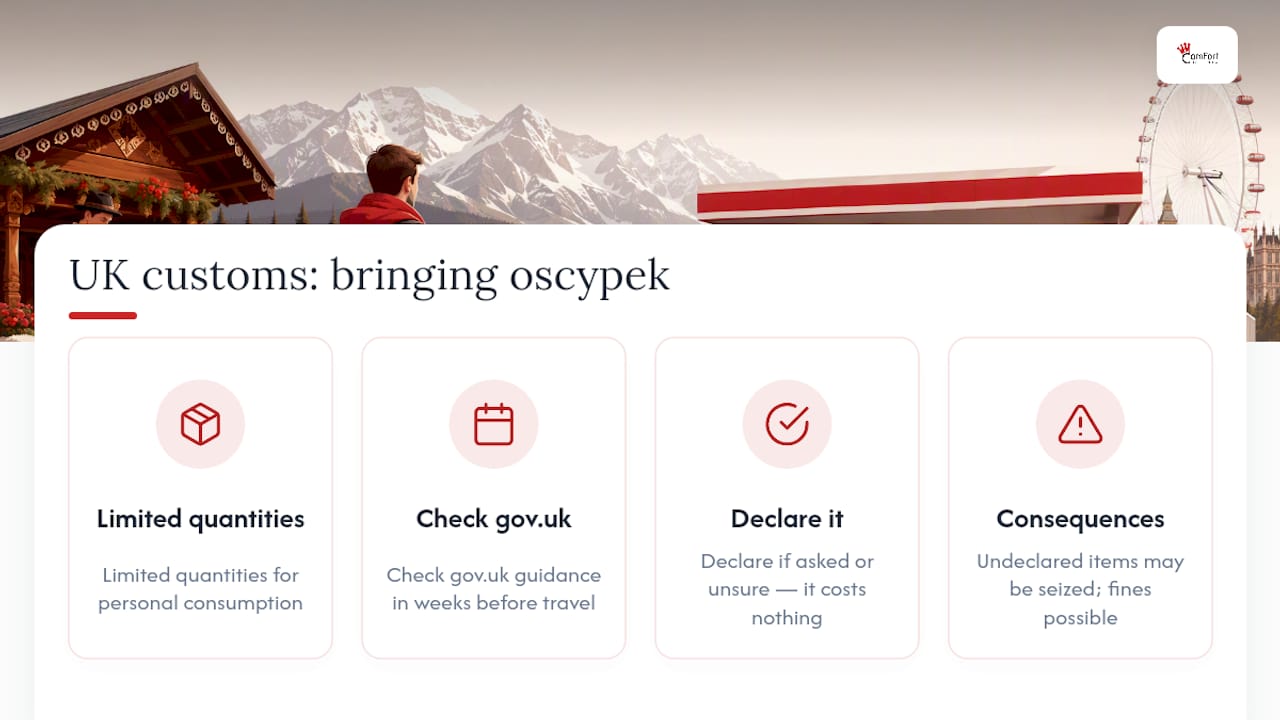
Non-compliance isn’t a minor inconvenience. Undeclared animal-origin products can be confiscated and destroyed on the spot, and in more serious cases, travellers can face fines. Declaring what you’re carrying, if asked, costs you nothing and keeps things simple. If you’re at all unsure whether your oscypek falls within the current allowance, declare it rather than risk it. Border staff deal with this constantly and would rather you asked than hid a cheese in your suitcase.
One practical workaround: eat it in Poland. Grilled oscypek with cranberry jam on Krupówki costs a fraction of what the same trip would cost if a customs issue ruins your journey home.
How do you store oscypek once you’re back in the UK?
Smoking gives oscypek a longer shelf life than an unsmoked, fresh cheese, but it’s still a dairy product that needs proper handling once you’re home.
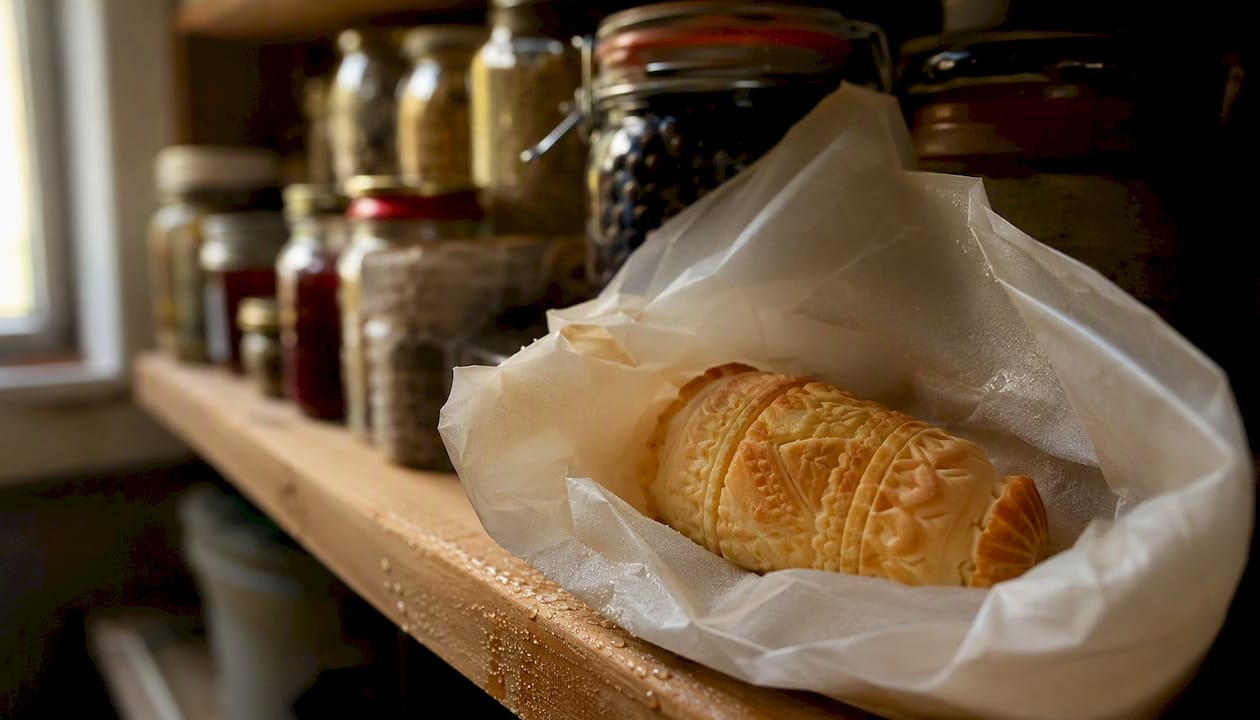
Keep it refrigerated at all times, wrapped in greaseproof or waxed paper rather than tight cling film, which traps moisture and encourages mould. If the vendor vacuum-packed it for you, leave it sealed until you’re ready to eat it. That packaging does a lot of the preservation work for you.
Once opened, use it within a week or so and keep it away from strong-smelling foods in the fridge. Its smoky character means it can pick up other odours quickly, and it can also pass its own smoky flavour onto neighbouring items. A separate container solves both problems.
If you’ve bought more than you’ll get through quickly, oscypek freezes reasonably well, though the texture firms up slightly on thawing, which actually suits grilling rather than eating it cold. Slice what you plan to freeze into portions before it goes in, since a whole piece can be awkward to divide once frozen solid. Thaw it slowly in the fridge overnight rather than at room temperature, and use it within a day or two of defrosting.
An honest take on the Krupówki cheese trade
Most guides treat oscypek shopping as a simple matter of following your nose to the nearest grill stand. That advice undersells the problem. Demand exploded after PDO registration in 2008, sheep’s milk supply didn’t scale with it, and the gap got filled with lookalikes dressed up in the same smoky colouring. The PDO label isn’t a bureaucratic footnote here; it’s genuinely the only reliable signal a tourist has on the street.
Where the conventional advice really falls short is timing. Most articles mention the PDO mark and stop there, without flagging that oscypek has a production season. A perfectly labelled-looking piece sold in January deserves more scepticism than one bought in July, simply because the grazing calendar makes genuine supply thinner in winter.
If you take one thing from this, prioritise provenance over convenience. A stall that can tell you which valley the cheese came from beats one that just hands it over with jam. And if you want that certainty without doing the legwork yourself, a guided visit to a working bacówka solves the problem entirely.
Sources
- EUR‑Lex: EU specification for ‘OSCYPEK’ (PDO)
- Oscypek — Wikipedia
- Poland’s surprisingly beautiful cheese — BBC Travel
FAQ
What is oscypek in English?
Oscypek doesn’t have a direct English name; it’s simply referred to as a smoked sheep’s-milk cheese from Poland’s Podhale region, and the Polish name is used internationally under its PDO status.
What does oscypek cheese taste like?
It has a firm, slightly rubbery texture with a distinct smokiness and a salty, tangy edge from the sheep’s milk, and the flavour softens when it’s grilled or pan-fried.
What is a famous Polish cheese?
Oscypek is Poland’s best-known cheese internationally, largely thanks to its EU PDO protection and its strong association with the Tatra Mountains and Zakopane’s street-food scene.
Where should I buy oscypek in Zakopane for authenticity?
Nowy Targ market and dedicated dairy shops tend to stock properly labelled PDO oscypek more reliably than souvenir stalls on Krupówki, though the stalls remain a great spot to taste it grilled.
Can I bring oscypek back to the UK?
You may be able to bring limited quantities of dairy products for personal use, but rules on animal-origin imports change, so check current gov.uk guidance before you travel.