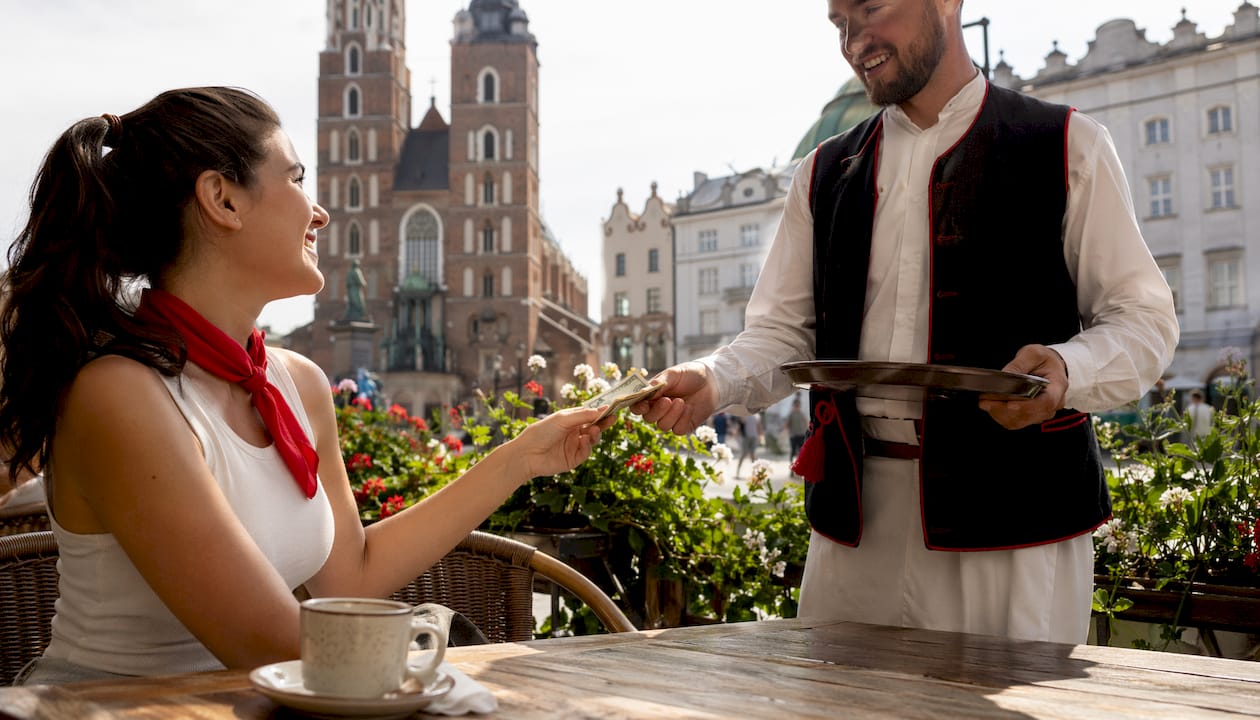
Tipping in Poland is defined as a discretionary gesture of appreciation, not a legal or cultural obligation. The standard gratuity for sit-down restaurant service runs 10–15% of the bill, though the amount shifts depending on the setting, service type, and whether you are in a major city or a rural town. Polish wages in hospitality remain modest, so a well-placed tip carries real meaning for the person receiving it. Knowing the local customs before you arrive saves you from awkward moments at the register and helps you show genuine appreciation.
How much to tip at restaurants, cafes, and bars in Poland
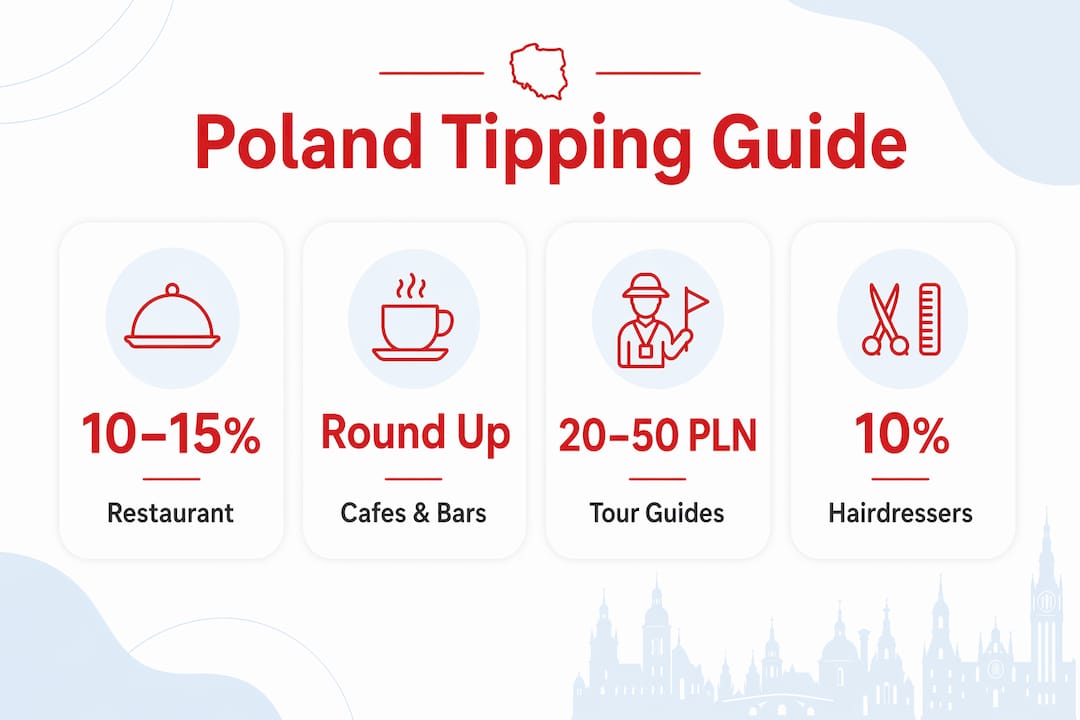
The 10–15% range is the reliable baseline for Poland restaurant tipping at any sit-down establishment with table service. In cities like Warsaw and Krakow, 10% is the most consistent starting point for visitors. If the service was exceptional, 15% is a natural and welcome step up.
Cafes and bars follow a simpler rule. Rounding up to the nearest 5 or 10 Polish zloty (PLN) is completely standard. If your coffee costs 14 PLN, leaving 15 PLN or 20 PLN is perfectly appropriate. No mental math required.
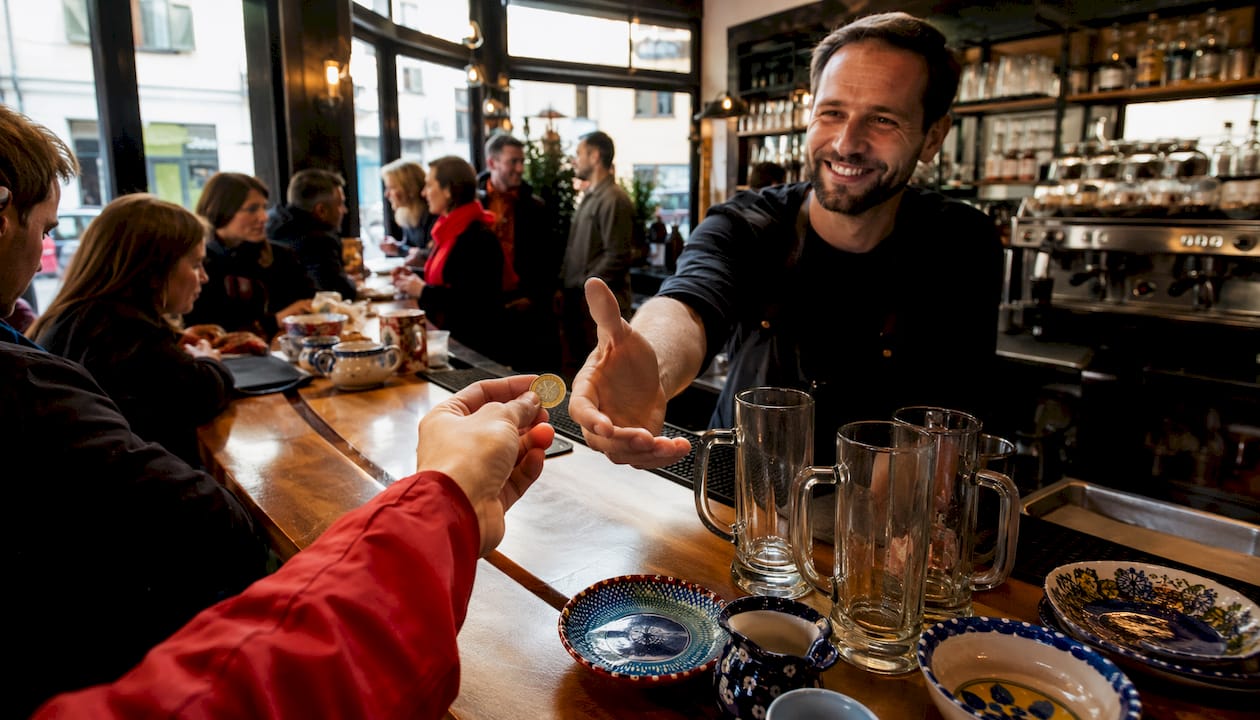
Traditional milk bars, known locally as bary mleczne, operate outside this culture entirely. These no-tipping cafeterias use fixed prices and a counter-service model. Pay the exact amount and move on. Leaving a tip there would confuse the staff more than please them.
Here is a quick reference for typical restaurant tipping amounts by bill size:
- 50 PLN bill: Leave 5–8 PLN
- 100 PLN bill: Leave 10–15 PLN
- 200 PLN bill: Leave 20–30 PLN
- 300 PLN bill: Leave 30–45 PLN
Cash tips are strongly preferred over card gratuities. Card tips may not reach the serving staff reliably, depending on how the restaurant processes payments. Handing cash directly to your server removes all doubt.
Pro Tip: Always tip in PLN, not in foreign currency. Servers cannot easily exchange coins or small foreign bills, and the gesture loses its value.
Tipping etiquette for taxis, hotels, and other services
Tipping customs in Poland extend well beyond the dinner table. Each service category has its own informal standard, and knowing them prevents both under-tipping and over-tipping.
Taxis and rideshares
Rounding up the fare is the most common approach. For a 28 PLN ride, paying 30 PLN is natural. Tipping around 10% applies when the driver helped with luggage, navigated efficiently, or provided genuinely good service. App-based rides often include a tip option, but cash remains the preferred method.
Hotels
Hotel tipping follows clear expectations across service roles:
- Porters: 5–10 PLN per bag is the accepted range for luggage assistance.
- Housekeeping: 10–20 PLN per night is appreciated. Leave it daily rather than at checkout so the right person receives it.
- Concierge: A tip of 10–20 PLN is appropriate when the concierge secures a reservation or goes beyond basic directions.
- Room service: Rounding up the bill or adding 10% works well here.
Tour guides
Tour guides represent one of the clearest tipping expectations in Polish travel culture. 20–50 PLN per person is the standard range for full-day or specialty tours, including visits to sites like Auschwitz-Birkenau or the Wieliczka Salt Mine. The guide’s depth of knowledge, storytelling, and personal attention all factor into where within that range you land. For a half-day city walk, 15–20 PLN per person is a reasonable and appreciated amount.
Hairdressers and spas
Hairdressers typically receive 10% of the service cost, paid directly in cash. Spa therapists follow the same general expectation. These tips go directly to the individual, so cash is both practical and personal.
What are the cultural nuances of tipping in Poland?
Polish tipping culture carries one rule that catches nearly every first-time visitor off guard. When you hand cash to a server, do not say “Dziękuję” (thank you) at that exact moment. In Polish custom, saying “thank you” while handing over money signals that you want the server to keep the change. If you intend to receive change and then leave a specific tip, wait until the change arrives before you hand over the gratuity.
Tipping in Poland reflects service quality, not social pressure. A thoughtful tip given for genuinely good service means far more than a reflexive percentage applied to every bill. Polish hospitality workers notice the difference, and so will you.
Urban and rural Poland differ noticeably in tipping expectations. In Warsaw, Krakow, and Gdansk, tipping is well understood and quietly expected in mid-range and upscale venues. In smaller towns and villages, locals tip less frequently, and staff may be surprised by a generous gratuity. That surprise is always a pleasant one.
Tipping is discretionary and tied directly to service quality. No Polish law or restaurant policy requires it. The social role of tipping in Poland is to acknowledge effort and skill, not to subsidize a broken wage system the way it functions in the United States. That distinction matters. Tip because the service was good, not because you feel obligated.
Pro Tip: Carry a mix of small PLN bills and coins specifically for tipping. A 100 PLN note is difficult to tip with, and asking for change to leave a tip creates an awkward interaction.
How do you handle tipping when paying by card?
Card payments are widely accepted across Poland, but tipping by card requires a specific approach. Tell your server you want to add a tip before the card terminal is presented. Once the payment is processed, adding a gratuity becomes difficult or impossible. Cash tips are preferred because card gratuities do not always flow directly to the staff member who served you.
Tourist areas in Warsaw, Krakow, and Gdansk have clearer tipping expectations than local neighborhoods. Restaurants near the Krakow Main Market Square or Warsaw’s Old Town see international visitors regularly and staff are accustomed to gratuities. Locals in the same cities tend to tip less than tourists, often rounding up rather than calculating a percentage.
Always check your bill before tipping. Some restaurants in tourist areas include a service charge, labeled as “obsługa” or a percentage added to the total. Tipping on top of an existing service charge means you are paying twice for the same thing.
Here is a practical summary of tipping by payment method and setting:
| Setting | Preferred method | Typical amount |
|---|---|---|
| Sit-down restaurant | Cash | 10–15% |
| Cafe or bar | Cash (round up) | 2–5 PLN |
| Taxi or rideshare | Cash | Round up or 10% |
| Hotel porter | Cash | 5–10 PLN per bag |
| Tour guide | Cash | 20–50 PLN per person |
| Hairdresser or spa | Cash | 10% |
Budget roughly 50–100 PLN per day in small bills if you plan to tip across multiple services. That amount covers meals, transport, and hotel staff without requiring constant trips to an ATM.
- Check the bill for “obsługa” before adding a tip.
- Withdraw PLN from ATMs rather than exchanging currency at airport kiosks, which often carry poor rates.
- Keep 5 and 10 PLN coins handy for quick rounding in cafes and taxis.
- For Krakow restaurant dining, a 10% tip on a two-person dinner typically runs 20–40 PLN.
Key Takeaways
Tipping in Poland is discretionary, cash-based, and most meaningful when it reflects genuine service quality rather than automatic habit.
| Point | Details |
|---|---|
| Restaurant standard | Tip 10–15% at sit-down restaurants; round up at cafes and bars. |
| Cash is essential | Always tip in cash so the gratuity reaches the individual server directly. |
| Avoid “Dziękuję” too early | Wait for your change before handing over a tip to avoid confusion. |
| Tour guide range | Budget 20–50 PLN per person for full-day guided tours. |
| Check for service charges | Look for “obsługa” on your bill before adding a separate tip. |
Tipping norms are shifting, and travelers are driving it
I have spent a lot of time watching how tipping plays out across Poland, and the honest observation is this: the norms are moving faster in tourist-heavy areas than anywhere else. Five years ago, rounding up was considered generous in Krakow. Now, servers in the Old Town area quietly expect something closer to 10%, because that is what the majority of international visitors have normalized.
That is not a complaint. It is a useful signal for travelers. If you are visiting Krakow, Warsaw, or Gdansk, treat 10% as your floor for good service. If you are heading into smaller cities or rural areas, rounding up is still the local standard, and a 10% tip will genuinely surprise and delight your server.
The one mistake I see travelers make repeatedly is tipping by card without confirming the process first. I have watched people assume the terminal prompt handled everything, only to learn later that the tip never reached the staff. Always hand cash directly. It takes five seconds and removes all ambiguity.
Polish hospitality workers are skilled, often multilingual, and working hard for wages that do not reflect that effort. A thoughtful tip in cash, given with a simple “dziękuję” after the transaction is complete, lands exactly as intended. That small act of awareness makes a real difference.
— Damian Fort owner at ComFort Tours Cracow
Plan your Poland trip with ComFort Tours Cracow
Knowing the local customs before you arrive makes every interaction smoother, and that includes tipping your guide at the end of a great day out.
ComFort Tours Cracow runs small-group and private guided tours across Poland, including visits to Auschwitz-Birkenau, the Wieliczka Salt Mine, and Krakow’s historic center. Every guide brings deep local knowledge and personal storytelling to the experience. When you book with ComFort Tours Cracow, you also get practical travel context, including how to handle gratuities, payments, and local customs, so nothing catches you off guard. Browse the full tour lineup and find the experience that fits your itinerary.
FAQ
Do you tip in Poland?
Tipping in Poland is not mandatory, but it is appreciated for good service. The standard gratuity at sit-down restaurants runs 10–15%.
Is cash required for tipping in Poland?
Cash is strongly preferred because card tips do not always reach the serving staff directly. Always carry small PLN bills for gratuities.
How much should you tip a tour guide in Poland?
Tour guides typically receive 20–50 PLN per person for full-day or specialty tours, such as visits to Auschwitz-Birkenau or the Wieliczka Salt Mine.
What does “obsługa” mean on a Polish restaurant bill?
“Obsługa” is a service charge added to the bill by some restaurants, particularly in tourist areas. Check for it before leaving an additional tip to avoid paying twice.
Should you tip at milk bars in Poland?
No. Traditional milk bars operate with fixed prices and counter service. Tipping is not expected and is outside the normal custom at these establishments.