
The Strążyska Valley, the lower stretch of the Kościeliska Valley, the Olczyska Valley up to Wielki Kopieniec, the Gubałówka ridge, and the approach to Morskie Oko from Palenica Białczańska are the best Zakopane beginner hikes. All five are short, mostly flat or gently graded, and reward you with proper mountain views without demanding any climbing experience. Start with Strążyska if you only have half a day; it’s the easiest of the lot.
TL;DR:
- The Morskie Oko trail is about 8 kilometers long and suitable for most, but its length makes it more tiring than shorter routes like Strążyska.
- The Olczyska Valley allows a peaceful hike with an optional short ascent to Wielki Kopieniec, but skipping the summit keeps it suitable for families or limited time.
- Arriving early, before 8:30 am, significantly reduces crowding on popular trails such as Strążyska and enhances the overall experience.
- Guides from companies like ComFort Tours can save time by managing transportation, route selection, and avoiding crowded or fully booked facilities.
- Carry sturdy footwear, weather-appropriate layers, and bear safety essentials, as around 15 bears are resident in the Polish Tatras, though encounters remain rare.
Table of Contents
- Zakopane beginner hikes: six easy, scenic routes to start with
- Are there bears in Zakopane, and how do you hike safely?
- Getting to the trailheads from Zakopane
- What to pack for an easy Tatra walk
- When to hike for fewer crowds
- Why a guided day trip suits many first-time Tatra visitors
- Getting the beginner routes right without overcomplicating them
- Book a guided Zakopane day trip from Kraków
- Sources
- FAQ
Zakopane beginner hikes: six easy, scenic routes to start with
These six routes cover the range of what a first-timer actually wants: waterfalls, meadows, a funicular view without the legwork, and one genuinely famous lake. None require technical skill, but a couple have short sections worth knowing about before you set off.
Dolina Strążyska (Strążyska Valley) is the classic starter walk. The path to Siklawica waterfall is short, largely flat, and takes around 1 hour 41 minutes at an easy pace, with much of the lower section suitable for pushchairs as far as the meadow. Start at the Strążyska entrance, a 20 to 25 minute walk from central Zakopane, or a short taxi ride if you’d rather save your legs for the trail itself.
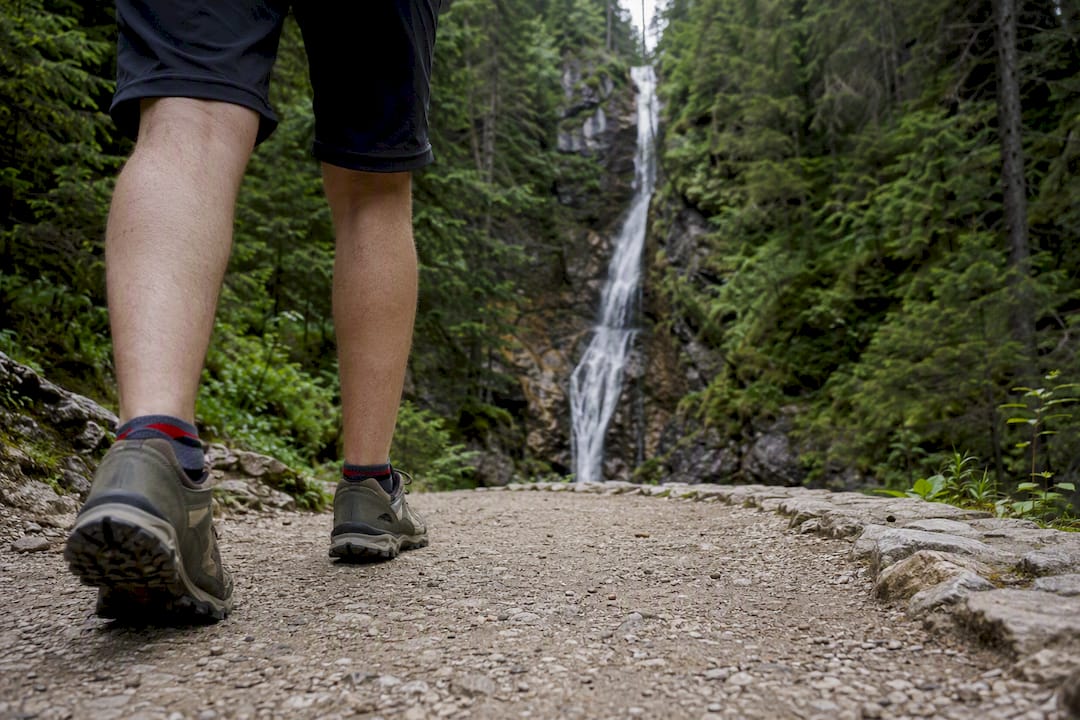
Dolina Kościeliska (Kościeliska Valley) offers a wider, gentler valley floor than Strążyska, with limestone cliffs on either side and a couple of shepherd’s huts serving oscypek cheese along the way. The first two or three kilometres are flat gravel track, easy for most fitness levels, though the valley continues much further for anyone wanting a longer day, a popular concept in urban food tourism combining local gastronomy and travel. Reach the entrance by bus or taxi from Zakopane; there’s no direct walk-in from town.
Gubałówka, reached by funicular from the centre of Zakopane, is the laziest of the beginner options and arguably the best value for effort. Walk the ridge to the Walowa Góra viewpoint for a panorama of the entire Tatra range without climbing a single serious incline. It suits families with small children or anyone recovering from a long flight who still wants the view.
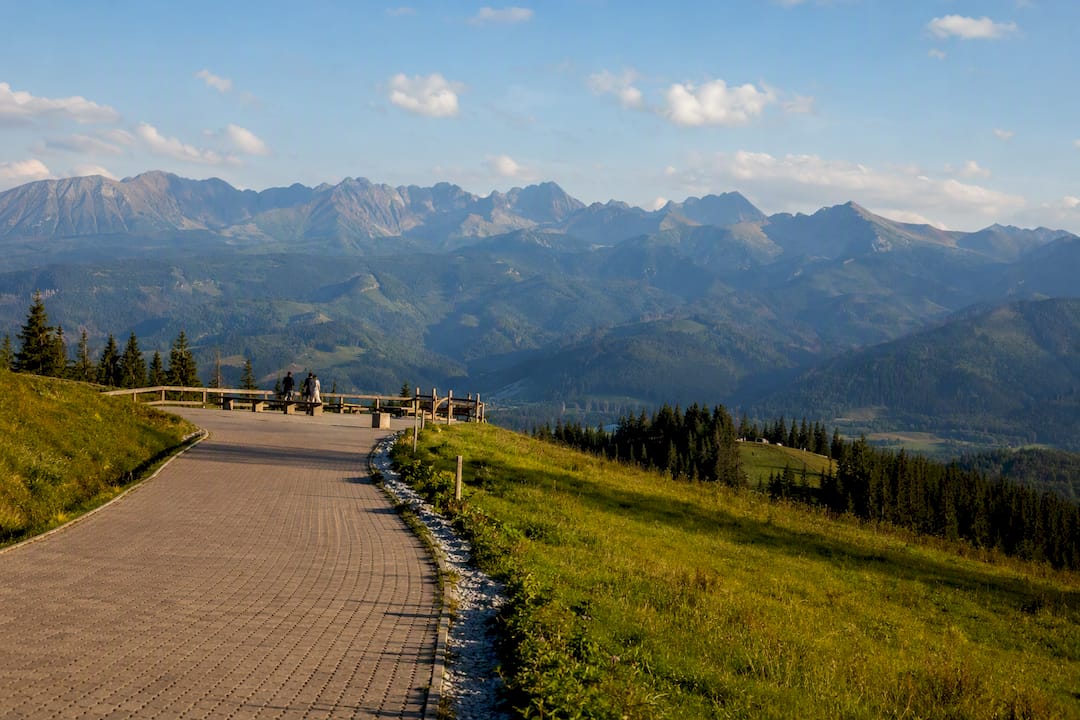
Dolina Olczyska (Olczyska Valley) and Wielki Kopieniec is the quieter alternative to Strążyska. The valley track is wide, mostly flat gravel, with an optional short, steeper climb to the Wielki Kopieniec summit for those who want a proper viewpoint. Skip the summit push if you’re hiking with young children or limited time, and just enjoy the meadow.
Morskie Oko, approached from the Palenica Białczańska car park, is the big one. The footpath is roughly 8 kilometres of surfaced, gently rising track, technically easy but long enough to test unfit legs. It isn’t pushchair territory unless you’re prepared for a slow, steady push; a horse-drawn carriage service covers part of the route for a fee if you’d rather save your energy for the lake itself.
- Strążyska: easiest, shortest, best for a half-day
- Kościeliska: flat, wide, good shade in summer
- Gubałówka: minimal walking, maximum view
- Olczyska / Wielki Kopieniec: quiet alternative with an optional climb
- Morskie Oko: longest but still non-technical, best done early
Pro Tip: Pair an early valley walk (Strążyska or Olczyska) with a later cable car trip to Gubałówka or Kasprowy Wierch. You get two very different views in one day without a single steep uphill stretch.
Are there bears in Zakopane, and how do you hike safely?
Brown bears live in the Tatras, and estimates put the cross border population at 50 to 60 animals, with around 15 resident permanently on the Polish side. Encounters on the popular beginner trails are rare, but a sensible level of caution costs nothing.
In numbers: Roughly 15 brown bears live permanently in the Polish Tatras, out of an estimated 50 to 60 across the whole mountain range shared with Slovakia.
- Hike in a small group rather than alone, and talk normally as you walk. Bears tend to avoid noise.
- Keep dogs on a lead at all times; an off-lead dog is the most common trigger for a defensive bear response.
- Never feed wildlife, and keep food sealed in your pack rather than left visible on a bench or picnic spot.
- Pack rubbish out with you. Discarded food waste is what draws bears toward trails in the first place.
If something does go wrong, whether it’s a twisted ankle or a genuine emergency, TOPR (the Tatra Volunteer Search and Rescue) is the organisation that covers the entire Polish side of the range. Save their number before you set off; mobile signal in the valleys can be patchy.
Getting to the trailheads from Zakopane
- Strążyska and Kuźnice are both walkable from central Zakopane, roughly 20 to 25 minutes on foot, or a five minute taxi if you’re short on time.
- Palenica Białczańska, the start point for Morskie Oko, needs a bus or taxi from Zakopane; there’s a car park at the entrance, but it fills quickly on sunny weekends.
- Day-trippers from Kraków should budget around two hours each way; a guided route from Kraków removes the guesswork around bus timetables and parking.
- Book horse carriage tickets to Morskie Oko and cable car slots for Kasprowy Wierch or the Gubałówka funicular ahead of time in July and August, when queues stretch into hours.
- Check conditions before winter visits. Valley paths ice over, and microspikes are genuinely worth carrying between November and April.
What to pack for an easy Tatra walk
Trainers are the wrong choice, even on the “easy” routes. Loose stones, wet roots and the odd muddy patch mean sturdy walking shoes or light boots earn their keep, even on Strążyska or Gubałówka.
- A waterproof layer, since Tatra weather shifts fast even in summer
- Sun protection: hat, sunscreen, and sunglasses above the treeline
- Water and a high-energy snack, more than you think you’ll need
- An offline map or app, a charged power bank, and a basic first aid kit
- Microspikes if you’re hiking between late autumn and early spring
Pro Tip: Layer up rather than wear one thick coat. Valley floors can be humid while ridge viewpoints like Walowa Góra catch a proper wind, sometimes within the same afternoon.
When to hike for fewer crowds
Visitor numbers, not the terrain, are what actually wear beginners down on the popular routes. Arriving before 08:30 gives you the best chance of an empty trail and an open car park at Strążyska in peak season.
- Choose Olczyska over Strążyska on a busy summer weekend; it sees a fraction of the footfall.
- Weekday mornings beat any weekend slot, especially in July and August.
- Stick to marked paths and pack out your rubbish, following Leave No Trace principles to protect the alpine meadows these trails cut through.
Why a guided day trip suits many first-time Tatra visitors
Reading a route list is one thing; navigating buses, ticket queues and unfamiliar terrain on a single day off is another. ComFort Tours Cracow runs small-group and private day trips from Kraków that handle transport, timing and route choice, which tends to suit families, limited-time visitors, or anyone who’d rather not puzzle over Polish bus timetables mid-holiday.
A guide also makes sense if you’re combining Zakopane with a wider Kraków stay, since two to three days is generally enough for a first visit, leaving little room for a wasted morning working out logistics.
Getting the beginner routes right without overcomplicating them
The biggest mistake first-timers make in Zakopane isn’t picking a trail beyond their fitness. It’s assuming “easy” means identical, then getting frustrated when Morskie Oko’s 8 kilometres feels a lot longer than Strążyska’s short loop to the waterfall. Match the walk to the day you actually want, not the one that photographs best on someone else’s feed.
The second mistake is treating crowd control as an afterthought rather than a planning decision. Visitor pressure on Strążyska in August genuinely changes the experience more than any change in gradient would. Walking the same route at 07:45 instead of midday isn’t a minor tweak; it’s closer to a different trail altogether.
Where I’d push back on the usual advice: don’t assume a guide is only for people who can’t manage the walking. The terrain on these five routes is genuinely forgiving. What a local guide actually buys you is time, avoiding the wrong bus, the fully booked carriage slot, the car park that filled at 09:00. For a short UK holiday, that’s often worth more than the walking itself.
— Damian Fort
Book a guided Zakopane day trip from Kraków
ComFort Tours Cracow is the alternative to piecing routes and transport together yourself: one small-group or private day trip from Kraków covers transport, a local guide, and a route chosen to suit beginners, so you’re not gambling a single free day on bus timetables and ticket queues. Groups stay small, guides know which valley is quiet that morning, and itineraries flex around families or limited time.

If Strążyska, Olczyska or Morskie Oko are on your list, the Zakopane and Tatra Mountains day trip page has route options and current availability. For travellers stacking a longer Kraków stay around the mountain day, the full-day guided Tatra trip covers transport both ways plus a local guide throughout. Check dates and book directly through the ComFort Tours tour listings to lock in a spot before peak summer weekends fill up.
Sources
- Dolina Strążyska i Wodospad Siklawica — Taterki
- Olczyska Valley, Kopieniec Meadow and ascent to Wielki Kopieniec
- Tatra, Poland: Ratings & Visitor Guide | International Parks
- Leave No Trace — 7 principles
FAQ
What are some easy hikes in Zakopane for beginners?
Strążyska Valley, the lower Kościeliska Valley, Gubałówka via the funicular, and the Olczyska Valley toward Wielki Kopieniec are the most beginner-friendly, offering short, flat or gently graded routes with strong views.
Are there bears in Zakopane?
Yes. An estimated 50 to 60 brown bears live across the Tatra range, with roughly 15 permanently on the Polish side, though encounters on popular trails are rare if you keep noise up and food secured.
Is Morskie Oko a difficult hike?
Not technically. It’s an 8 kilometre surfaced path with a gentle, steady rise, but the distance alone makes it more demanding than shorter routes like Strążyska.
How many days is enough in Zakopane?
Two to three days works well for a first visit, giving you time for one proper mountain day plus a look around the town itself.